Apartment Repairs After Tenant Move-Out in Israel
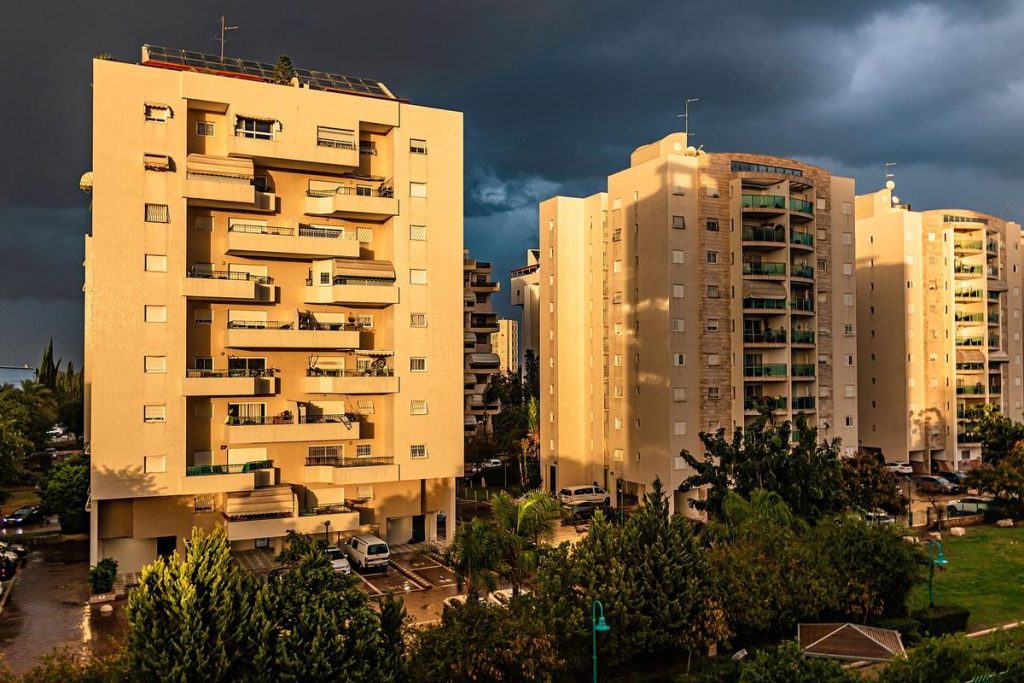
In Israel, restoring a property does not mean returning it to its original condition, but rather restoring it to a normal state of use. The tenant is responsible for damage that exceeds normal wear and tear, but proof relies on a joint inspection conducted by a professional, the bedek bayit. Without this document and a signed move-in report, recovering costs becomes legally complex, as the shtar ’hov covers only rent debt, not material damage.
1. The joint inspection: between penalty clauses and the reality of the walls
Israeli law clearly distinguishes between normal wear and tear and damage. Unlike some practices in the United States where a return to a pristine state is sometimes demanded, Israeli courts apply a concept of reasonable wear. A carpet that frays over time or paint that fades is not the tenant’s responsibility. However, a hole in the wall, a broken window, or a permanent stain on the hardwood floor is. This distinction is crucial for any owner who wishes to invest in Israel without ending up financing unnecessary cosmetic work.
The shtar ’hov, often signed at move-in, is an acknowledgment of debt for unpaid rent. It does not constitute insurance against damage. If the tenant causes damage, the shtar ’hov does not serve as an automatic financial guarantee for repairs. You must therefore rely on the lease agreement and physical evidence. Bringing in a professional for a building inspection, the bedek bayit, becomes the key piece of evidence. This document, prepared by an independent expert, describes the exact condition of the property. It allows you to challenge the tenant’s claims, who might argue that the damage existed before they moved in.
The speed of the inspection is decisive. If the owner waits several weeks after the tenant leaves to inspect the property, the tenant can argue that the damage occurred during the vacancy period or that it was pre-existing. The tolerance threshold accepted by the courts is pragmatic: you do not demand fresh paint if the tenant lived in the apartment for two years, but you do demand the repair of a forced door. This pragmatic approach avoids unnecessary disputes, but requires rigorous documentation from the start.
2. The bedek bayit: the inspection procedure before handing over the keys
The inspection must be joint. This means that the tenant and the owner (or their representative) are present during the visit. The tenant’s absence significantly weakens the probative value of the report. A unilateral report can be challenged in court. It is therefore imperative to organize this visit a few days before the scheduled move-out date, or immediately after if the tenant has left the premises early.
The choice of expert is sensitive. They must be independent, meaning they have no financial interest with the property manager or the owner. Their report must be detailed, factual, and free of value judgments. It describes the condition of the walls, floors, fixtures, and windows. Systematic photography is mandatory. Photos must be timestamped, show the entire room and then the detail of the damage, and be taken in good lighting conditions. These images serve as visual evidence in addition to the written report.
Specific equipment common to Israeli real estate must be inspected with care. The doud shemesh, the solar water heater, is a frequent point of friction. You must check the condition of the tubes, the presence of limescale, and the function of the valve. The mazgan, the air conditioner, must be tested to verify the gas charge and the cleanliness of the filters. These pieces of equipment are expensive to replace. A precise inspection helps determine if the failure is due to normal wear or tenant negligence, such as failing to clean the filters, which damaged the machine.
3. Cost allocation: who pays for what in the vaad bayit and repairs
The separation between internal and common responsibilities is strict. Repairs inside the apartment, that is, within the walls of the unit, are the owner’s responsibility, unless the tenant is responsible for the damage. Common elements, such as staircases, the entry hall, or the roof, fall under the vaad bayit, the homeowners’ association. The tenant cannot be held liable for repairing a broken staircase, even if they used it. However, if they damaged their apartment door, they pay for it.
The case of water leaks is complex. You must determine the source. If the leak comes from the internal plumbing of the apartment (faucet, shower pipe), it is the owner’s responsibility, unless there is tenant negligence. If the leak comes from the common vertical plumbing that runs through the floors, it is the responsibility of the vaad bayit. A professional must identify the source before any intervention. This identification is essential to allocate the cost correctly.
For paint and floors, the criterion of age applies. A tenant leaving after a short lease does not have to repaint the entire apartment. They only have to repair the damage they caused. For tile flooring, replacement is required only if the tiles are broken or cracked, not if they are simply worn. Engaging local contractors requires good faith. The owner must request multiple quotes to prove that the billed prices are consistent with the market. A single invoice, without comparison, can be challenged by the tenant as being excessive.
| Item | Normal Responsibility | Responsibility in Case of Damage |
|---|---|---|
| Wall paint | Owner (normal wear) | Tenant (holes, stains) |
| Internal plumbing | Owner | Tenant (negligence) |
| Vertical plumbing | vaad bayit | vaad bayit |
| mazgan | Owner (maintenance) | Tenant (failure due to negligence) |
| Entry door | Owner | Tenant (forcing, breakage) |
4. Managing the shtar ’hov and financial guarantees
The shtar ’hov is a financial instrument that guarantees the payment of rent. It does not cover repairs. If the tenant must pay restoration costs, it is a separate debt. The owner cannot simply deduct these costs from the shtar ’hov without the tenant’s written agreement. If the tenant refuses to pay for repairs, the owner must initiate a debt collection procedure, separate from the rent collection procedure.
The role of the arev, the guarantor, is limited. They generally guarantee the payment of rent and charges. They do not guarantee material damage, unless the contract explicitly states so. To hold the arev liable for repairs, the lease agreement must clearly provide for it. The notification must be formal and written. If the arev refuses to pay, the owner must take the matter to court.
The limits of retention are strict. The owner cannot retain the entire shtar ’hov if the damage is minor. They must prove the exact amount of repairs. If the damage is disputed, retention is prohibited. Recourse to the competent court is necessary to recover an unfulfilled shtar ’hov or to obtain a payment order for repairs. This procedure can be lengthy, which reinforces the importance of prevention and documentation.
5. Disputes over specific equipment: mamad, mazgan, and doud shemesh
The mamad, the secure room, is a critical point. You must verify the integrity of the locks and the armored walls. If the lock is forced or the wall is damaged, the repair is costly and falls under the tenant’s responsibility. This is a major security element that tenants often forget to check when they leave.
The mazgan requires a distinction between routine maintenance and failure. Cleaning the filters is the tenant’s responsibility. If the filters are dirty and this caused the machine to overheat, the failure is attributable to the tenant. However, if the machine is at the end of its life and the gas charge leaks naturally, it is the owner’s responsibility. The bedek bayit must specify the condition of the filters and the performance of the air conditioner.
The doud shemesh is subject to limescale accumulation, especially in regions where the water is hard. The tenant must keep the system clean. If the tubes are clogged and this has reduced the heating capacity, responsibility is shared. You must check the condition of the tubes and the valve. Electronic equipment and home automation, if present, follow the same logic: failure due to misuse is the tenant’s responsibility, while failure due to wear is the owner’s responsibility.
6. Tax and accounting deduction of repair costs
Restoration costs are deductible for the mas hachnasa, income tax, if they are related to the rental. You must distinguish between routine repair, which is immediately deductible, and investment, which can be depreciated over several years. The classification depends on the nature of the work. Simple painting is a repair. A complete kitchen renovation is an investment.
The impact on the mas shevach, capital gains tax, during a future sale must be considered. Investment work increases the calculation base for capital gains. It is therefore important to classify expenses correctly. The reshut ha-misim, the tax authority, requires transparent and detailed invoices. Each invoice must indicate the nature of the work, the date, and the amount. Receipts must be kept for several years.
The accounting of vaad bayit funds must avoid double counting. If the vaad bayit pays for part of the repairs, the owner must not deduct that portion from their own expenses. You must track financial flows with precision. An accounting error can lead to overtaxation or a penalty. The property manager must ensure this traceability for the owner.
7. Practical cases: three scenarios of early departure in Netanya
The first scenario is an urgent departure in July. The tenant leaves the apartment empty, without maintenance. The mazgan has not been cleaned, and the filters are clogged. The bedek bayit reveals an air conditioner failure due to overheating. The tenant is responsible. They must pay for the repair or replacement. The owner must act quickly to document the condition before the heat causes further damage.
The second scenario is major damage during the vacancy. The tenant has left the apartment, but a water leak occurred, causing damage to the apartments below. The source is the internal plumbing. The owner is responsible toward the neighbors, but they can turn against the tenant if the leak is due to prior negligence (a poorly fixed pipe, for example). The bedek bayit must identify the root cause.
The third scenario is a dispute over invoices. The tenant refuses to sign the move-out report and challenges the amount of repairs. They claim that the damage was pre-existing. Without move-in photos and a joint bedek bayit, the owner is in a difficult position. They must take the matter to court. The speed of the reaction is crucial. Statute of limitations for action are short. Do not wait until the tenant is far away to start the process.
8. Prevention: the contract and key handover as a shield
Drafting the contract is the first line of defense. The restoration clause must be precise. It must mention the initial condition documented by the move-in report. This report must be signed by the tenant and the arev. It must include photos and a list of equipment. The tenant’s home insurance must be verified. It must cover damage caused to the owner’s property. If it does not, the risk is entirely on the owner.
The role of the manager is to accompany the signature and the departure. We organize the joint bedek bayit, we verify specific equipment such as the doud shemesh and the mamad, and we establish the report. We manage relations with the tenant and the arev. We ensure the traceability of costs and tax compliance.
Once the deed is signed, daily management takes over. Who receives the keys? We manage them. Who finds the tenant? We look for serious candidates. Who answers when a pipe bursts on a Friday? We intervene through our network of local professionals. The allocation of costs after an early departure is only part of the problem. The real challenge is to keep the property profitable and protected throughout the lease. To manage these aspects daily and secure your investment, consult our property management. We treat each property with the rigor necessary to avoid disputes and maximize return on investment.
Never sign a shtar ’hov without having checked the condition of the property. This document does not protect against damage. Require a joint bedek bayit at move-in and move-out. It is your only solid proof in case of dispute.

Gestion locative en Israël pour propriétaires francophones. Bureaux à Netanya, 26 Dizengoff. Une question sur votre bien ? Écrivez-nous.