Balcony Waterproofing in Israel
Balcony waterproofing in Israel depends on the quality of the membrane applied to the slab and the maintenance of rainwater drains. Infiltrations typically appear during the first winter rains, revealing slope defects or cracks in the surface coating. To protect your investment, you must distinguish between repairs involving the building’s structure and those concerning your private equipment, such as the doud shemesh or the mazgan.
The seasonal cycle of waterproofing in Israel
The Israeli climate dictates a specific maintenance rhythm. The ideal period for work is during the summer months, when the heat allows waterproofing products to dry quickly. However, owners often only notice failures in winter, during the transition from the dry season to the rainy season. This time lag often creates a sense of urgency, even when the problem may be structural and long-standing.
There are two distinct types of water risks. On one hand, seasonal rains test the drainage capacity of the balconies. On the other hand, there is the risk of flooding during exceptional storms. In the latter cases, if the drains are obstructed, water stagnates on the slab, exerting hydrostatic pressure that forces its way through micro-cracks in the coating.
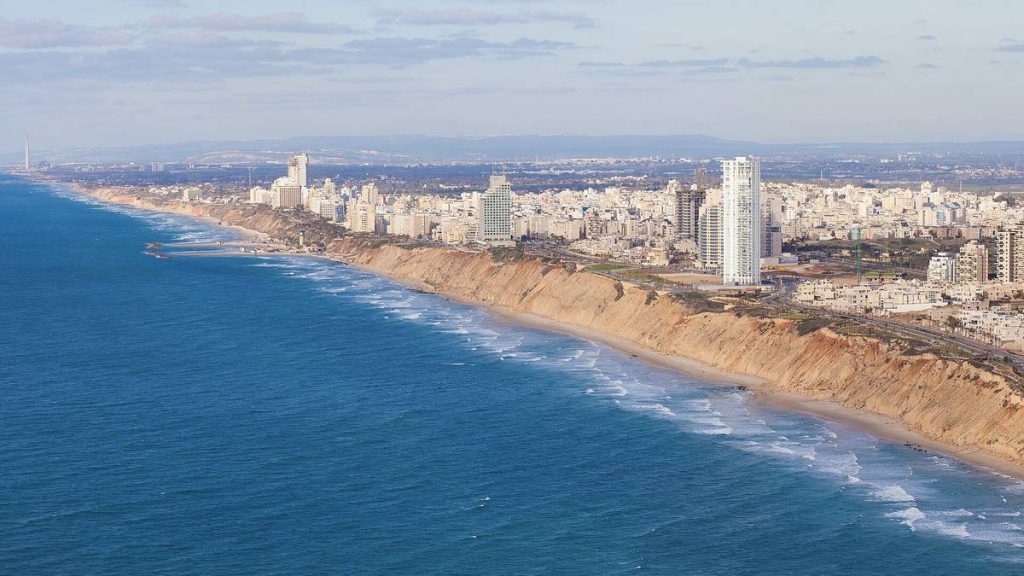
In Netanya and along the entire coast, salt air accelerates material degradation. Salt penetrates joints and protective membranes, causing chemical erosion that weakens the waterproofing. A beachfront balcony requires more frequent inspections than an inland apartment, as sealing components degrade faster due to saline corrosion and constant humidity.
Building inspection (bedek bayit) applied to balconies
To avoid unpleasant surprises, we recommend hiring a professional to perform a building inspection (bedek bayit) before the rains arrive. While this is not a legal requirement, it helps identify potential points of failure. The inspector should focus on the geometry of the slab to ensure the slope directs water toward the drainage outlets rather than toward walls or door thresholds.
The inspector should verify the following elements:
- The slope of the balcony slab toward the drainage points.
- The cleanliness and functionality of the rainwater drainage pipes.
- The integrity of the expansion joints between the balcony and the main structure.
- The absence of cracks in the exterior coating, particularly at junctions with facade walls.
Particular attention must be paid to the junctions between the balcony and the mamad. If the balcony waterproofing fails, water can infiltrate the walls of the secure room. This can lead to serious humidity issues in an area that must remain perfectly dry and isolated. To understand the importance of this room’s structure, consult our article on Mamad and electricity standards for Israeli apartments: compliance rules.
Allocation of responsibilities between the owner and the vaad bayit
Managing an infiltration requires immediately determining the source of the leak to know who is responsible for the cost. In Israel, the distinction is based on the nature of the failing element: is it private or common? The balcony slab, which constitutes the load-bearing structure, is generally considered a common area. Consequently, repairs to the slab’s waterproofing are the responsibility of the vaad bayit.
The vaad bayit is responsible for maintaining the main drainage columns. If the infiltration stems from a blockage in the building’s main column, the homeowners’ association must fund the repairs. Conversely, if the leak is caused by equipment installed on your balcony, the responsibility lies with you personally.
The following table summarizes the typical allocation of costs:
| Element concerned | Maintenance responsible | Type of repair |
|---|---|---|
| Balcony slab and waterproofing membrane | vaad bayit | Structural / Common |
| Drainage pipes (columns) | vaad bayit | Structural / Common |
| Balcony-specific drainage (outlets) | Owner | Private |
| Installation of mazgan or doud shemesh | Owner | Private |
| Sliding door joints | Owner | Private |
In the event of a dispute, particularly if the infiltration comes from a neighbor’s balcony, the procedure is to have the damage assessed by a professional. This report will serve as the basis for holding the neighbor or the vaad bayit liable with the insurance companies.
Technical control points specific to the Israeli balcony
An Israeli balcony is more than just an extension of living space; it houses technical installations that can become sources of leaks. We systematically check all fluid penetration points. For example, the doud shemesh requires that the joints around its supports and piping be perfectly watertight. A leak from the solar water heater can invisibly saturate the slab’s waterproofing membrane.
The mazgan also poses a specific risk. Air conditioning supports installed on the facade or balcony create entry points in the wall. If the mounting holes are not correctly sealed, condensation or rainwater can infiltrate behind the coating. It is essential to verify that cable passages and drainage pipes are properly caulked.
Finally, examining sliding door thresholds is crucial. Water runoff on the balcony must never flow inward toward the apartment. An improperly sized threshold or a worn silicone seal can turn a damp balcony into a source of flooding for your living room or bedroom. For apartments equipped with a mamad, special attention should be paid to door sealing to prevent bottom-level infiltration, as detailed in our guide on Mamad door maintenance in Israel: key points of vigilance.
The impact of waterproofing on rental management and leases
For a landlord, an infiltration is not just a technical problem; it is a legal risk. The owner is obligated to maintain the property in a habitable condition suitable for its intended use. A water leak that causes mold or makes a balcony unusable can constitute grounds for a rent reduction or lease termination by the tenant.
As part of our rental management services, we handle emergency infiltrations during the lease term. This requires immediate reactivity to limit material damage. If the infiltration is due to a building defect, we contact the vaad bayit. If it is due to private equipment, we appoint a professional for a rapid repair.
There is a specific case: tenant negligence. If the infiltration is caused by the tenant obstructing the balcony drains (accumulation of debris, soil from flower pots, or waste), the responsibility lies with them. In this case, the owner may use the shtar ’hov signed at the start of the tenancy to cover restoration costs. The shtar ’hov is not insurance, but a guarantee instrument used to recover funds spent to repair damages caused by tenant fault.
Pre-purchase checks: the balcony and the tabou
Buying an apartment in Israel requires an analysis that goes beyond a simple aesthetic visit. A balcony that appears to be in good condition may hide a structure whose waterproofing has reached the end of its lifespan. The first step is to consult the tabou. While the tabou is primarily a land registry, it allows you to verify if official building waterproofing works have been recorded or if exceptional charges have been noted for structural works.
We also advise requesting access to the minutes of the latest vaad bayit general meetings. These documents are essential for identifying recurring structural issues. If discussions regularly involve infiltrations between floors or cracks in balconies, it indicates a management or construction problem that could become costly after purchase.
Finally, compare the visual state of the balcony with the property’s technical descriptions. If the balcony is described as recently renovated but you observe efflorescence or degraded joints, a thorough inspection by a professional is indispensable. Do not rely solely on the appearance of paint or tiling, as the waterproofing lies beneath the finishing layer.
Before every rainy season, personally inspect your balcony drainage outlets. A simple cleaning of plant debris can prevent major infiltration and avoid costly disputes with the vaad bayit or your tenant.

Gestion locative en Israël pour propriétaires francophones. Bureaux à Netanya, 26 Dizengoff. Une question sur votre bien ? Écrivez-nous.