Check the Top-Floor Roof for Leaks Before Buying in Israel
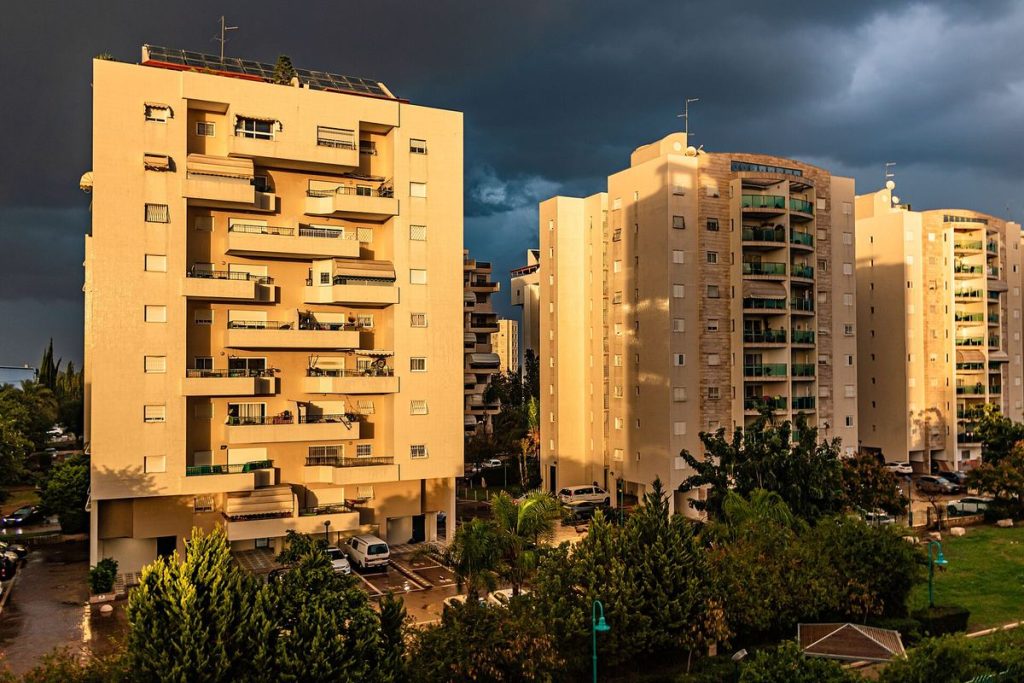
In Israel, the absence of an official waterproofing report does not prevent a purchase, but it exposes you to immediate, heavy repairs. Before signing, hire a hydrology expert to inspect the roof and walls of the top floor. Check the condition of the doud shemesh and the electrical installations at height. Require that these checks be completed before the handover of keys, as the seller cannot evade responsibility for existing hidden defects.
Professional inspection: the adapted bedek bayit
Many owners confuse the legal obligation to inspect a building for co-ownership purposes with the private technical verification needed during a purchase. In Israel, the bedek bayit is not an administrative document issued by the state, unlike inspections in other countries. It is a contractual step between you and the seller. Without this clear distinction, you might think the notary or real estate agent is protecting you. They are not. The bedek bayit here is an expertise at your expense, engaged to secure your investment.
The choice of expert is critical. A general mason or electrician lacks the skills to assess the state of a waterproofing membrane or a complex drainage system. You need a roofing specialist. This professional must know how to identify micro-cracks, joint delamination, and water stagnation points that precede major leaks. Their qualification must specifically cover membranes and drainage systems, not general masonry.
- Distinguish the legal co-ownership inspection from the private technical verification: the bedek bayit here is a contractual step between you and the seller, not an administrative obligation.
- Choose an independent expert specialized in roofing, not a general electrician or mason: the qualification must cover waterproofing membranes and drainage systems.
- Require full access to the common roof: if the roof belongs to the co-owners, the vaad bayit must authorize the expert’s presence, which takes time.
- Formalize the request in writing to the seller and the vaad bayit to avoid last-minute access refusals.
This step occurs before the final signature. If you discover major defects, you can renegotiate the price or break the purchase agreement. Once the deed is signed, your margin for maneuver disappears. To understand other technical checks for a vacant property, consult our guide on verifying a vacant apartment before renting in Israel.
The role of the vaad bayit in roof access
The roof of a building is a common area. You do not have the right to access it alone, even if you are buying the top floor. Access is controlled by the vaad bayit, the co-ownership management body. Ignoring this reality is a frequent error among foreign buyers. The vaad bayit may refuse access if the request is not formulated correctly or if work is in progress. This refusal can block your transaction if you have already signed the purchase agreement.
You must negotiate the inspection date directly with the manager. Response times from the vaad bayit vary. Some respond in a few days, others take weeks. Plan a buffer in your purchase schedule. Do not let this step become the breaking point of the negotiation. The vaad bayit is required to inform you of budgets voted for roof renovation. If an assembly recently voted for roofing work, this changes the value of your property. You should not pay twice for the same repair.
- Understand that the roof is a common part of the building: you do not have the right to access it alone without the vaad bayit‘s agreement.
- Negotiate the inspection date with the manager: vaad bayit response times can delay the transaction, so plan a buffer.
- Check if roofing work is in progress or planned: the vaad bayit must inform you of budgets voted for roof renovation.
- Request the minutes of recent assemblies: they reveal the actual state of the roof and co-owners’ reservations about its solidity.
These minutes are your best source of information. They detail resident complaints and decisions made. Silence in these documents is reassuring. Repeated reservations are an immediate alarm signal. This administrative transparency is specific to Israeli property management. In other jurisdictions, information is often more dispersed. Here, the vaad bayit centralizes information. Use this centralization to your advantage before signing.
The doud shemesh and high-level installations
The top floor houses specific equipment that does not exist on lower floors. The doud shemesh, the solar water heater, is the main component. Its metal support and pipes are the first sources of leaks. Water infiltrating around the doud shemesh reaches the roof structure directly. A certified technician must inspect the connections. A simple visual check is not enough. You must verify the state of joints around antennas, ventilation pipes, and electrical conduits.
The mazgan, the air conditioner, and electrical cables often pass through the roof. Their protection against humidity is critical. In Israel, temperature variations between day and night are extreme. This thermal expansion weakens joints. If conduit insulation is failing, humidity infiltrates the apartment. The consequences are electrical and structural. You must require a pressure test or a thorough visual inspection of the doud shemesh connections. This test must be performed by a professional, not the seller.
- Inspect the solar water heater: it is the main component of the top floor, and its support and pipes are the first sources of leaks.
- Check the insulation of electrical conduits: the mazgan and cables often pass through the roof, and their protection against humidity is critical.
- Control the state of joints around antennas and ventilation pipes: these are frequent points of water penetration.
- Require a pressure test or visual inspection of the doud shemesh connections by a certified technician.
These equipment items are specific to Israeli architecture. A foreign expert may not know the local installation standards for the doud shemesh. Ensure your inspector is familiar with these installations. The safety of your property depends on the precision of this inspection. If you plan to install surveillance systems, also check the functionality of penthouse security cameras before renting. Electricity and humidity are complementary enemies.
Hidden defects and seller liability
Israeli law protects the buyer against hidden defects. The seller is responsible for existing defects they know or should know about. This concept is broader than in many other legal systems. If the seller ignored a leak for years, they remain responsible. You do not have to prove bad faith, only the existence of the defect and its prior date. Israeli case law is clear on this point. The seller’s silence is interpreted as implicit knowledge of the defect.
Documenting previous leaks is your best defense. If the current tenant or seller mentions infiltrations, require written proof. Photos, repair reports, emails. These documents prove the problem existed before your purchase. Without written proof, the seller can deny knowledge of the defect. Oral proof is difficult to establish in court. You must therefore insist on documentation. If the seller refuses to provide these documents, consider it a major warning signal. There is likely a problem they wish to hide.
- Know Israeli case law: the seller is responsible for existing defects they know or should know about.
- Document previous leaks: if the current tenant or seller mentions infiltrations, require written proof.
- Negotiate a retention on the sale price: part of the amount can be set aside to finance immediate roof repairs.
- Specify in the deed of sale that the waterproofing state is « as is » or with specific guarantees: silence is dangerous.
Negotiate a retention on the sale price. Part of the amount can be set aside to finance immediate roof repairs. This retention secures your investment. It covers the cost of work if the inspection reveals defects. Specify the state of the waterproofing in the deed of sale. Silence is dangerous. It leaves the door open to interpretations. Be explicit. Indicate if the roof is guaranteed or sold « as is ». This contractual precision is your legal shield. To understand other legal aspects of the transaction, consult our guide to buying or selling in Israel.
Water pressure: test before signing
Visual inspection has its limits. Water does not always flow where you expect. A watering test is essential. Have the roof watered for several hours with hoses to simulate heavy rain. This test must be performed by a professional, as the watering must be uniform and powerful. A simple water jet is not enough. You must saturate the waterproofing membrane to reveal weak points. This test is brutal but necessary. It reveals defects the eye cannot see.
Observing the walls and ceilings of the top floor during the test is crucial. Moisture stains often appear after 24 to 48 hours. You must stay on site or have a trusted third party monitor the premises. Wall corners are the most vulnerable zones. Humidity often infiltrates through corners, where joints are weakest. Take photos and videos. These proofs are essential in case of post-purchase litigation with the seller. Without visual proof, it is difficult to demonstrate the seller’s liability. Photographic proof is your main asset.
- Organize a watering test: have the roof watered for several hours with hoses to simulate heavy rain.
- Observe the walls and ceilings of the top floor during the test: moisture stains often appear after 24 to 48 hours.
- Check wall corners: humidity often infiltrates through corners, where joints are weakest.
- Take photos and videos: these proofs are essential in case of post-purchase litigation with the seller.
This test must be planned with the seller and the vaad bayit. It cannot be performed clandestinely. Roof access is regulated. The test must be documented. An expert report must follow this test. This report details the zones tested, the duration of watering, and the observed results. This document has legal value. It proves you verified the roof state before the purchase. It protects your investment. Do not neglect this step. It is more expensive than a roof repair, but far less than a legal dispute.
Repair costs and price negotiation
Once the roof state is known, you must evaluate repair costs. Obtain three quotes from specialized companies. The price of a complete roof renovation varies depending on materials and access complexity. These quotes are your basis for negotiation. Present them to the seller. They cannot ignore concrete figures. The negotiation must be factual. Show them the real cost of work. If they refuse to lower the price, you can require them to perform the repairs before the sale. This is often the simplest solution.
| Type of defect | Required action | Impact on negotiation |
|---|---|---|
| Localized leak | Joint repair | Moderate price reduction |
| Membrane delamination | Partial replacement | Significant price reduction |
| Compromised structure | Complete renovation | Possible sale cancellation |
Compromised structure is the most serious case. If water has reached the reinforced concrete, the repair is complex and costly. In this case, canceling the sale is a serious option. You do not have to accept a property with a compromised structure. The vaad bayit may also be involved if the roof is common. Repair costs can be shared among co-owners. Check the co-ownership bylaws. They define the distribution of charges. If the roof is your exclusive responsibility, the negotiation is different. You must bear the cost alone. This distinction is crucial for your budget. Do not sign without clarifying this distribution.
After signing: daily management
Once the deed is signed, the next problem appears: who manages the property? You are abroad, the property is in Israel. You cannot intervene yourself when a pipe bursts on a Friday. Property management is an essential service. We manage properties for our clients. We find tenants, we collect rents, we respond to emergencies. The tenant does not call you at midnight. They call our team. We intervene or send a technician. This responsiveness is vital. An unsatisfied tenant leaves. A leaking roof destroys the property. Property management protects your investment daily. We also manage relations with the vaad bayit and the payment of arnona. You do not have to worry about administrative details. We handle everything. To discover how we manage your property, consult our property management service in Israel. It is the logical next step of your purchase. You have checked the roof. We monitor it.
This article describes field practice and does not replace the advice of a lawyer or qualified professional. Each situation depends on the lease, the building, and the municipality: have yours verified before acting.

Gestion locative en Israël pour propriétaires francophones. Bureaux à Netanya, 26 Dizengoff. Une question sur votre bien ? Écrivez-nous.