Homeowners Association Construction Disputes
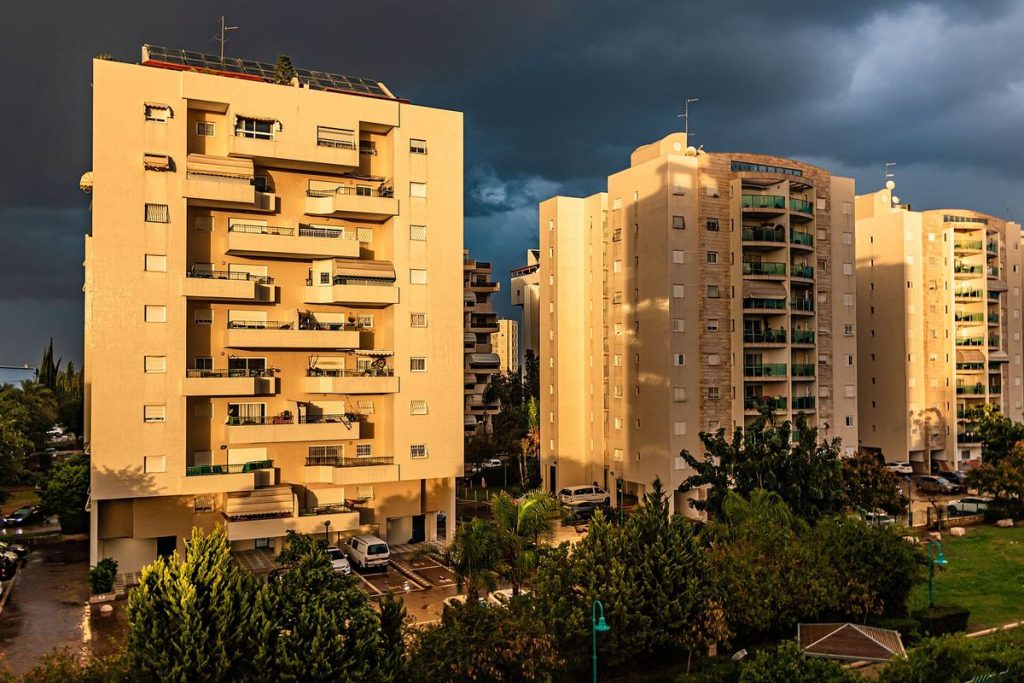
To resolve a dispute regarding work not performed by the vaad bayit, you must first establish the legal distinction between common areas and your private equipment. Once the responsibility of the association is proven through a technical examination, the procedure involves sending a formal demand letter before taking the matter to small claims court. The goal is to obtain either an injunction to perform the work or financial compensation for damages sustained.
Distinguishing the responsibility of the vaad bayit from that of the owner
The first step is to identify whether the owner or the vaad bayit must bear the cost and management of the intervention. In Israel, the allocation of responsibilities is based on the nature of the failing element. You should consult the building’s bylaws to define management zones. The vaad bayit exclusively manages common areas: stairwells, elevators, the roof, collective plumbing, and shared outdoor spaces. If a leak originates from the building’s main riser, the responsibility lies with the association.
Conversely, equipment located inside your unit is entirely your responsibility. This includes the mazgan (air conditioner), the doud shemesh (solar water heater) if it is attached to your private installation, or your window frames. Disputes often arise when the origin of the damage is uncertain. To avoid paying for work that is the responsibility of the association, you must establish a precise causal link between the association’s inaction and the damage observed in your apartment. For example, water infiltration through the facade requires intervention from the vaad bayit, whereas a plumbing issue with your own faucets falls under your personal management. To delegate this technical and administrative oversight, you can use our property management services.
- Determine the nature of the work by reviewing the Israeli building bylaws.
- Identify common areas (stairwells, elevators, roof) managed by the vaad bayit.
- Distinguish between structural repairs and interventions on private equipment (e.g., mazgan or doud shemesh).
- Establish proof of the causal link between the association’s inaction and the damage sustained.
Confirming inaction through a professional technical examination
The association cannot contest a failure if it is indisputably documented. To move beyond simple verbal complaints, you must have the issues verified by a professional. A written report by a qualified expert holds higher legal value than a neighbor’s testimony. We recommend conducting a building inspection, known as a bedek bayit, when a major structural problem appears. This inspection allows you to isolate with certainty the failures of common areas from those of private areas.
Documentation must be rigorous. Take dated photographs of the damaged areas, specifically cracks, moisture traces, or defective safety elements. Compare the current state of the building with the maintenance obligations listed in the association’s annual budget. If a budget line is allocated to elevator or roof maintenance, but no intervention has occurred despite reports, inaction is established. This technical document will serve as the basis for your demand letter and, if necessary, as a central piece of evidence before a judge. A good understanding of these mechanisms is essential to mastering Vaad bayit, work, and voting: managing buildings in Israel.
- Have issues verified by a professional to avoid factual disputes.
- Perform a building inspection (bedek bayit) to isolate failures in common areas.
- Document the state of common areas with dated photographs and expert reports.
- Compare the current state with the maintenance obligations in the association’s annual budget.
The demand letter: a prerequisite to any legal action
Before bringing the matter before a judicial authority, you must send a formal demand letter to the head of the vaad bayit. This letter should not be a simple complaint, but a structured legal act. You must precisely outline the unperformed work, the observed issues, and the risks involved (damage to the apartment, safety concerns, etc.). It is imperative to set a specific deadline for execution, such as ten or fifteen days, adjusting this timeframe to the technical urgency of the situation. A roof leak problem cannot be treated with the same deadline as facade maintenance.
The letter must be sent via a method that allows proof of receipt, such as registered mail with acknowledgment of receipt or a transmission method recognized by Israeli courts. In this document, specify the legal and financial consequences you will pursue in the event of no response. Mention that, failing execution within the allotted time, you will petition the court for an injunction to perform the work and for damages. This step is crucial to demonstrate to the judge that you attempted an amicable resolution and that the association was formally notified to fulfill its obligations.
Recourse through small claims or local courts
If the demand letter remains ineffective, you must evaluate jurisdictional competence based on the amount in dispute and the nature of the harm. For low-value disputes or routine management issues, small claims courts are most appropriate. Preparing the file is decisive. You must gather all supporting documents: proof of regular vaad bayit payments, invoices for your own urgent repairs, technical reports, and even proof of your arnona payments to demonstrate your status as a property owner in good standing.
It is necessary to distinguish between two types of requests: a request for the performance of work (injunction to act) and a request for damage repair (financial compensation). A judge may order the association to repair the roof, but they cannot, through the same decision, retroactively reimburse you for damage to your furniture if you did not make that specific request. Note also that mediation procedures are often encouraged by Israeli courts. A mediator can help reach an agreement on the work schedule without undergoing a long and costly trial. To avoid complications related to dues, consult our article on Managing vaad bayit arrears: your obligations as an owner.
Enforcement and compensation against association fees
Once a judgment is obtained, enforcement can be complex. If the vaad bayit still refuses to act, the judgment may allow for forced enforcement procedures. Regarding financial management, it is tempting to want to suspend the payment of association fees to offset the loss. Caution: this method is legally risky and can backfire, leading to late fees or lawsuits for non-payment. It is preferable to use the judgment to obtain reimbursement for emergency costs if you had to hire a professional to stop an imminent disaster.
| Type of dispute | Resolution method | Risk for the owner |
|---|---|---|
| Urgent work not performed | Request for injunction to act | Requirement of a prior court decision |
| Degradation of common areas | Claim for damages | Complexity of assessing the loss |
| Elevator maintenance failure | Demand letter and rapid recourse | Liability engaged in case of accident |
You must also verify the association’s liability clauses regarding third parties. If the vaad bayit‘s inaction causes damage to a tenant or a visitor, the association’s liability is engaged. As an owner, you must ensure your insurance covers the damages, but recourse against the homeowners’ association remains the primary way to cover the costs of restoring common areas. Analyzing the maintenance contracts signed by the association may sometimes reveal that the service provider is responsible for the failure, shifting liability from the vaad bayit to the technical company.
Managing disputes related to major renovation work
Disputes take on a different dimension during major renovation work (facade restoration, installation of a new elevator, etc.). In these cases, the first check concerns the validity of decisions made at the general assembly. An irregular vote or a lack of quorum can make the work illegal. You have the right to contest the allocation of costs if the work only impacts certain units or if the calculation method does not follow the bylaws. For example, work to secure the mamad (secure room) concerns all residents, but its financing must follow strict rules.
Monitoring compliance is another point of vigilance. Renovation work must respect the building permits issued by the municipality. If the vaad bayit initiates work that modifies the building’s structure without authorization, you can involve local authorities. Finally, managing defects in common equipment, such as sump pumps or security lighting, requires immediate reactivity. If the contractor commits an error, the vaad bayit is your contractual contact, but you can intervene if the failure compromises the safety or the value of your property.
Before incurring legal fees, always request a copy of the minutes from the last general assembly and the projected budget. These documents indicate whether funds for the work have been allocated or if the association has the financial capacity to act. A technical dispute is often won through the precision of the accounting and technical documents produced at the beginning of the procedure.

Gestion locative en Israël pour propriétaires francophones. Bureaux à Netanya, 26 Dizengoff. Une question sur votre bien ? Écrivez-nous.