Inheritance Conflict in Israeli Real Estate: Selling Property Held in Co-ownership
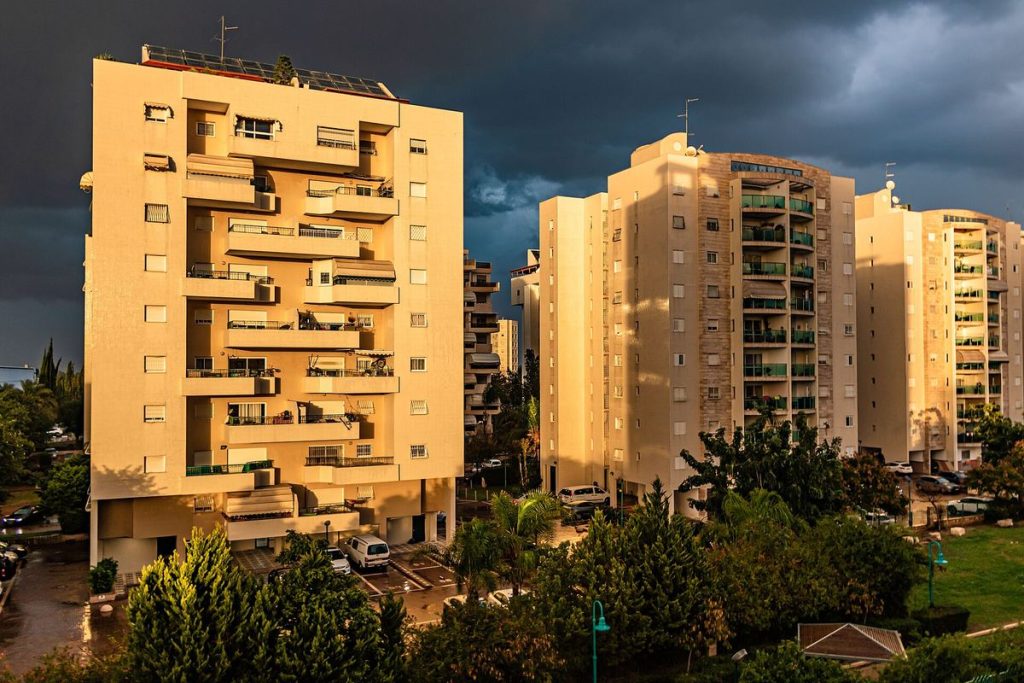
To sell real estate in Israel inherited through succession, all heirs must be legally recognized as owners by the tabou. If a disagreement arises, resolution requires obtaining a tsav yerusha from the family court, an essential document to identify the rightful beneficiaries. In the absence of a unanimous agreement, the court may order a forced sale to liquidate the joint ownership.
Obtaining a tsav yerusha to resolve legal status
Physical possession of the keys to an apartment in Netanya or Tel Aviv does not constitute proof of ownership. In Israel, property is registered at the tabou. Until the succession is formalized, the deceased’s name remains on the title, preventing any transaction. To transfer rights, heirs must apply for a tsav yerusha, the succession order issued by the family court.
The existence of a tzava’a radically changes the procedure. If the deceased left a will, the court must first validate this document before issuing the order. Without a tzava’a, the court applies the rules of yerusha according to the personal status code, which may lead to distributions different from what the heirs expected. We systematically verify the validity of identity documents, specifically the teoudat zeout of each applicant, to ensure the file complies with authority requirements.
- The distinction between actual possession (occupying the unit) and legal ownership registered at the tabou.
- The procedure for requesting an order from the competent family court.
- The impact of the presence or absence of a tzava’a on the distribution of shares.
- The necessity of certifying identity documents and birth certificates to establish lineage.
Managing joint ownership and the rights of each heir
When a property is transferred through yerusha, it enters a regime of joint ownership. Each heir owns a share of the property, but no one owns a specific physical part of the apartment (such as a bedroom or a balcony). Managing the property requires consensus. A single heir cannot decide alone to buy or sell in Israel without the agreement of the others, except in exceptional cases provided by law.
A sale being blocked by a single heir is a frequent situation. The law protects minority owners, but it does not allow an asset to be frozen indefinitely. It is important to distinguish between the management of rental income and the sale of capital. If the apartment is rented, the rent must be distributed proportionally to each person’s share. At the same time, each heir is responsible, pro rata to their share, for building fees, the vaad bayit, and municipal taxes, the arnona. In the event of non-payment by one heir, the group of joint owners may be held liable to the municipality or the homeowners association.
| Type of expense | Joint ownership responsibility | Consequence of non-payment |
|---|---|---|
| vaad bayit | Proportional to the yerusha share | Action against the joint owners by the building manager |
| arnona | Jointly held among heirs | Lien on the property by the municipality |
| Maintenance (e.g., mazgan) | Shared according to ownership shares | Depreciation of the asset value |
The role of the attorney and dispute resolution through mediation
A conflict between heirs requires the intervention of an Israeli attorney capable of representing the joint ownership. The attorney does not work for a single heir, but for the estate, to protect the common interest. If tensions are too high, judicial mediation is often the preferred path before starting a forced sale procedure, which is long and costly. Mediation allows for a compromise on the sale price or on one heir buying out the others’ shares.
To prevent the property from deteriorating during the conflict, we recommend drafting a temporary management agreement. This agreement defines who handles technical maintenance, such as repairing a doud shemesh or a mazgan, and how the succession’s Israeli bank accounts are managed. Fund management must be transparent to prevent any heir from being accused of misappropriating rental income. To facilitate decisions without a physical presence, using a real estate power of attorney in Israel is a common method to allow a representative to act on behalf of the joint owners.
Forced sale: the judicial alienation procedure
If no agreement is reached, an heir may ask the court to order the sale of the property. This is the judicial alienation procedure. The court does not sell the property itself, but it authorizes the sale to allow for the distribution of assets. This procedure is heavy and mechanically reduces the net amount received by the heirs due to legal fees and expert costs.
The process follows a precise order. First, the court appoints a real estate expert to perform an appraisal of the property’s market value. This appraisal serves as a reference point to avoid sales at low prices. Next, the property is put up for sale, often via auction or through an agent appointed by the court. Once the sale is concluded, the proceeds are deposited into an escrow account. The judge then orders the distribution of the sale proceeds after deducting the estate’s debts ( yerusha costs, taxes, arnona arrears). It is crucial to consult the article on Real Estate Sale Authorization in Israel to understand the steps of this transition.
- Court petition filed by an heir requesting the distribution.
- Appointment of an expert for the property valuation.
- Judicial authorization to sell (auction or fixed price).
- Payment of creditors and due taxes.
- Distribution of the balance among heirs according to their shares.
Tax impact on the sale of inherited property
The sale of an inherited property triggers tax obligations with the reshut ha-misim. The most critical point is the calculation of the mas shevach, the real estate capital gains tax. To determine the taxable base, the tax administration must establish the acquisition date. In the case of succession, this date is generally the date of the original owner’s death, not the date of registration at the tabou. This can have a major impact on the capital gains calculation if the property has been held for a long time.
Certain exemptions are possible, particularly if one of the heirs meets residency conditions or if the property is their only ownership. However, these rules are strict and vary according to each heir’s personal situation. Furthermore, if the property was rented before the sale, the income received is subject to mas hachnasa (income tax). We verify the compliance of the estate’s income declarations with the reshut ha-misim to avoid any delays during the signing of the final sale deed.
| Tax | Tax base | Administration |
|---|---|---|
| mas shevach | Capital gain between the date of death and the sale | reshut ha-misim |
| mas hachnasa | Rent collected during the joint ownership period | reshut ha-misim |
Rental management during heir conflicts
Maintaining a rental apartment while heirs are in dispute is complex management. A lease signed by a single heir may be contested by others if that person does not have explicit authority. To secure the tenant and the property, the agreement of all heirs or a power of attorney is necessary. The tenant must also be assured that guarantees, such as the shtar ’hov signed by the tenant and their arev, are valid and kept in a safe place.
The management of financial flows is the main point of friction. If rent is paid into a single heir’s account, others may claim a breach of trust. Similarly, technical maintenance cannot be neglected. A broken mazgan or an unrepaired water leak degrades the asset and increases vaad bayit charges. Once the sale deed is signed and the conflict is resolved, the nature of the property management changes. If the joint ownership transforms into managing a rental portfolio for the heirs, the question of a single point of contact arises: who receives the keys, who finds the tenant, and who responds to a technical emergency on a Friday night? For these situations, we offer our property management, which acts as a trusted third party to ensure the payment of charges and technical maintenance without depending on the agreement between owners.
In the event of a succession conflict, do not leave the property vacant or without technical management. The lack of equipment maintenance (air conditioning, water heater) and the non-payment of municipal taxes increase the risks of legal disputes and depreciation of the sale value.

Gestion locative en Israël pour propriétaires francophones. Bureaux à Netanya, 26 Dizengoff. Une question sur votre bien ? Écrivez-nous.