Leak in Common Areas of an Israeli Building: Who Pays?
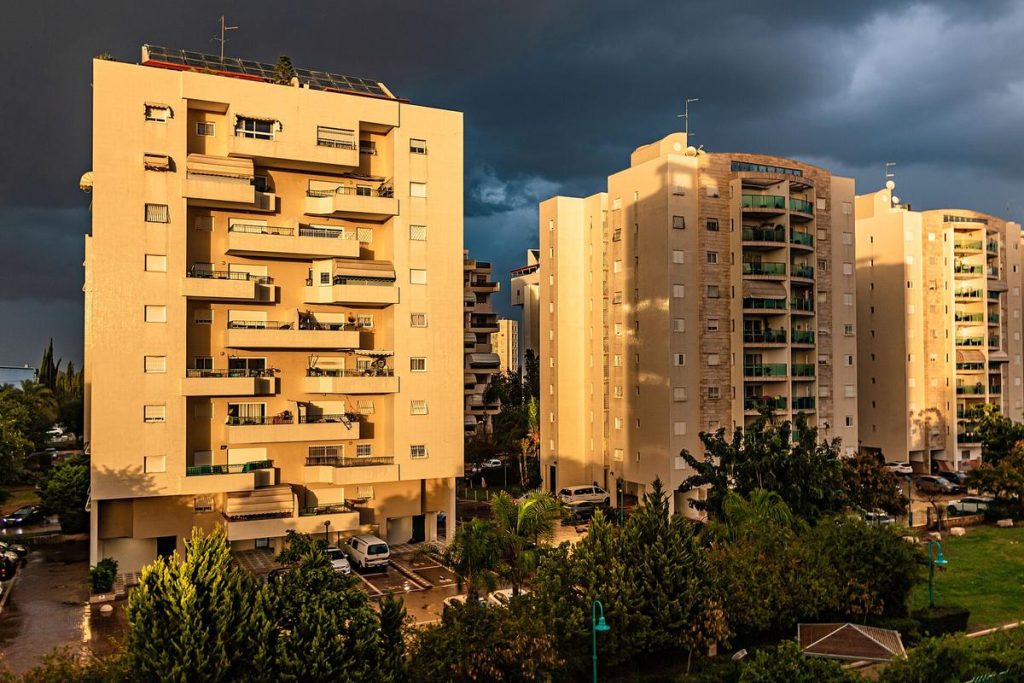
In Israel, responsibility for leaks in common areas falls to the vaad bayit, the building’s management body, not the individual owner. If the vaad bayit refuses or neglects repairs, you must issue a formal written demand, have a professional verify the source, then initiate a debt offset procedure or file a claim in district court. The cost of work is borne by the co-ownership, but the owner may advance expenses under strict conditions to secure reimbursement.
The legal boundary between common and private areas
Israeli co-ownership law, the HaTzavot LeVad Bayit, defines common areas as elements serving collective use or structuring the building. Unlike in the US, where regulations often impose uniform standards, the boundary here is technical and contractual. The vaad bayit is neither a landlord nor a mandatory insurer; it is a management body elected by co-owners. Its responsibility ends where the exclusive use of an apartment begins.
The critical point is the connection. For water, owner responsibility generally begins after the individual meter or at the junction with the main riser. For electricity, it begins after the apartment’s main breaker. If the leak originates from a pipe in a load-bearing wall or hallway, it is a co-ownership issue. If it comes from an interior faucet or a connection specific to your unit, it is your responsibility. This distinction is vital because it determines who pays the plumber. In the US, professional property managers often handle these interfaces; in Israel, the vaad bayit is run by volunteers, making decision traceability more fragile. You must know where your meter and breaker are located to immediately identify the zone of responsibility.
Vaad bayit silence and formal demand
When the vaad bayit ignores a repair request, silence is not a decision. You must create written proof of negligence. In Israel, there is no fixed legal deadline for reaction, unlike in some US jurisdictions. Case law applies a “reasonable time” based on the severity of the damage. For an active leak, this is a few hours to a few days. For slow infiltration, it may extend to a few weeks.
The process begins with written notification. Send a certified letter or an email with read receipt to the vaad bayit president. Specify the location, nature of the damage, and the request for urgent repair. Keep a copy. This differs from the US, where professional managers often have contractual obligations for results. Here, you must document every step to prove the vaad bayit was informed and refused to act. If the vaad bayit refuses to pay, consult our article on refusal to repair common area damage to understand the legal arguments. Proof of the formal demand is the cornerstone of any future dispute. Without it, the vaad bayit can claim it was not alerted.
Technical inspection and bedek bayit
If the leak’s origin remains uncertain, do not speculate. Hire a professional for a building inspection, or bedek bayit. This is not a routine check like in the US, but a technical verification initiated by the parties. The professional’s report determines if the leak comes from private plumbing or the common structure. This document is decisive for cost allocation.
The cost of this inspection is a frequent point of friction. If the origin is clearly private, the owner bears the cost. If the origin is in common areas, the vaad bayit must pay. If the origin remains ambiguous, the cost is often shared or advanced by the party who initiated the request, subject to reimbursement if responsibility is later established. The report must be detailed: photos, diagrams, material identification. In Israel, the bedek bayit does not have absolute legal value like a US inspection, but it is admissible in court if performed by a recognized expert. Verify that the professional is qualified to work on hydraulic or structural systems. This report transforms an opinion debate into a technical fact.
Advancing costs and the right of offset
If the vaad bayit refuses to act and damage worsens, you may advance repair costs. This advance is not a gift. You have the right to demand reimbursement from the vaad bayit if the leak is in common areas. The simplest mechanism is debt offset. You deduct the work cost from your monthly co-ownership fees.
Note, this is not rent withholding. You cannot withhold rent from your tenant to offset a vaad bayit debt. This is a transaction between you, as a co-owner, and the co-ownership. You must keep all invoices from the plumber and inspection professional. If the vaad bayit refuses to acknowledge the debt, you can file in court for a payment order. This mechanism is faster than a full trial. It allows you to recover funds without waiting months. The key is written proof: the initial formal demand, the technical report, and the invoices. Without these three elements, offsetting is difficult to enforce.
Insurance and the role of arnona
The arnona is the municipal housing tax paid to the city. It does not cover water damage. Do not confuse this tax with insurance. Building insurance is taken out by the vaad bayit or by each owner individually. Most buildings have a fire and liability policy covering water damage in common areas.
Check your policy. If the leak comes from a pipe in a load-bearing wall, the building insurance must indemnify damage to neighbors. If the leak comes from your apartment and floods the unit below, your liability insurance applies. Claims are filed with the vaad bayit insurer or your personal broker. Required documents include the technical report, damage photos, and repair invoices. In Israel, it is common for the vaad bayit to have a single broker for the entire building. Contact them directly. If you do not have personal insurance, you are exposed to the risk of not being indemnified if fault is attributed to you.
Dispute before the district court
If amicable offset fails, the recourse is the district court, or Beit Mishpat HaMerkazi. This is the competent jurisdiction for co-ownership disputes. The procedure is formal. You must hire a lawyer. Legal costs for this type of dispute can be significant, often exceeding the work cost if the dispute is minor.
Before trial, mediation is often imposed or strongly recommended. The court may order a mediation session to resolve the conflict without trial. This step is faster and less costly. If it fails, the trial begins. The court examines the evidence: the formal demand, the bedek bayit report, and invoices. It can order the vaad bayit to pay for work and legal fees. Trial duration varies but is generally shorter than in the US for similar amounts. The main risk is procedural cost. If the amount in dispute is low, the trial may cost more than the gain. Evaluate this risk before initiating proceedings.
Prevention: doud shemesh and mazgan
Prevention is less costly than litigation. The doud shemesh, or solar water heater, is a frequent source of leaks. This system is often shared or located on the roof. Maintenance is the vaad bayit’s responsibility if it is a collective system. If it is private, it is yours. Check the condition of connections and downpipes. A leak here can flood the entire building.
The mazgan, or air conditioner, generates condensation water. If the drain pipe is poorly connected or clogged, water can infiltrate the ceiling of the neighbor below. This is a private issue if the pipe is in your apartment, but it causes common damage. Clean filters and check the drain regularly. For an absent owner, it is crucial to entrust these checks to a trusted professional. Document the technical condition annually. This document will serve as proof in case of maintenance disputes. Negligence in maintenance is a major cause of insurance claim denial.
Property management and remote follow-up
Once the deed is signed, daily reality sets in. Who receives the keys? Who finds the tenant? Who responds when a pipe bursts on a Friday night? If you reside in the US, you cannot be on site to manage these emergencies. The vaad bayit does not manage apartment interiors. Your tenant is your only direct contact for private issues.
This is where property management becomes essential. We manage the entire cycle: tenant search, lease drafting, rent follow-up, and intervention in case of failure. We are on site in Netanya and can bring a plumber or electrician within hours. We handle disputes with the vaad bayit and neighbors. You do not have to call a lawyer remotely for a plumbing issue. To understand the legal aspects of acquisition, consult our guide to buying or selling in Israel. And if you encounter a blockage with the co-ownership, read our analysis on refusal to repair common area leaks. Property management is not a luxury; it is protection against remote inaction.
Always keep a digital copy of your formal demand and technical report. In case of dispute, these documents are your only proof of good faith and diligence. Never leave a leak without written documentation, even if it is minor. Written proof is the basis of any legal defense in Israel.

Gestion locative en Israël pour propriétaires francophones. Bureaux à Netanya, 26 Dizengoff. Une question sur votre bien ? Écrivez-nous.