Outdoor Camera in Herzliya: Approval from the Building Association
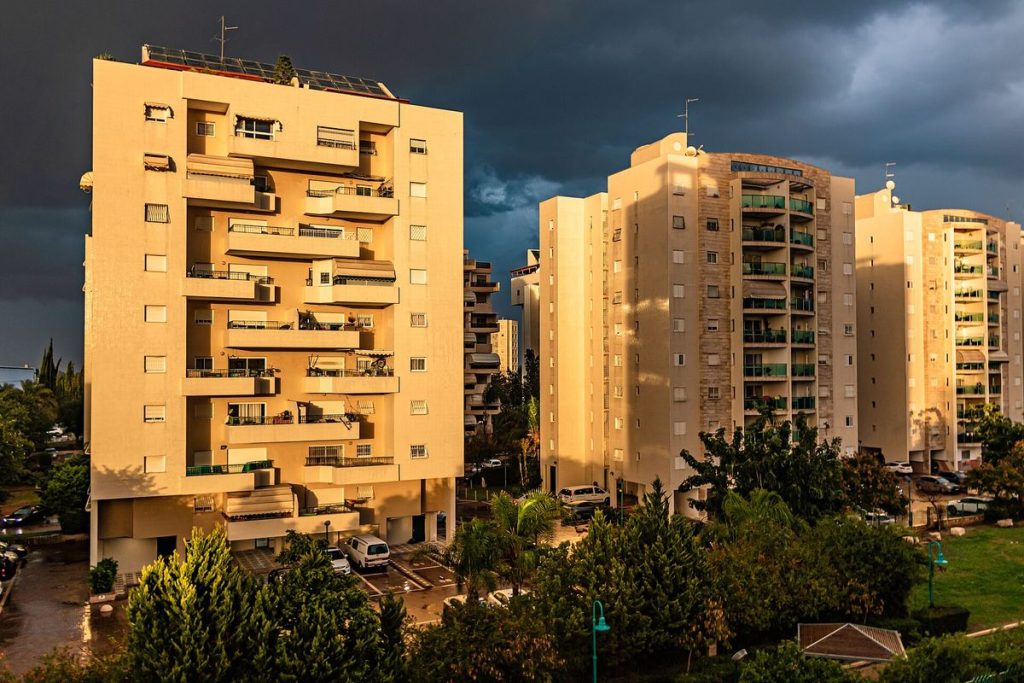
Installing an exterior camera on the facade of an apartment in Herzliya requires dual authorization: approval from the vaad bayit for modifying common areas and a permit from the municipality for visual and structural impact. The owner must submit a complete technical file, including a plan signed by a licensed engineer and proof of insurance, before any drilling. Refusing to follow this procedure exposes the installation to forced demolition and legal action for illegal construction.
The legal status of the facade and how it differs from the US
In the United States, building facades are often considered common areas, but modification rules are typically governed by strict national or state codes. In Israel, the definition of a « common area » (chachui) depends exclusively on the co-ownership contract and the specific internal regulations of each building. There is no single law governing all facades in the country. The vaad bayit acts as a local decision-making body here, holding veto power over exterior modifications, unlike many US homeowners’ associations where decisions are often more administrative.
The initial building permit plays a decisive role. If the original permit did not allow for exterior projections (balconies, antennas, cameras), any addition is considered a modification of the approved plan. In Herzliya, where building aesthetics are strictly controlled by the municipality, this distinction is crucial. A tenant or owner cannot act unilaterally. Israeli law protects the visual integrity of the building as a collective asset. If you own an inherited property, verifying these facade rights is part of managing the estate, as we detailed in our article on Renting an inherited apartment in a building with a vaad bayit in Israel. The absence of a clause allowing exterior modifications in the initial regulations makes the request to the vaad bayit mandatory, not merely a courtesy.
The application procedure to the vaad bayit: what the regulations require
Before approaching the vaad bayit, the owner must consult the building’s chikma (internal regulations). This document defines the thresholds for modification. Simple adhesive or surface screw fixation may be tolerated without a vote, while drilling into reinforced concrete requires a general assembly. The regulations often specify work hours and authorized material types. Ignoring this step is the primary cause of rejection.
The file must include a technical plan signed by an engineer licensed by the Israel Engineers Association. This plan must indicate the exact anchoring point, the diameter of the drill hole, and the type of fixation. Providing a photo of the camera is not sufficient. The distinction between a « simple fixation » and a « structural modification » is key to the procedure. If the installation requires penetrating the load-bearing structure, the file is more complex. We systematically verify the plan’s compliance with local standards before submitting it to the vaad bayit. This rigor avoids unnecessary back-and-forth. If the vaad bayit refuses a request, it must justify its decision in writing, citing specific articles of the internal regulations. This refusal can be challenged in district court if the decision is deemed arbitrary, but prevention through a solid file remains the most effective path.
The role of the bedek bayit: validating integrity before drilling
Before any drilling, a technical inspection of the facade is required to ensure the load-bearing structure can support the camera’s weight and potential vibration. This inspection, performed by a qualified professional (a bedek bayit in the broad sense of technical expertise, or a civil engineer), focuses on structural integrity rather than aesthetics. In the US, this might be referred to as a usage inspection; here, it is a validation initiated by the parties to avoid irreversible damage to the building.
The expert checks the concrete thickness, the presence of rebar at the drilling point, and the condition of the exterior coating. If the facade has cracks or water infiltration, installation is prohibited until repairs are made. This step is distinct from a simple visual inspection. Who finances this visit? In most cases, it is the owner requesting the installation. The vaad bayit may require this expertise at its own expense if it doubts the general solidity of the building, but this is rare for a single camera. The expert’s report is attached to the municipal file. Without this report, the Herzliya municipality will refuse the permit. This precaution protects the owner against future claims from neighbors in case of console collapse or water leaks caused by drilling.
Herzliya municipality approval and local standards
Herzliya is a city where urban planning is strictly controlled. The municipality’s planning and construction department must approve any exterior modification visible from public space. This approval is distinct from the vaad bayit consent. Even if the vaad bayit accepts, the municipality can refuse if the camera alters the general appearance of the street or creates an undesirable shadow on the public way.
Specific constraints in Herzliya include the color of the housing (often mandated to harmonize with the facade) and the installation height. The main risk is reclassification as illegal construction. A camera installed without a municipal permit is considered an unauthorized structure. The municipality can order its demolition at the owner’s expense and impose a fine. This fine is often proportional to the value of the illegal construction, which can be significant. We recommend obtaining municipal approval before signing the contract with the installer. The order of operations is therefore: vaad bayit approval, then municipal permit, then work. Reversing this order exposes the owner to demolition and reconstruction costs. This procedure is longer than in the US, where small projections are sometimes tacitly tolerated, but it guarantees the legality of the installation.
Data management and neighbor privacy
Recording public or semi-public images is governed by Israel’s Personal Data Protection Law. The owner is responsible for the collection and storage of these images. They must inform neighbors of the camera’s existence, ideally via a notice posted in the building and written notification. The field of view is a critical point. If the camera films the interior of a neighbor’s apartment, their private courtyard, or their parked car, it violates privacy.
The owner must adjust the angle so it captures only their own door and apartment entrance. In case of dispute, the burden of proof lies with the owner to demonstrate that the angle is restrictive. A data leak (for example, if images are publicly accessible on the internet) exposes the owner to criminal and civil lawsuits. Liability is personal. We advise limiting image retention to a reasonable duration, defined by the device’s privacy policy. The vaad bayit may require a clause in the regulations prohibiting cameras that film common areas beyond what is strictly necessary. This management is stricter than in the US, where rules are sometimes less clear for small residential installations.
Financing the work and cost allocation
Cost allocation is clear: equipment and installation are the owner’s responsibility. However, if the work damages the exterior facade coating (paint, plaster), the repair is a charge on the common areas. The vaad bayit may refuse to pay for this repair if it is caused by an unauthorized or poorly executed installation. To avoid this conflict, the owner must require the installer to have liability insurance covering damage to third-party property.
If the installation is approved and executed correctly, future repairs to the camera mount are the owner’s responsibility. In case of forced demolition by the municipality, the owner bears all costs. We recommend setting aside a reserve fund for potential removal. There is no automatic separate account for this type of expense. The vaad bayit may propose a deduction from co-ownership fees if the owner cannot prove their insurance, but this is an exceptional practice. Transparency on costs avoids tensions with neighbors, who pay the building’s fees. A financial conflict can degrade the relationship with the vaad bayit, complicating other future requests, such as leak repairs, a topic we addressed in our article on Vaad bayit Herzliya refuses to repair the roof leak.
The technical file to present: document checklist
An incomplete file is the number one reason for delays. Here is the list of documents to attach to the request to the vaad bayit and the municipality:
- The official application form, signed by the owner and, if applicable, the tenant.
- The technical plan signed by a licensed engineer, indicating anchoring points and materials.
- The structural inspection report (bedek bayit) validating the facade’s solidity at the drilling point.
- A copy of the contract with the licensed installer, including the liability clause.
- The installer’s liability insurance certificate, valid for the duration of the work.
- The camera’s technical sheet, specifying its dimensions, weight, and field of view.
- Proof of payment of the arnona and vaad bayit fees to prove the owner’s standing.
This file must be submitted in two copies: one for the vaad bayit and one for the municipality. We verify the accuracy of the engineer’s and installer’s contact details before sending. An error in name or registration number leads to immediate rejection. The file must be written in Hebrew, or accompanied by a certified translation if the original documents are in English. This documentary rigor is the key to quick approval.
Property management and post-installation follow-up
Once the camera is installed, the owner must ensure the tenant is informed of its presence and operation. The lease agreement must mention the camera’s existence and the owner’s right to review images in case of an incident. The tenant cannot deactivate the camera without the owner’s consent. In case of a dispute between the tenant and a neighbor regarding the camera, the owner is the primary point of contact.
We recommend entrusting the management of this aspect to a property management professional. A local manager can ensure the camera functions, images are saved, and legal obligations are met. They can also intervene in case of malfunction or damage. Technical follow-up is continuous: the camera must be cleaned, its angle checked, and its power supply monitored. Lack of maintenance can render the camera unusable or, worse, obsolete compared to current security standards. This proactive management avoids surprises and protects the value of the real estate investment.
Before installing an exterior camera in Herzliya, verify your building’s internal regulations and obtain written approval from the vaad bayit and the municipality. A complete technical file, including an engineer’s plan and insurance, is essential to avoid refusals and fines for illegal construction. Data management and neighbor privacy must be strictly respected to prevent any legal dispute.

Gestion locative en Israël pour propriétaires francophones. Bureaux à Netanya, 26 Dizengoff. Une question sur votre bien ? Écrivez-nous.