Penthouse Pool Closed: How to Contest Syndicate Fees in Israel
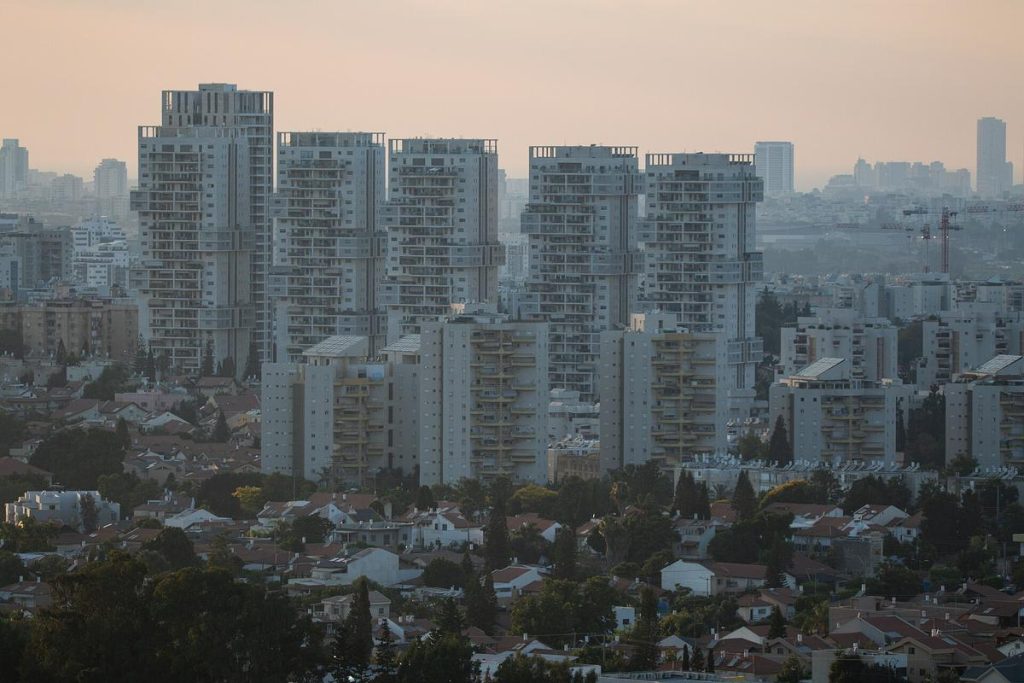
You cannot pay maintenance fees for a pool that you do not use and that is officially closed. In Israel, the allocation of common charges depends on the tabou and the bylaws of the vaad bayit, not on a uniform law. If the pool is private or if its closure stops active services (electricity, water treatment), the manager must adjust the invoice. You have the right to request supporting documents and to withhold payment for the disputed line item if the manager cannot prove the actual expense.
The penthouse pool: common property or exclusive use in the vaad bayit bylaws
The first step is to determine the legal nature of the pool. Unlike the United States, where state laws often define common areas strictly, Israel relies on the deed of ownership and the tabou. If the pool is not listed as a common asset in the tabou, it is considered private. In this case, the penthouse owner bears the maintenance costs alone. The manager cannot bill other floors for equipment that is not their property.
- Review the deed of acquisition. If the document lists the pool as a « private annex » or excludes it from the list of common areas, any cross-billing is invalid.
- Check the minutes of the vaad bayit meetings. A specific resolution may assign maintenance solely to the penthouse owner. Without this explicit vote, the cost is divided among all owners pro rata based on their share, even for equipment not used by some.
- Examine the building bylaws. They often define the allocation of fees. If the pool is classified as « common equipment, » its closure does not automatically remove the charge, but it changes the nature of the expenses (from operation to simple preservation).
This distinction is crucial. If the pool is private, your objection is simple: you have nothing to pay. If it is common, the discussion focuses on the amount of actual fees incurred during the closure period. Do not confuse ownership of the equipment with the obligation to pay for its inactive operation.
The impact of closure on vaad bayit billing
Common charges cover routine maintenance and shared costs. In Israel, monthly invoices from the vaad bayit are often adjusted retroactively based on actual expenses. There is no fixed « budget » in the same way as in many US buildings. If the pool is closed by the manager’s decision for safety or cost reasons, electricity and water treatment fees must disappear from the monthly invoice. The manager must provide a detailed statement of expenses incurred.
- If the pool is out of service, any budget line related to active maintenance (pumping, filtration, heating) must be zero. The owner can demand the removal of this line if it persists while the installation is inactive.
- The difference with the US is notable: here, the monthly prepayment is an estimate. If the actual expense is lower at year-end, the manager must refund the surplus. Closure should therefore lead to an immediate reduction in prepayments or a negative adjustment.
- Be aware of « supervision » fees. If the manager bills for human surveillance while the pool is closed and locked, this charge is debatable. Security is the overall responsibility of the vaad bayit, but it does not justify a specific surcharge for unused equipment.
The owner must verify if the closure is temporary or permanent. A seasonal closure stops energy costs. A permanent closure due to age may lead to demolition or safety securing costs, which are distinct common charges from operation. Always distinguish between the cost of operation and the cost of preservation.
Checking the manager’s accounts: access to documents and proof
In Israel, the owner has the right to consult the accounting books of the vaad bayit. The manager must produce invoices from service providers (water treatment, electricity, labor) for each month the pool was closed. If the manager bills a flat « pool maintenance » fee despite the closure, they must justify this amount with documents. In the absence of a provider invoice, the charge is unjustified.
- Request detailed invoices. The manager cannot rely on a global amount. You have the right to see who was paid, for what, and when.
- If the manager maintains billing without proof, you can refuse to pay the disputed portion. It is possible to deposit the amount with the court or block it until clarification. Do not pay under threat of late fees if the dispute is valid.
- Having a professional document the pool closure and the absence of active maintenance strengthens your position. The bedek bayit (technical inspection) is not mandatory for this dispute, but a report from an expert attesting that the equipment is inactive serves as objective proof.
This right of access to documents is a powerful tool. It allows you to verify if the manager has actually incurred expenses or is applying a fixed rate out of habit. Many Israeli managers bill flat rates without connection to reality. Checking supporting documents is the only way to ensure this. If the documents are incomplete, the manager is lacking in transparency.
The role of the mamad and security: why is the pool closed?
The closure of the penthouse pool is often linked to fire safety and the presence of the mamad. If the pool is located in a shared space or near the mamad, safety standards may require its closure in case of risk. The owner must verify if this closure is a legal obligation or a discretionary decision by the manager. If it is due to a safety defect attributable to the penthouse owner, that owner must bear the costs of repair.
- Request the minutes of the meeting where the closure decision was made. The reason is essential. A closure due to danger requires securing measures, but not necessarily water operation.
- The mamak (protected common space) has no direct link to the pool, but building security management is the responsibility of the vaad bayit. If the closure is general (winter or electrical failure), operating charges cease.
- Check if the closure is related to building works. In this case, charges may be suspended or reduced. The manager must prove that the closure is not simple negligence on their part, which would entail different liability.
Security is a sensitive topic in Israel. The mamad is a mandatory secure room in many buildings. If the pool hinders access or security to this room, its closure is justified. But this does not mean you must pay for its active maintenance. The distinction between « securing » and « operation » is the key to your objection. Do not let the manager confuse these two notions to maintain their revenue.
Disputing the invoice: written procedure and formal notice
In Israel, disputes are handled in writing, ideally via certified mail or email with read receipt. The letter must specify the months concerned, the disputed amount, and the reason (pool closure). The owner must demand the production of underlying invoices. If the manager does not respond or maintains billing, the owner can suspend payment for the disputed line item.
- Send a formal demand letter. Clearly state that you refuse to pay the unjustified portion. Attach proof of closure (photos, manager letters, meeting minutes).
- Set a response deadline. If the manager does not provide proof within this deadline, you have the right to block payment. In Israel, withholding payment is an effective pressure tool if justified.
- Keep a copy of all exchanges. In case of future litigation, these documents prove your good faith and the manager’s good faith. Transparency is required on both sides.
Written procedure is essential. A simple phone call is not enough. The manager must have a written record of your dispute. If you are a tenant and not the owner, you must inform your owner, as they sign documents with the manager. However, you can act as a representative if you have power of attorney. Clarity of message is more important than politeness. Be factual and direct.
GII’s role: dispute management and owner protection
As a property management company, we manage relationships with the vaad bayit daily. We verify monthly invoices before payment. If a charge line seems abnormal, we request proof from the manager. We do not pay blindly. This vigilance protects the owner’s assets, whether they are present in Israel or residing abroad.
- We analyze the consistency of charges relative to the actual state of equipment. If the pool is closed, we dispute operating fees.
- We manage communications with the manager. We send formal demands and follow up on responses. The owner does not have to fight the building administration alone.
- We ensure accounting follow-up. We verify annual adjustments. If the manager overcharged, we demand a refund of the surplus.
This active management is particularly important for owners living in the United States. They cannot visit the site to check the state of the pool. We serve as their eyes and ears. We know local manager practices and legal pressure tools. If you own an apartment in Israel, it is wise to entrust charge management to a professional who knows the system. You can consult our article on Common charges before delivery: paying the manager in Israel? to understand initial obligations.
Alternatives and long-term solutions
If the pool is permanently closed and will no longer be operated, the vaad bayit may decide to transform or demolish it. This decision must be voted on in a meeting. The cost of transformation is a common charge, but it must be justified by a detailed quote. If the pool is private, the penthouse owner must bear these costs alone. In this case, other owners have nothing to pay.
- Propose a resolution in the meeting to clarify the pool’s status. If it is unused, it is better to classify it as « dormant common property » or transfer it to private ownership.
- Negotiate with the manager a reduction in charges if the closure is prolonged. The manager’s good faith must be tested by the transparency of their accounts.
- Consider mediation if the dispute persists. In Israel, mediation is often faster and less costly than a trial. It allows finding an agreement on the amount of charges.
The long-term solution depends on the future use of the space. If the pool is an added value for resale, it must be maintained in good condition. If it is a pure burden, it must be removed or privatized. The decision must be collective and informed. Do not let the status quo last indefinitely. A closed and neglected pool devalues the building. Act now to protect the value of your property. You can also consult our guide on Common charges and manager: vacancy after early departure in Israel to understand the impact of charges on vacancy.
| Pool Status | Cost Responsibility | Action in Case of Closure |
|---|---|---|
| Private (per tabou) | Penthouse owner only | Total dispute by other owners |
| Common (per bylaws) | All owners pro rata | Dispute of operating fees (electricity, water) |
| Common with specific resolution | Penthouse owner only (if voted) | Verification of vote validity |
Never pay a pool charge if the equipment is closed and the manager cannot prove the actual expense. Demand detailed invoices. If you are an owner in the US managing your property in Israel, entrust this verification to a professional like GII. We know local manager practices and protect your financial interests. For more information on managing your property, discover how to rent out your apartment from the US with peace of mind.

Gestion locative en Israël pour propriétaires francophones. Bureaux à Netanya, 26 Dizengoff. Une question sur votre bien ? Écrivez-nous.