Renewing Your Penthouse Insurance: The Absent Owner in Israel
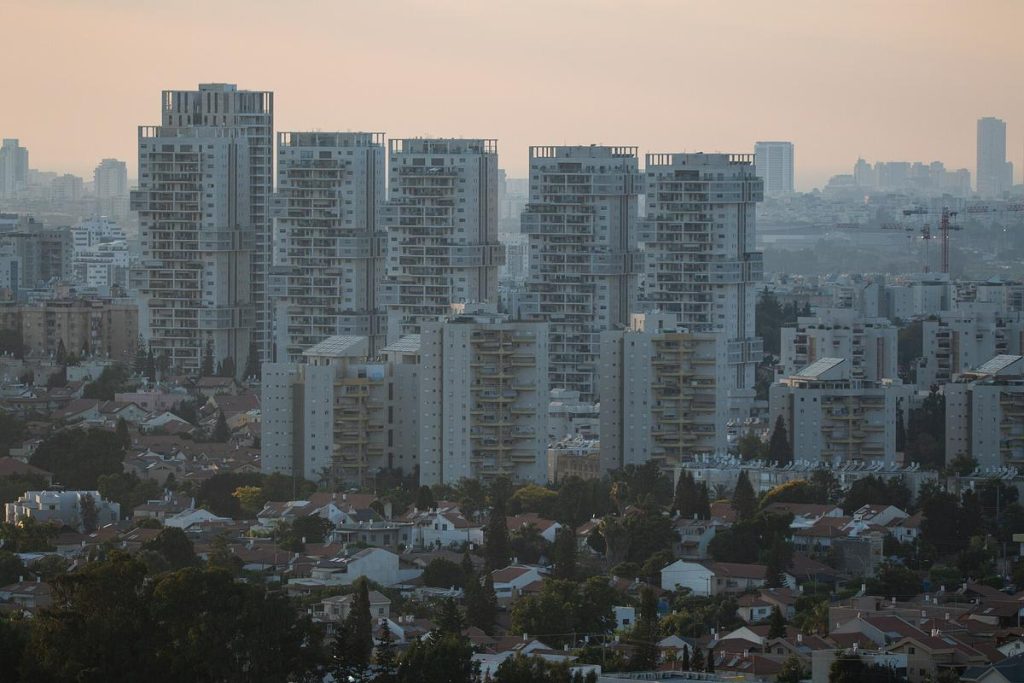
Renewing the insurance for a penthouse remotely requires clearly distinguishing coverage for common areas, managed by the vaad bayit, from that of private equipment such as the doud shemesh. Israeli insurers reimburse reconstruction costs, not market value, which requires precise declaration of outdoor amenities. We manage the appointment of local agents and the collection of technical certificates to secure your file without your physical presence.
The specific nature of the property: why a penthouse is not a standard apartment
A penthouse in Netanya or Tel Aviv differs structurally from a standard apartment. The living space often extends outdoors: roof terraces, wooden or metal pergolas, and sometimes private pools. These elements change the nature of the risk. A standard apartment is protected by the building’s structure; a penthouse is directly exposed to the elements.
Fire risk is increased by the presence of combustible exterior materials and solar heating systems. The doud shemesh, installed on the roof, is an electrical and hydraulic unit exposed to weather. Its failure can cause a fire or flooding. The insurance policy must therefore cover these outdoor installations, which standard contracts for interior living spaces do not.
The legal distinction between common areas and private areas is crucial. In the United States, condominium associations often cover exterior elements. In Israel, the boundary is blurrier for a penthouse. Is the roof supporting your terrace a common area or a private one? If it is private, the vaad bayit insurance does not cover it. You must verify if your individual contract includes the private roof and support structures. A confusion here leads to claim denial in the event of major damage.
- Structural difference between a standard upper floor and a penthouse: roof terraces, pergolas, private pools.
- Increased fire risk due to exterior materials and exposed solar heating systems (doud shemesh).
- Legal distinction between the building’s common areas and the penthouse’s private areas in the insurance policy.
Verifying equipment coverage: the doud shemesh and the mazgan
Solar water heaters are often excluded from standard policies. They are considered complex technical equipment. You must verify the existence of a specific extension for outdoor installations. Without this clause, the insurer will refuse to cover the repair of the doud shemesh in case of lightning or freezing.
Split or central air conditioning systems (mazgan) require a clear distinction. Equipment insurance covers breakage or theft of the indoor and outdoor units. Liability insurance covers damage caused to third parties if a refrigerant leak or a falling unit damages a neighbor’s property. These two coverages are distinct and must be activated separately.
Coverage for water damage caused by a burst pipe in the doud shemesh is a frequent point of friction. Who pays for the repair of the ceiling in the apartment below? If the leak comes from private equipment, your insurance must compensate the neighbor. If the pipe runs through common areas, the vaad bayit must intervene. It is essential to document the exact location of the pipes during renewal to avoid liability disputes.
- Solar water heaters are often excluded from standard policies: verify the specific extension for outdoor installations.
- Split or central air conditioning systems (mazgan): distinguish equipment insurance from liability insurance.
- Coverage for water damage caused by a burst doud shemesh pipe: who pays for the repair of the ceiling in the apartment below?
The role of the vaad bayit and declaration obligations
The vaad bayit is obligated to insure the building’s common areas. This policy covers the structure, stairs, elevators, and main roof. However, it does not cover damage to penthouses if it is linked to private elements. For example, if a leak in the common roof damages your private terrace, the vaad bayit insurance must cover the roof repair, but your individual insurance must cover damage to your outdoor amenities.
Declaring the building’s value to the vaad bayit directly impacts the collective premium. If the declared value is too low, the premium is reduced, but coverage in the event of major damage (total building fire) will be insufficient for reconstruction. As an owner of a valuable property, you must ensure the building’s overall value is correctly assessed to protect your investment.
Frequent conflicts arise when the vaad bayit insurance refuses to pay a claim by citing the penthouse owner’s fault. For example, if you blocked a smoke vent or modified the roof structure without authorization, the insurer may cite gross negligence. We systematically check fault clauses in collective policies to identify these risks and alert you to modifications to avoid.
- The obligation for the vaad bayit (condominium association) to insure common areas: verify if it covers damage to penthouses caused by common roof leaks.
- Declaration of the building’s value to the vaad bayit: the impact on the collective premium and individual coverage.
- Frequent conflicts: when the vaad bayit insurance refuses to pay a claim by citing the penthouse owner’s fault (e.g., obstruction of a vent).
The remote claim procedure: who acts on your behalf?
In the event of a claim, the speed of the declaration is critical. As an absent owner, you cannot sign expert reports on site. We appoint a local agent authorized to act on your behalf. This agent signs claim declarations and expert reports with the insurer. They transmit signed documents digitally or via secure mail.
The building inspection (bedek bayit) must be performed by a professional accredited by the insurer. A simple plumber or electrician is not sufficient. The insurer requires a detailed technical report, written by a recognized expert, to assess the extent of damage and repair costs. We coordinate this inspection and verify that the report mentions all damaged elements, including outdoor amenities.
Document transmission is a critical point. Israeli insurers often require specific forms and compliance certificates. We collect these documents on site: repair invoices, dated photos, expert reports. We ensure the file is complete before submitting it to the insurer. An incomplete file leads to significant processing delays or even claim denial.
- Appointment of a local agent (our agency) to sign expert reports and claim declarations.
- The importance of the building inspection (bedek bayit) by a professional accredited by the insurer, not just a plumber.
- Document transmission: Israeli insurers often require specific forms and compliance certificates that we collect on site.
The value of the property: calculating the insurance amount without error
The difference between market value and reconstruction value is fundamental. Insurers pay the cost of reconstructing the property, not its selling price. Market value includes the land value, which is not reconstructed. Reconstruction value includes the cost of materials and labor to rebuild the apartment identically.
Labor costs in Israel are significantly higher than in the United States. An estimate based on US prices systematically underestimates the cost of renovating a penthouse. We use local rates for artisans and construction companies to calculate the reconstruction value. This method guarantees that coverage is sufficient to cover actual reconstruction costs.
Including outdoor amenities (pool, terraces, pergolas) in the declared value is essential. Omitting them is the main cause of partial claim denials. If your terrace is made of exotic wood and you did not declare it, the insurer will refuse to cover its repair. We list all outdoor amenities and their replacement cost to include these elements in the declared value.
- The difference between market value (selling price) and reconstruction value: insurers pay for reconstruction, not market price.
- Labor costs in Israel: why an estimate based on US prices systematically underestimates the cost of renovating a penthouse.
- Inclusion of outdoor amenities (pool, terraces, pergolas) in the declared value: omitting them is the number one cause of partial claim denials.
Specific coverage exclusions for high-end buildings
Exclusion of damage caused by weather on uncovered surfaces (terraces, balconies) is frequent. Verify coverage against wind and hail. If your pergola is destroyed by a storm, the insurer may refuse coverage if the « storm » clause is not activated. This extension is often optional and costs extra.
The « wear and tear » clause is a point of caution. Insurers do not reimburse the replacement of old equipment unless a specific extension is purchased. A mazgan older than 10 years may be considered worn out. In case of failure, the insurer will pay for repair, but not for replacement with a new model. If you want coverage for replacement, you must subscribe to a « new for old » extension.
Non-coverage of damage caused by undeclared tenants is a major risk. If the penthouse is rented and you have not informed the insurer, any claim related to rental activity will be refused. Home insurance does not cover professional risks. We update the contract if the property is rented, specifying the nature of the activity and the tenants, to maintain the validity of the coverage.
- Exclusion of damage caused by weather on uncovered surfaces (terraces, balconies): verify coverage against wind and hail.
- The « wear and tear » clause: insurers do not reimburse the replacement of old equipment (e.g., mazgan older than 10 years) unless a specific extension is purchased.
- Non-coverage of damage caused by undeclared tenants: the importance of updating the contract if the penthouse is rented.
Documents to provide for annual renewal
The compliance certificate for the doud shemesh is often required. Some insurers ask for a recent maintenance certificate to prove the equipment is in good working order. Without this certificate, the insurer may refuse coverage in the event of a claim linked to the installation. We request this certificate from the maintenance technician during the annual visit.
Proof of an alarm or video surveillance system has a direct impact on premium reduction. Insurers grant a premium discount if the property is equipped with certified security devices. We provide compliance certificates for these systems to obtain this discount. This is a direct financial advantage for the owner.
The arnona (municipal tax) statement is used by some insurers to verify the address and actual area of the property. The arnona is calculated based on the area declared to the city hall. If the insured area does not match the arnona area, the insurer may contest the validity of the contract. We compare these two documents to ensure the consistency of the file.
- The compliance certificate for the doud shemesh: some insurers require a recent maintenance certificate.
- Proof of an alarm or video surveillance system: direct impact on premium reduction.
- The arnona (municipal tax) statement: some insurers cross-reference data to verify the address and actual area of the property.
| Element | Standard Coverage | Necessary Extension |
|---|---|---|
| Doud shemesh | Excluded | Outdoor Installation |
| Mazgan | Repair only | New for Old Replacement |
| Terrace / Pergola | Excluded (Weather) | Storm Coverage |
| Tenant | Excluded (Professional Risk) | Activity Declaration |
In Israel, the insurer may require a physical inspection of the property before validating a major claim. As an absent owner, you must designate in writing a person authorized to open the apartment and allow experts to enter. We manage this logistics to avoid any processing delay. If your property is rented, consult our guide on renting from abroad to understand the impacts on liability. For technical equipment, also read Penthouse smart home failure: liability of the absent owner in Israel and Private penthouse elevator maintenance: owner liability to identify specific risk areas.

Gestion locative en Israël pour propriétaires francophones. Bureaux à Netanya, 26 Dizengoff. Une question sur votre bien ? Écrivez-nous.