Renting Your Vacant Apartment in Israel on a Short-Term Basis: Fees
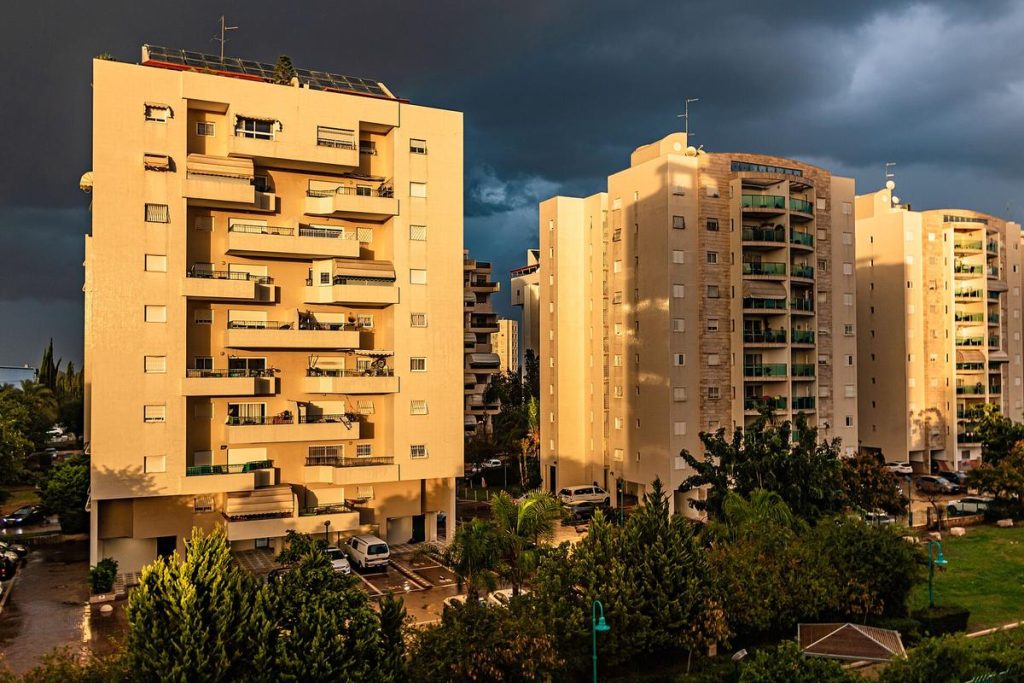
Converting a vacant apartment into a short-term rental in Netanya requires specific municipal authorization and prior tax registration. This is not a standard residential lease; it is a commercial activity subject to VAT and strict safety standards. Without this process, you risk penalties and the retroactive reclassification of your income. GII manages this administrative and operational transition for you.
The legal boundary: tourist rental vs. residential lease
In Israel, the distinction between a standard residential lease and a tourist rental is clear. Residential leases, governed by housing rental laws, protect tenants over the long term. Tourist rentals, however, are commercial activities. Local authorities define this activity by the length of stay (generally less than 30 days) and the intent to rent to non-residents or residents for temporary stays.
Before listing on Booking.com or Airbnb, you must register with the reshut ha-misim (tax authority). This step is not optional. It changes your status from a passive owner to a sole proprietor. If you rent without this registration, you expose your assets to major risks. The tax authority can retroactively reclassify your income and apply penalties distinct from those for standard filing delays. Unlike in some countries where small landlords may be exempt from VAT below certain thresholds, Israeli logic requires immediate transparency from the first night billed.
We verify the compliance of your file before any listing goes live. We prepare the activity declaration and obtain the appropriate tax identification number for this activity. This procedure ensures that your income is treated as commercial income, which allows for the recovery of VAT on your expenses, a significant benefit we detail further below. Never start a short-term rental based on a simple residential lease contract. Israeli case law is strict: commercial intent overrides the form of the contract.
Municipal approval and specific arnona
In Netanya, as in most Israeli cities, the city hall has the power to control building usage. To operate a tourist rental, you must obtain an operating permit. This process involves submitting the apartment floor plan and proving that it meets fire safety and evacuation standards. The city’s technical department inspects the premises. This is not a mere administrative formality; it is a validation of the space’s compliance with intensive use.
The direct financial impact is felt in the calculation of arnona, the municipal housing tax. As long as the apartment is rented short-term, it is reclassified as commercial or tourist use. The applicable arnona rate is therefore higher than the residential rate. We calculate this difference to integrate this cost into your cash flow forecast. Ignoring this rate change can create a significant budget gap over the year.
Another point of caution concerns the vaad bayit, the building management committee. Before launching the activity, we review the building bylaws. Many buildings in Netanya explicitly prohibit short-term rentals in their internal regulations. If this is the case, no municipal permit will suffice. The vaad bayit can block operations and initiate legal action for violating building rules. We analyze these bylaws and, if necessary, negotiate with the management to modify the clause or obtain an exemption. This step is crucial because a dispute with the building management can paralyze your activity for much longer than a tax audit.
Liability insurance: mandatory coverage
Standard home insurance does not cover commercial activities. If you rent your apartment to tourists, you must purchase a specific professional liability insurance policy. This insurance is mandatory. It covers damages caused to vacationers’ belongings, third parties (such as neighbors), and the apartment itself in the event of an accident.
A standard home insurance policy automatically excludes coverage if the apartment’s use is modified. In the event of a claim, the insurer would cancel the contract and refuse indemnification, leaving you alone to face the damages. We systematically check the “commercial use” clause in your current contract. If it is absent or restrictive, we request quotes from insurers specializing in hospitality and tourism.
The coverage must include tenant liability. For example, if a vacationer spills red wine on the apartment’s marble floor, the insurance must cover the repair. Similarly, if a fire breaks out and spreads to the neighboring apartment, the coverage must be sufficient to cover damages to third-party property. We compare deductibles and coverage limits to choose the most suitable coverage for your property’s risk profile. This policy is a prerequisite for obtaining the municipal permit and for listing on major booking platforms, which require proof of adequate coverage.
Space setup: local standards and equipment
Safety is the absolute priority in an apartment intended for tourist rental. The presence of a mamad (safe room) or, failing that, a mamak (shared protected space on the floor) is a legal and technical requirement. For foreign tourists, safety is a major selection criterion. Booking platforms display this information. If your apartment does not have a mamad, we verify the condition of the building’s mamak and its compliance with current standards.
The doud shemesh (solar water heater) must be inspected by a professional. Intensive use by tenants who do not know the installation increases the risk of leaks or malfunction. We arrange a technical inspection to check the condition of the pipes, seals, and tank. A doud shemesh failure in the middle of winter or summer can render the apartment uninhabitable and generate immediate negative reviews.
The mazgan (air conditioner) must be sized to support high turnover. Frequent start and stop cycles wear out components quickly. We recommend preventive maintenance before the high season. Unlike continuous residential use, short-term rentals require increased robustness. We also verify the presence of smoke and gas detectors, which require mandatory testing. These devices are not comfort options but safety conditions that protect your liability.
Remote operational management: effective delegation
You reside in the United States. You cannot manage check-ins and check-ins on the ground. Delegation is therefore total. We select a local service provider, either a specialized agency or an independent manager, based on your budget and requirements. The division of responsibilities must be clear in the management contract. In the event of a claim, who pays for the repair? We negotiate these clauses to protect your assets.
The check-in and check-out process is automated. We use secure key boxes or digital code locks. Each access is tracked. If a tenant stays beyond the scheduled departure date, we have time-stamped proof of their entry and exit. This traceability is essential for managing disputes and incidents.
For urgent repairs, we designate a single point of contact, available 24/7. Whether it is a plumbing failure, a power outage, or a doud shemesh issue, this local contact intervenes quickly. We do not bother you with technical questions. We manage the relationship with tenants, cleaning providers, and technicians. You receive a concise monthly report: income, expenses, incidents. This management method avoids communication errors and ensures service continuity. For more details on this organization, see our rental management offer.
Taxation: income declaration and VAT
Short-term rental income is taxed as commercial income, not as rental income. Income tax (mas hachnasa) applies to net profit, after deducting allowable expenses. This includes management fees, repairs, insurance, and building charges.
You are subject to VAT on accommodation services. Once your turnover exceeds the legal threshold, you must charge VAT for each stay. The major advantage is the recovery of VAT on your purchases. Vaad bayit fees, repairs, furniture, and consumables are billed with VAT. You can recover this VAT on your quarterly declaration. We prepare these declarations to maximize your cash flow.
Each stay must be subject to an invoice compliant with reshut ha-misim requirements. The invoice must mention the tenant’s name, the period, the net amount, the VAT, and the gross amount. We automate this invoice generation. In the event of a tax audit, we produce all supporting documents. This administrative rigor avoids penalties and reclassifications. If you have inherited an apartment and are considering this activity, read our guide on the inventory of an inherited apartment for rental in Israel to understand the specifics of the estate before starting.
Covering charges: analysis of real profitability
The central question is whether the income covers the fixed costs. We establish a monthly dashboard. Fixed costs include vaad bayit fees, arnona, and management fees. Gross income is the rent collected. Net margin is the difference.
We integrate turnover costs, which are often underestimated. Professional cleaning after each departure, linens, accelerated furniture wear, and preventive maintenance weigh heavily. A short-term rental apartment wears out three times faster than a residential lease apartment. We provide for a renovation fund to replace furniture and equipment before they become obsolete.
Vacancy periods are inevitable. In the low season, the occupancy rate drops. We model these scenarios to verify that fixed costs remain covered even in the event of low occupancy. If income is not sufficient to cover costs, we adjust the strategy: price increases in the high season, reduction of management costs, or a switch to a residential lease. To understand the exact composition of your fixed costs, read our article on building charges and arnona for a vacant apartment in Israel. This analysis is the foundation of your decision.
Before launching your short-term rental, request a complete financial simulation from GII. We calculate your potential income, your tax and municipal charges, and your real net margin. This simulation allows you to make an informed decision, without tax surprises or municipal penalties. We manage the entire process, from authorization to invoicing.

Gestion locative en Israël pour propriétaires francophones. Bureaux à Netanya, 26 Dizengoff. Une question sur votre bien ? Écrivez-nous.