Rising Homeowners Association Fees in Israel: An Analysis of Costs
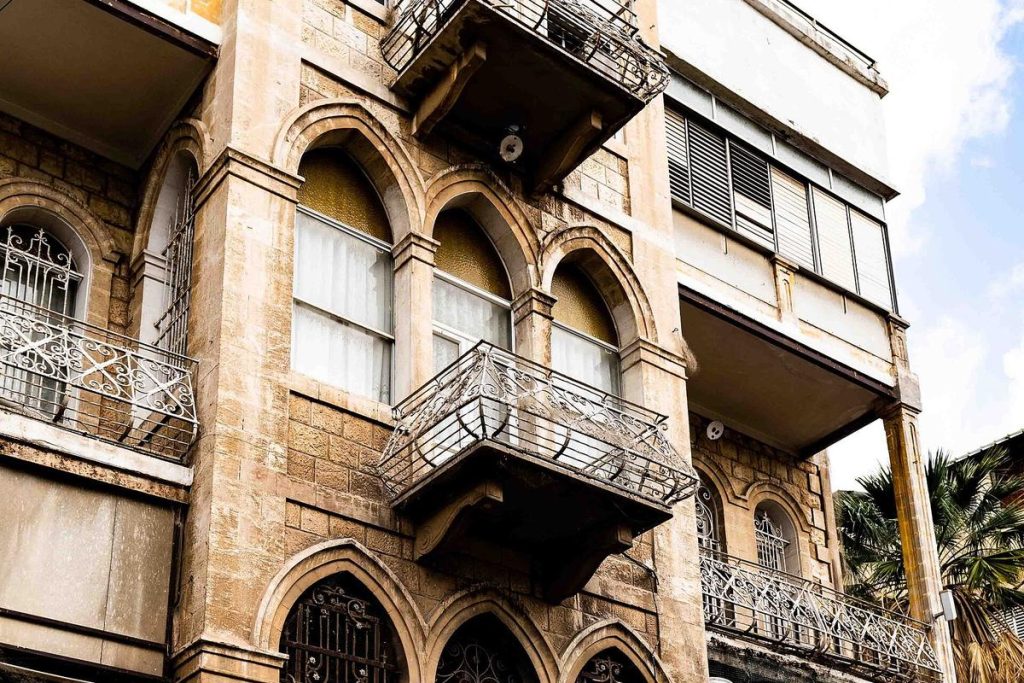
To respond to an increase in vaad bayit fees, you must first demand detailed invoices and the minutes of the general assembly that voted for the increase. Check if the rise stems from an external service provider or an internal decision by the building committee. If the increase is unjustified, you can contest the decision or request a refund of any improperly collected funds.
Analyze the structure of vaad bayit expenses
A sudden increase in fees requires a precise breakdown of expense items. The vaad bayit does not operate like a typical homeowners association in the United States where fees are strictly governed by standardized bylaws. In Israel, management can be more informal or delegated to a management company, which changes the visibility of costs.
We distinguish two types of financial flows in building management: routine operating costs and investment expenses. Operating costs include cleaning common areas, lighting maintenance, and security guard salaries. Investment expenses concern major repairs, such as facade renovation or replacing an elevator pump. An increase may be temporary if it finances durable equipment, or structural if it reflects rising operational costs.
We examine the following points to identify the nature of the increase:
- The distribution of costs between common areas (hallways, lobbies) and specific equipment (elevators, pool, security).
- A comparison of collective water and electricity bills with previous months’ statements.
- An analysis of the portion of fees related to the maintenance of the doud shemesh or collective air conditioning systems.
| Type of charge | Example item | Typical frequency |
|---|---|---|
| Operating | Cleaning, lobby electricity | Monthly |
| Maintenance | Elevator maintenance, mazgan | Quarterly or annual |
| Investment | Roof renovation, painting | Occasional (every few years) |
Identify the source of the increase: manager or provider
The increase may come from two distinct sources: a policy decision by the building committee or an economic reality imposed by service providers. It is unnecessary to contest a committee decision if it is simply a consequence of rising energy or water rates in Israel.
We verify if the increase is linked to higher rates from external providers. Maintenance contracts for collective mazgan units or pool pumping systems are subject to local market fluctuations. If a provider raises their rates, the building committee often has no choice but to pass this cost on to the unit owners.
It is also necessary to evaluate the impact of public utilities. Water and electricity rates are regulated by the state, but adjustments directly impact the vaad bayit budget. A rise in collective consumption, for example due to an undetected leak in common areas, can be misinterpreted as a rate hike. In this case, action should focus on finding the leak rather than disputing the rate.
Finally, we check if the increase is due to an internal management decision, such as hiring a new security service or adding more frequent cleaning services. If this decision was made without consultation, it may be subject to contestation.
Verify the legitimacy of decisions made at the general assembly
In Israel, the validity of a fee increase relies on following voting procedures. Unlike some highly regulated systems elsewhere, decision-making methods in an Israeli building depend heavily on the property bylaws or the habits of the local committee. A decision made without a quorum or without proper notice is contestable.
We verify the existence of meeting minutes (sichel) to validate the decision. This document is the only legal proof of what was decided. Without this document, the increase has no legal basis. The minutes must mention the date of the meeting, the participants, the subject of the discussion, and the voting results.
To avoid errors in interpretation, one must understand how Israeli voting procedures work. In Israel, the weight of votes can vary based on surface area or the number of units, but practice can sometimes deviate toward a simple majority of those present, which may be inappropriate for large-scale projects. If you are considering buying or selling in Israel, reviewing the minutes from recent years is an essential verification step to anticipate future fees.
- Verify the date of the notice sent to unit owners.
- Ensure the agenda explicitly included the fee increase.
- Confirm that the quorum required by the bylaws was reached.
- Verify that the minutes are signed by the committee members or the meeting secretary.
Control the compliance of services provided
An increase in fees can sometimes mask a failure in the quality of services rendered. If you pay more, you should receive more or a better quality of service. If fees increase without a visible improvement in the building’s condition, a technical verification is necessary.
We request detailed invoices for every cleaning or security service. A global invoice without detail does not allow us to verify if the work was actually performed. For example, if a contract provides for three cleaning visits per week and the building is dirty, the increase may be linked to overbilling or a provider’s failure to respect the contract.
If repair work is billed disproportionately, we recommend hiring a professional for a building inspection (bedek bayit). This professional can confirm if the planned work is truly necessary or if the building committee is overstating the urgency of the interventions. This approach provides a neutral opinion against the committee’s arguments.
We also verify that maintenance work is not subject to double payment. It sometimes happens that certain maintenance costs are already included in the vaad bayit, but an additional invoice is sent by a third-party provider. This type of duplication is a frequent source of management error.
Manage the impact of the increase on the lease agreement
For an owner, an increase in the vaad bayit changes the financial balance of the investment. The first question is who must bear this extra cost. This depends exclusively on the wording of the lease agreement.
We determine if the increased charges are contractually the responsibility of the tenant or the owner. In the majority of leases in Israel, common area charges are the responsibility of the tenant. However, if the increase is related to structural work or building improvements (such as installing a new security system), these costs may be charged to the owner. It is necessary to consult the contract to decide.
If the lease provides for a review of charges, we review the amount in the contract using the cost-of-living index. This maintains balance without having to renegotiate the main rent with every fluctuation. It is also necessary to check the consistency between the vaad bayit increase and the amount of the arnona. A massive increase in fees can reduce the net profitability of the apartment, impacting the overall yield calculation. To understand how these two elements interact, consult our article on the Allocation of vaad bayit and arnona charges in Israeli property management.
Respond to opaque or abusive management
If requests for clarification remain unanswered, you must move to a formal contestation phase. Opacity is often a sign of disorganized management or misappropriation of funds, although the latter is rarer in standard residential buildings.
We request annual accounts from the manager or the building committee. Every owner has the right to consult the supporting documents for expenses incurred. If the committee refuses to present invoices, this constitutes immediate grounds for contestation. In case of suspected irregular management, you can initiate contestation procedures with the competent authorities or civil court.
If you wish to recover sums that were wrongly charged to you, you must follow a specific procedure. We invite you to read our guide on vaad bayit fee refunds. For an amicable resolution, we prepare the necessary documents for potential mediation between owners, such as copies of invoices, account statements, and contested minutes.
Managing a property from a distance presents challenges that go beyond simply receiving rent. Once the sale deed is signed and the apartment is registered in the tabou, the owner’s responsibility extends to the technical and administrative monitoring of the property. Who receives the keys? Who selects the tenant after verifying their teoudat zeout and the strength of their arev? Who responds to a tenant whose mazgan breaks down on a Friday night or who reports a water leak? Managing these contingencies and controlling vaad bayit fees requires a constant presence that distance makes difficult. We provide this presence through our property management services, taking charge of the relationship with the building committee and the rigorous monitoring of expenses.
Before paying a fee increase, systematically demand the general assembly minutes and the invoices from the relevant providers. Do not settle for an oral explanation from the building committee.

Gestion locative en Israël pour propriétaires francophones. Bureaux à Netanya, 26 Dizengoff. Une question sur votre bien ? Écrivez-nous.