Tax and Inheritance Declarations in Israel: Key Steps
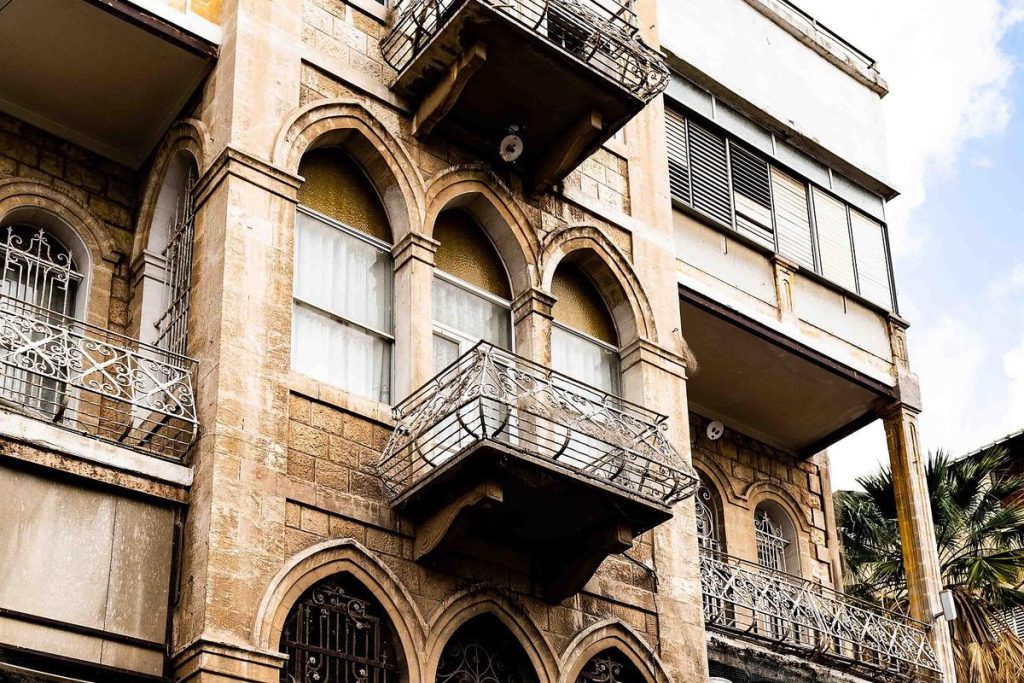
Declaring real estate received through inheritance in Israel requires first obtaining a tsav yerusha issued by the family court. This document allows you to prove your status as an heir to the tabou and establishes the reference value of the property for tax authorities. This value, determined on the date of death, serves as the calculation base for mas shevach when the apartment is later resold.
Obtaining the tsav yerusha to formalize the transfer of property
The transfer of real estate assets in Israel is not handled through a simple notarized deed as might be common in other jurisdictions. The process is judicial. You must petition the family court to obtain a tsav yerusha, which is the inheritance order. This document is the only title that officially identifies the beneficiaries and allows for changes in ownership.
Unlike systems where a notary centralizes the management of an estate, in Israel, the family court intervenes to validate the list of heirs. Without this order, no transfer of ownership can be recorded in the land registry. We advise you to consult our article on Notaries and real estate inheritance in Israel: roles and distinctions to understand whether a notary or the court handles your specific assets.
Once you have the tsav yerusha, the procedure is not over. You must have your name, or the name of the estate, registered with the tabou. The tabou is the authority that manages the land registry. If the registration is not completed, you do not have legal ownership against third parties. This step is distinct from the mere recognition of your right to inherit; it is the actual act of ownership.
- Filing the inheritance application with the competent family court.
- Waiting for the publication of the inheritance notice to allow for potential contests.
- Receiving the final inheritance order.
- Registering the new ownership status with the tabou.
Evaluating the property value for the reshut ha-misim
The reshut ha-misim, the Israeli tax authority, requires precise knowledge of the property’s value at the time the estate is opened. This value is not what the deceased originally paid during the initial purchase, but the market value observed on the date of death. This step is crucial because it determines your tax cost basis.
To set this reference price, we perform a comparative analysis. We look at recent real estate transactions in the same neighborhood, whether in Netanya or Haifa, for properties with similar characteristics. This method provides an estimate consistent with the local market reality. However, a simple estimate is not always sufficient for the tax authorities.
We recommend hiring a professional, such as a certified real estate appraiser, to perform a formal evaluation. This expert will produce a detailed report justifying the chosen price. This document will serve as protection in the event of an audit by the reshut ha-misim. An expert report is more robust than a simple price estimate found on a real estate portal. The goal is to have a solid database to justify the declared value.
| Evaluation Method | Recommended Use | Evidence |
|---|---|---|
| Market Comparison | Quick estimate | Recent sale prices in the neighborhood |
| Real Estate Appraisal | Official tax declaration | Report from a certified expert |
| tabou Evaluation | Administrative reference | Land registry data |
Declaring the transfer of real estate assets
Declaring the transfer to the reshut ha-misim is an obligation that follows obtaining the tsav yerusha. This is not an inheritance tax in itself, but a step to declare the entry of new assets into your estate. You must distinguish between properties held individually, which you now fully own, and assets that are still part of an undivided estate.
During this declaration, the identification of heirs is strictly controlled. Each heir must provide their teoudat zeout. This document is the essential Israeli identity card for all administrative procedures. If you are not an Israeli resident, the procedure may require the use of validated equivalent documents, but the teoudat zeout remains the standard for connection with the local administration.
The declaration must be precise regarding the nature of the assets. An apartment with a mamad (secure room) or equipped with a doud shemesh (solar water heater) may have specific value characteristics. We verify the accuracy of the information recorded on the title of ownership before any submission to the reshut ha-misim to avoid errors in classification that could lead to requests for additional information or processing delays.
Calculating the impact of mas shevach during a future resale
One of the most critical points concerns the resale of the apartment. In Israel, taxation on real estate capital gains is governed by mas shevach. Unlike systems where inheritance taxes are levied on the value of the transferred property, mas shevach is a tax on the difference between the sale price and the acquisition price. In the case of an inheritance, the acquisition price is the value of the property on the date of death.
To understand precisely how this calculation impacts your assets, we invite you to read our detailed article on Mas Shevach and inheritance in Israel: calculating capital gains. The rule is as follows: if you sell the property after receiving it through inheritance, the capital gain is calculated by subtracting the value declared at the time of death from the actual sale price. If the value at death was already high, the final tax will be mechanically reduced.
The holding period also plays a role in tax calculations. The longer you keep the property after the inheritance, the more the calculation mechanisms may vary according to the laws in effect at the time of sale. It is therefore useful to keep all documents relating to the initial value to justify your tax base to the reshut ha-misim when the time comes.
Managing expenses related to property pending distribution
Between the time of death and the actual distribution of assets among the heirs, the apartment continues to generate expenses. These costs must be covered by the estate itself. The first expense is the arnona, the municipal property tax. This tax is due by the owner or occupant and is collected by the city municipality, such as Netanya. It must be paid regularly to avoid late penalties that accumulate against the estate’s account.
At the same time, the building is subject to vaad bayit, the condominium fees. These costs cover the maintenance of common areas, the elevator, hallway cleanliness, and lighting. If the property is vacant, paying the vaad bayit remains mandatory to maintain the building in good condition and prevent a decline in the asset’s value. A failure to pay can lead to collection proceedings against the estate.
The distribution of these costs among the co-heirs must be clearly established. We recommend keeping a separate account for expenses related to the inherited apartment. This allows you to know exactly what portion of the estate funds was used for maintenance and facilitates the final accounting during distribution. Expenses include:
- Payment of arnona to the municipality.
- Payment of vaad bayit for building maintenance.
- Technical maintenance costs (leak repairs, electricity).
- Administrative management fees for the estate.
Renting the inherited property: tax and contractual aspects
Once ownership is established, renting the property is an option to generate income. However, this income is subject to mas hachnasa, income tax. You must declare every shekel received through your annual income tax returns. Managing this income requires particular rigor, especially to separate rental income from your other sources of income in Israel.
When drafting the lease, we establish a solid contract. To secure income and guarantee payment, we systematically require the signature of a shtar ’hov. This promissory note, or acknowledgment of debt, is signed by the tenant and their arev (the guarantor). This is not insurance, but a legal instrument that allows for the recovery of owed sums in case of non-payment. It is an indispensable protection standard in Israel.
Before handing over the keys, a technical inspection is recommended. We verify the condition of the mamad to ensure its sealing and compliance, as well as the proper functioning of the doud shemesh. A faulty solar water heater can lead to high electricity costs for the tenant and contractual tensions. To delegate these tasks, you can use our property management services, which handle these inspections and the management of non-payments.
Before any steps to sell or rent an inherited property, ensure that the tsav yerusha has been properly transcribed to the tabou. Without this registration, you have no legal decision-making power over the property regarding the reshut ha-misim or a future tenant.

Gestion locative en Israël pour propriétaires francophones. Bureaux à Netanya, 26 Dizengoff. Une question sur votre bien ? Écrivez-nous.