View and Noise: Legal Easements for a Ground-Floor Apartment on the Ashkelon Beach
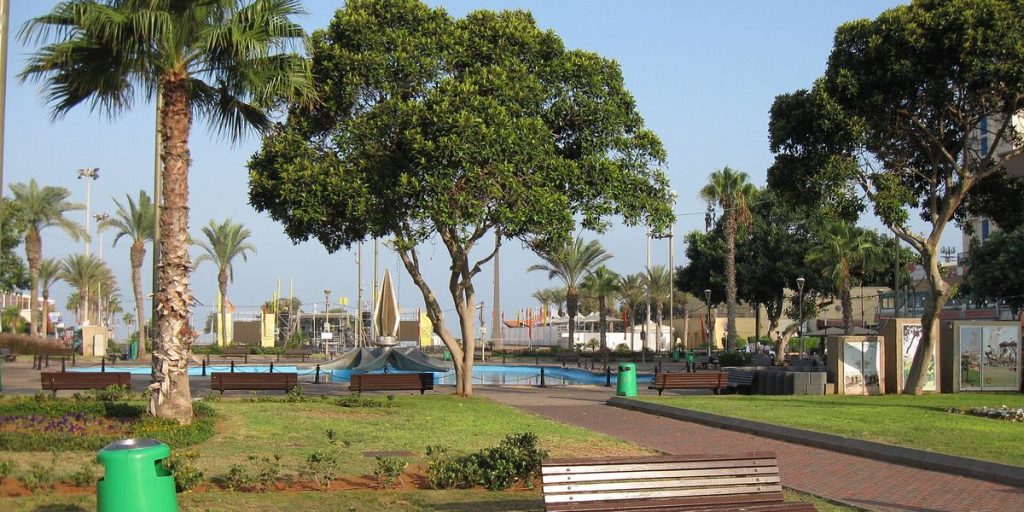
In Ashkelon, a ground-floor apartment on the beach does not offer the same peace and quiet as a property in the United States. The beach is a public space managed by the state, which means constant pedestrian traffic and limits on the right to a view. Before buying, check the local master plan and the actual sound insulation, because noise is inherent to the location and difficult to challenge legally.
The « Tourist Building » Status and the Master Plan
In the United States, proximity to a beach often falls under private property rights or standard easements. In Israel, the situation is different. The Ashkelon beach is a natural resource managed by the Nature and Parks Authority. It is not a simple urban zone. This distinction changes the landscape for investors.
You must verify if the building in question is classified as « tourist » in the master plan. This status imposes strict usage rules, distinct from permanent residence. If the apartment is intended for short-term seasonal rental, this classification is mandatory. If it is for long-term rental, the rules are different. The priority in these zones is the conservation of the natural landscape. The right to a view is therefore not absolute; it is subordinate to the public interest of preserving the natural aspect of the coast.
To identify restrictions, consult the specific master plan for Ashkelon, particularly Plan 6501. This document details height restriction zones and locations where construction is prohibited or limited. An unobstructed view today may be modified tomorrow if the plan authorizes new structures. In the United States, you look at the zoning map. Here, the master plan of the Nature and Parks Authority takes precedence. Do not count on an acquired right to a view if neighboring construction is compliant with the plan.
The investor must understand that the « view » is a fragile privilege. If a new building is authorized by the master plan, you cannot block the construction on the pretext that your view is obstructed. The value of your property relies on compliance with the plan, not on the absence of visual obstruction. Check ongoing projects in the buffer zone. If the plan provides for densification, the view will be reduced. This is an investment risk to consider during price negotiations.
Public Right of Way and the « Buffer Zone »
The Ashkelon beach is a public asset. Passage there is a constitutional right, not a negotiable easement. In the United States, people sometimes speak of view or passage easements. Here, the reality is more direct: the ground floor opens directly onto a space of intense circulation. The « view easement » is often replaced by a passage easement that drastically limits privacy.
Pedestrian flow is continuous. Unlike the expectation of an American owner who imagines a quiet beach off-season, in Ashkelon, walkers, joggers, and families are present year-round. The noise and traffic do not stop in winter. This reality directly impacts rental. A tenant seeking absolute quiet on the ground floor will be disappointed.
To evaluate the impact, have a professional measure the actual distance between your balcony and the main pedestrian walkway. This is a specific building inspection (bedek bayit). Measure the distance. If the balcony is directly over the main path, privacy is zero. If the apartment is set back, with a strip of vegetation or a buffer zone, the situation is better.
This proximity also requires vigilance regarding security. A ground floor open to the beach is more exposed to intrusions. You must secure the access points. Consult our article on Changing apartment locks in Ashkelon after a lease to understand the security protocols adapted to these properties. Public passage creates a higher risk of break-ins than an upper-floor unit.
The Noise Regime: Silence Is Not an Absolute Right
In the United States, one can refer to decibel standards to prove a nuisance. In Israel, there is no fixed legal maximum noise level for residences. Protection against noise falls under the jurisdiction of the local Ashkelon police and specific ordinances. The judge evaluates the « nuisance » on a case-by-case basis, considering the context of the location.
The noise from beach activities (music, street vendors, children’s cries) is considered inherent to the location. You cannot demand silence if you chose a property by the sea. This is an accepted risk. Legal remedies are limited. If the noise comes from a source external to the beach (a construction site, a business), you can take action. But for the « natural » noise of the beach, the chances of judicial success are low.
Check for recurring complaints registered for this specific building. Inquire with the local police. If there are repeated complaints for specific nuisances (for example, events organized on the beach), this can justify an action. But for ambient noise, no compensation is provided.
The investor must accept this noise level. If you target a tenant who works from home and needs total silence, this property is not suitable. If you target tourists or vacationers, the noise is an asset, not a defect. The choice of tenant must correspond to the acoustic reality of the place. Do not count on magical insulation to eliminate the sound of the sea and passersby.
The Impact of the mamad and Partitions on Insulation
The mamad is the mandatory secure room in every apartment. It serves for protection in case of an attack. Its walls are designed for mechanical resistance, not for sound insulation. It is a common mistake to believe that the presence of a mamad guarantees quiet. It does not block the noise from the beach.
Acoustic insulation depends on the thickness of the walls facing the beach and the quality of the glazing. There is no strict national standard for sound insulation for seaside residences. Have the wall thickness and the presence of double glazing checked during a building inspection (bedek bayit). If the windows are single-pane, noise will enter directly.
Soundproofing renovation of a ground-floor seaside apartment is rarely profitable. Replacing windows with triple glazing or adding acoustic panels is expensive. The potential rent does not necessarily cover this investment. In the United States, certain improvements can be deducted. Here, the tax code does not specifically favor soundproofing work.
Also check the internal partitions. If the apartment is open to the beach (large glass doors), the noise is amplified. If the apartment is partitioned with a buffer room (such as an office or bedroom) between the beach and the living room, the noise is attenuated. This architectural configuration is crucial. An open plan is beautiful, but noisy. A partitioned plan is less visually appealing, but more comfortable.
Before buying, ask to see the architectural plan. Identify the load-bearing walls and openings. If you must pay to insulate, integrate this cost into your profitability calculation. Do not count on the mamad to serve as an acoustic barrier. It is there for your safety, not for your comfort.
The vaad bayit and Internal Nuisance Rules
The vaad bayit is the co-ownership committee. It can impose strict rules on noise and balcony usage. In the United States, the house rules are codified. In Israel, the vaad bayit has greater latitude to self-organize. It can block work or activities that disturb other residents.
A complaint from the vaad bayit for noise can lead to a municipal fine, not just a civil action. The committee can call the local police to stop the nuisances. If you rent out your apartment and the tenant makes noise, the vaad bayit can put you on notice. You are responsible for the nuisance, even if the tenant is the source.
Check if the building allows the use of the beach as an « extension » of the home. Storing mattresses, umbrellas, or chairs on the beach is often prohibited by the vaad bayit or the Nature and Parks Authority. This storage creates visual nuisances and maintains disorder. If the vaad bayit prohibits this storage, you must comply.
The vaad bayit can also impose quiet hours. For example, no music after 10 PM. These rules are binding. Before buying, ask to see the minutes of the vaad bayit meetings. Understand the culture of the building. Is it strict? Tolerant? This impacts the quality of the rental. A tenant who does not respect the rules of the vaad bayit can be evicted more easily than in the United States.
Taxation Related to Usage Restrictions
The arnona is the municipal residence tax. It is calculated on the cadastral value of the building. This value includes the privilege of the beach. If the view is blocked by a new authorized construction, the cadastral value does not automatically decrease. It is up to the owner to contest it.
In the United States, the property tax can be revised if the value of the property drops. In Israel, the arnona is linked to the location, not to the effective enjoyment. An increase in the arnona can occur even if the view is obstructed. The Ashkelon city hall periodically re-evaluates cadastral values. You must monitor these re-evaluations.
If you contest a value that is too high, you must provide proof. For example, photos showing the neighboring construction that blocks the view. But this is not automatic. You must make a formal request to the city hall. The process is long and complex.
The impact on the mas shevach (capital gains tax) is also to be considered. If the value of the property has increased due to proximity to the beach, the capital gain will be high. If the view is degraded, the capital gain may be lower, but the arnona remains high. Taxation does not follow the degradation of enjoyment. It follows the administrative cadastral value.
Ask the tax authority (reshut ha-misim) for an estimate of the impact of a plan modification on the cadastral value. This is a proactive step. Do not count on an automatic tax decrease if your situation deteriorates. You must act to lower the tax.
Rental Management and Maintenance After Signing
Once the deed is signed, you are no longer in the United States. You cannot monitor your property yourself. Who receives the keys? Who finds the tenant? Who answers when a pipe bursts on a Friday?
Rental management is crucial. A distant owner must rely on a local professional. We manage the entire cycle: tenant search, lease drafting, key handover, and routine maintenance. If a problem arises, our team intervenes. We do not leave the tenant to manage emergencies alone.
Restoration after a lease is a sensitive point. The tenant must return the apartment in good condition. We verify the exit condition report. If repairs are necessary, we have them done. Consult our article on Restoring an apartment in Ashkelon before rental to understand the expected maintenance standards.
The vaad bayit can impose work on the building. You must pay your share. We manage these invoices. We send you a monthly report with the expenses. You know exactly what was done and why.
Rental of a seaside property is more complex than an urban property. Wear is faster (salt, humidity). Maintenance must be more frequent. We take charge of these aspects. You invest with peace of mind, without dealing with daily details. For more information on opportunities, consult our page on investing in Israel.
Before buying a ground-floor property on the Ashkelon beach, have a specific building inspection (bedek bayit) conducted for sound insulation and distance from the public way. Check the master plan to know upcoming construction restrictions. Do not count on the mamad for silence. Budget for higher maintenance than for an upper-floor property. And above all, entrust management to a local professional who knows the specifics of the beach and the rules of the vaad bayit.

Gestion locative en Israël pour propriétaires francophones. Bureaux à Netanya, 26 Dizengoff. Une question sur votre bien ? Écrivez-nous.