Your HOA Refuses to Install Your Air Conditioner in Netanya: What Should You Do?
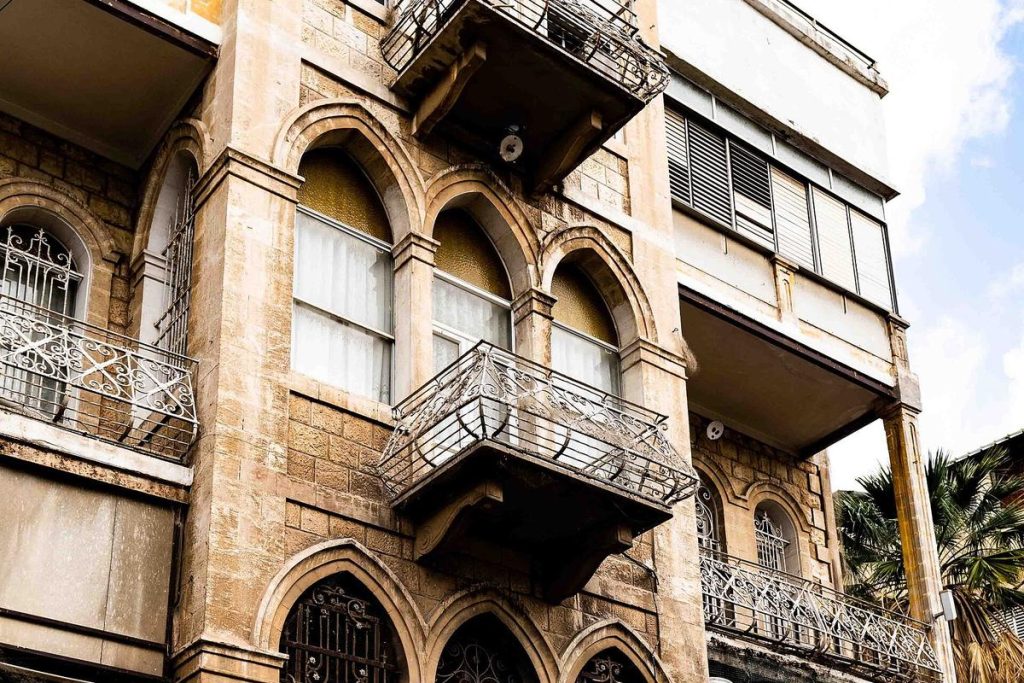
When the building management refuses to allow your air conditioning unit on the facade, it falls under Israeli condominium law, which differs from US or British standards. If the outdoor unit rests on a common area, approval from the board is mandatory, even if the facade is your exterior wall. Conversely, installation on a private balcony requires no validation from the vaad bayit. The solution involves verifying the legality of the decision, obtaining a municipal permit, and, if necessary, appealing to the court, while avoiding sterile conflicts over pure aesthetics.
The vaad bayit and the distinction between facade and balcony
In Israel, the line between private property and common areas is strict, but often misunderstood by foreign owners. The vaad bayit, or board of directors, does not manage your interior. Its authority covers elements that belong to the building as a whole: load-bearing walls, roofs, staircases, halls, and exterior facades. If the outdoor unit of your mazgan (air conditioner) must be fixed to a wall that separates your apartment from the outside and supports the building’s weight, you are in a common area.
The distinction from the US is clear. In the US, the facade is often considered part of the apartment owner’s property, subject to the bylaws. In Israel, the facade is a common area by default, unless explicitly stated otherwise in the deed of sale or the building’s internal regulations. Check your deed at the tabou (land registry). If the internal regulations are absent or silent, the law protects the building’s general appearance. The manager cannot arbitrarily ban an installation, but they can require that it does not disfigure the structure.
On a private balcony, the situation is different. The balcony is your exclusive space. You do not need any authorization from the vaad bayit to install an outdoor unit there, provided the weight does not overload the balcony structure itself. If the manager’s refusal concerns a balcony, it is likely illegal. If installation is planned on the facade, the refusal may be legitimate if the installation compromises the wall’s integrity or the overall aesthetic accepted by other owners. Do not confuse these two zones. Installation on a balcony is a right; installation on a facade is a tolerance subject to conditions.
Verifying the vaad bayit decision and its reasons
Before incurring expenses, analyze the legality of the refusal. A vaad bayit decision is only valid if it respects voting procedures. Was it taken at a general assembly of owners or by the executive committee? The committee can make routine decisions, but a modification of the facade’s exterior appearance is often considered a major decision, requiring a vote by the assembly. If the manager refused via simple email without a vote, the decision is fragile.
Identify the real reason for the refusal. Acceptable reasons under Israeli law are limited: structural danger, unacceptable noise, or serious damage to aesthetics. A refusal based on a committee member’s personal preference, or on discrimination against an absent owner, is null. If the cited reason is « beauty, » demand specifics. What is the aesthetic standard? Are there similar units already installed? If other owners have visible air conditioners on the facade, the refusal against you is discriminatory.
Distinguish proven danger from worry. If the manager claims the wall might give way, they must prove it. Without technical proof, it is an opinion. However, if the building is old and shows visible cracks, the safety reason is serious. In this case, the refusal is justified until the structure is reinforced. If the reason is noise, check local standards. Compressor noise is regulated, but a total ban in the name of noise is often excessive if the unit is modern and silent. A purely arbitrary or discriminatory refusal can be challenged.
Technical inspection by a certified professional
To resolve doubts about the facade’s solidity, hire a professional. In Israel, we do not speak of « routine inspections » as in the US, but of a technical inspection, or bedek bayit. This is not an administrative formality; it is a factual expertise. Hire a certified building engineer to inspect the intended attachment wall. Their role is to verify the concrete’s load capacity, the absence of structural cracks, and the state of the reinforcement.
This inspection is not a legal obligation imposed by the state, but a necessary technical proof to convince the vaad bayit. If the report concludes that the wall can support the weight of the unit and bracket without risk, the safety reason disappears. You then have a solid document to present to the manager. If the report reveals problems, you have proof that the wall must be repaired before installing the air conditioner. In this case, the responsibility for wall repair lies with the condominium, not you alone, as it is a common area.
Do not attempt this inspection yourself. The report must come from a recognized expert. Without this document, the manager can maintain their refusal by citing uncertainty. The inspection costs money, but it settles the technical debate. If the wall is sound, you can demand authorization. If the wall is fragile, you know the refusal is founded, and you can ask the condominium to finance the repair. This is a proactive step that avoids unnecessary lawsuits.
The construction permit from the Netanya local authority
In Netanya, as in all of Israel, installing an outdoor unit on a facade is considered construction. It requires a permit from the municipality (Rishut HaMishkal). This permit is distinct from the manager’s authorization. The manager cannot refuse installation if you have obtained the municipal permit, except in cases of immediate danger to persons or property.
The procedure is handled by the municipal engineer. You submit a simple plan showing the unit’s position and fixation points. You pay the file fees. The engineer verifies compliance with safety and urban planning standards. If the permit is granted, the installation becomes legal from a public standpoint. The vaad bayit can no longer object on technical grounds, as the state has validated the safety.
However, the municipal permit does not cover the building’s internal aesthetics. It validates structural safety and urban compliance. The manager can still require aesthetic conditions, such as the color of the grille or the precise position, to harmonize with other units. But they cannot ban the installation itself if the permit is present. This step is crucial: without a permit, you risk a fine and a demolition order from the municipality, regardless of the manager’s agreement. Always check with the municipality before buying equipment.
Technical constraints specific to Netanya buildings
Netanya is a coastal city where humidity and sea salt affect installations. Outdoor mazgan units must be chosen with care. Corrosion is a real risk. Use stainless steel or treated aluminum supports, never black steel that rusts within a few years. The Mediterranean climate demands resistant materials.
Noise is a sensitive point in Netanya’s dense buildings. Compressors vibrate. If the unit is fixed directly to a load-bearing wall, vibrations transmit to the building and can disturb neighbors. Plan for spring supports or anti-vibration rubber. The vaad bayit is often very attentive to this point, as noise generates immediate complaints.
Interaction with the doud shemesh (solar water heater) must also be considered. If your apartment has solar panels, check the available space on the facade or roof. The air conditioner installation must not block panel ventilation or maintenance access. Furthermore, electrical circuits must be separated. Overloading the electrical panel can cause outages. Have a certified electrician verify your electrical line capacity before installation. These local technical constraints are often ignored by foreign owners, leading to avoidable disputes.
The appeal procedure: family court and mediation
If dialogue fails, the judicial path opens. In Israel, disputes between owners often fall under the family court (Beit Mishpat LeMishpacha), which handles domestic and neighborhood conflicts. Before any trial, mediation is mandatory. A mediator attempts to find an agreement. This is often the most effective step, as it allows negotiating precise conditions.
If mediation fails, the judge rules. They can order installation under strict conditions. For example, they may impose a camouflage grille, a specific position, or the installation of soundproofing materials. The judge cannot ban installation if it is technically possible and legal, except in cases of serious danger. They seek a balance between your right to use your property and neighbors’ right to quiet and aesthetics.
The appeal is costly and long. Use it only if the stakes are significant or if the refusal is clearly abusive. In most cases, mediation leads to a compromise. The judge can also order the vaad bayit to pay part of the installation costs if the refusal was unfounded. Do not neglect this option, but do not use it as a first reflex. Neighborhood relations in Israel rely on cohabitation, and a lawsuit can poison the years ahead.
Alternatives and technical compromise solutions
If the facade is blocked, explore alternatives. Installation on the common flat roof is a frequent option. If the roof is accessible and the weight is distributed, you can install the unit there. This requires a written agreement from the vaad bayit and plumbing work to route the pipes. This solution moves the unit out of sight, which often satisfies aesthetic requirements.
If the roof is inaccessible, consider forced ventilation systems or compact indoor units. Some models dissipate heat through a window or air extraction, without a massive outdoor unit. This is not the most efficient solution for cooling, but it may suffice for living areas.
Negotiate an aesthetic installation. Propose a camouflage grille that harmonizes with the facade color. Offer to cover the cost of painting the wall around the installation. The vaad bayit is often sensitive to visual appearance. An aesthetic compromise can unblock the situation without resorting to court. These solutions show your good faith and facilitate agreement.
| Installation Zone | Required Authorization | Main Risk |
|---|---|---|
| Private Balcony | None (except structural overload) | Excessive weight on balcony |
| Common Facade | Municipal Permit + vaad bayit Agreement | Corrosion, noise, aesthetics |
| Flat Roof | Written Agreement from vaad bayit | Difficult access, waterproofing |
Management of fees and regularization before resale
Installing an air conditioner can impact condominium fees. If wall reinforcement work is necessary, the cost will be shared among owners via the vaad bayit. Check how these fees are accounted for. If you have sublet your apartment, ensure the tenant does not install equipment without your consent, as this can create debts. Consult our article on Poleg, Netanya: Tenant sublets apartment without authorization to understand the risks related to unauthorized modifications.
If you plan to sell, a non-compliant or disputed installation can hinder the sale. Buyers check the state of equipment. An air conditioner installed with a permit and manager approval is an asset. An illegal installation is a liability. Before resale, regularize any pending situation. See our guide on Settling manager fees and TV: Regularize before resale to avoid surprises during the transaction.
Managing your property requires a good relationship with the vaad bayit. If you have difficulty managing these aspects, entrust management to professionals. Our property management service in Netanya handles these daily interactions, including authorization requests and technical disputes. Do not let a neighborhood conflict tarnish the value of your investment.
Before buying an air conditioner, verify technical and legal feasibility. Obtain written agreement from the vaad bayit and the municipal permit. If the refusal is arbitrary, initiate mediation. Never install equipment on a common area without validation, under penalty of forced demolition and fines.

Gestion locative en Israël pour propriétaires francophones. Bureaux à Netanya, 26 Dizengoff. Une question sur votre bien ? Écrivez-nous.