Damaged Private Balcony: Tenant Restoration in Israel
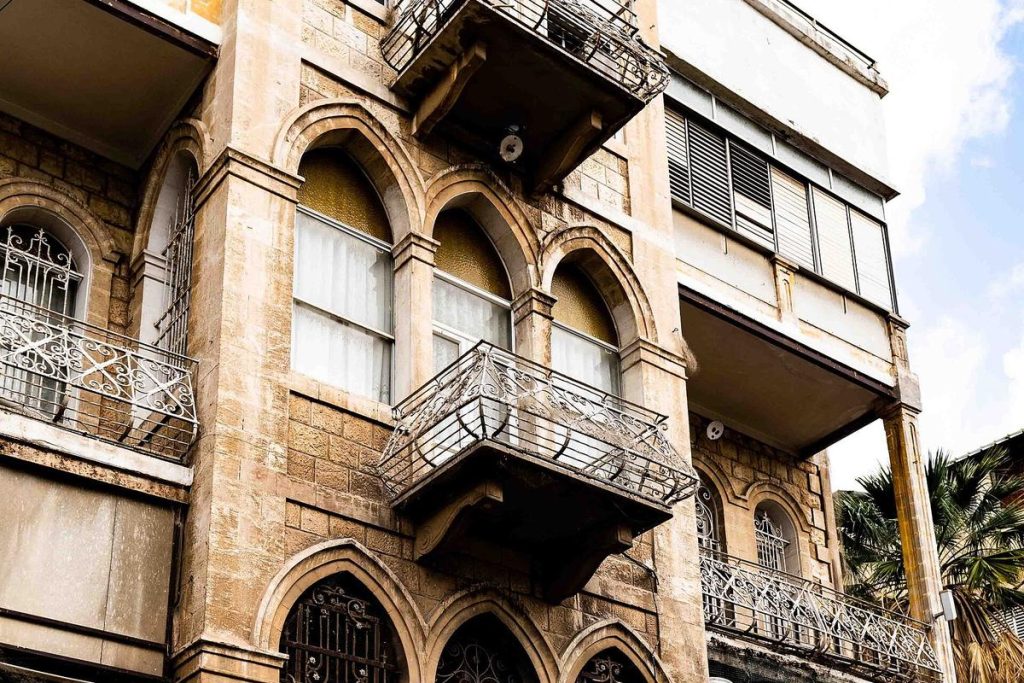
Restoring a damaged private balcony at the end of a lease in Israel relies on proving the damage and clearly distinguishing between natural wear and tenant negligence. You must verify the legal status of the balcony in the tabou and compare the move-in and move-out condition reports. Recovery is based on the shtar ’hov and, if necessary, a lawsuit, because wear caused by the Mediterranean climate is not the tenant’s responsibility.
The legal distinction between private balconies and common areas in Israel
Before incurring costs, you must confirm that the balcony is private space. In Israel, the line between private property and common areas can be blurry, especially for cantilevered balconies. Consult the cadastral map and the tabou to verify the registration of the space. If the balcony does not appear as a private extension, it may be part of the common areas, which would change how costs are shared.
The load-bearing structure of a private balcony is the owner’s sole responsibility. Unlike in France, where the building manager often handles the facade, here you pay to repair the beam or slab if it is damaged. Condo fees (vaad bayit) only cover maintenance of common zones: the elevator, the lobby, and the building’s exterior facade. If a leak from a private balcony damages the apartment below, the responsibility remains with you, unless you prove the fault lies with the tenant.
Check whether the balcony is recessed or cantilevered. If it is cantilevered, maintenance of the underside is the owner’s responsibility. If it is recessed, the boundary with the common facade is clearer. This technical distinction determines who pays for repainting or repairing joints. Never assume that the vaad bayit will cover the repair of broken tiles or a rusted railing. These are private elements. If the balcony is integrated into the building’s facade, responsibility may be shared, but an expert must provide proof.
The lease agreement and the restoration clause
The lease is your first line of defense. Examine the clause regarding the move-out condition report. It must explicitly mention the balcony and its initial state. If the lease states that the tenant must return the property in the condition in which they found it, minus normal wear, you have a solid basis. The absence of a specific mention of the balcony in the move-in report complicates proof. If you did not photograph existing cracks at the start, it will be difficult to prove they worsened during the tenancy.
Distinguish normal wear from damage. The aging of materials, concrete erosion due to rain, and slow steel corrosion are normal wear. The tenant does not pay for this. However, tiles broken by a heavy object, a railing bent by improper awning installation, or a leak caused by a poorly maintained irrigation system are attributable damages.
The shtar ’hov (promissory note) signed by the tenant and their arev (guarantor) is crucial. This document is not insurance; it is an acknowledgment of debt. It secures recovery of repair costs if the tenant refuses to pay. Verify that the amount of the shtar ’hov is sufficient to cover a major damage scenario. If the amount is too low, your options are limited. Ensure the guarantor’s signature is valid and that they have real financial capacity. A guarantor without stable income offers no protection.
Conducting the technical inspection: the bedek bayit of the balcony
There is no mandatory usage inspection in Israel. You do not have the equivalent of the French installation checks or usage controls. This is a prudent step to establish proof. Hire a professional to conduct a building inspection (bedek bayit). This can be a civil engineer or a structural expert. Their role is to document the condition and assess the nature of the damage.
Document everything. Take dated and timestamped photos. Video the state of the balcony in the presence of the outgoing tenant or their representative. If the tenant refuses to show up, note this in writing and send a formal demand for a joint inspection. The inspection must cover: water infiltration, corrosion of exposed steel, concrete spalling, and the condition of tiles and joints. The expert writes a report. This report is a key piece of evidence for the court. It distinguishes structural damage from cosmetic damage.
Do not let the tenant conduct the inspection alone. Their assessment will be biased. An impartial expert adds credibility to your case. If the balcony shows signs of immediate danger (crumbling concrete, heavily rusted steel), the expert may recommend urgent measures. These measures must be documented. The expert’s report must be clear on the origin of the damage: is it age or negligence? This distinction is the key to liability.
Interpreting liability: natural wear or tenant negligence
The Mediterranean climate is an aggravating factor. Air salinity and temperature variations accelerate steel corrosion and concrete degradation. An Israeli court takes this context into account. If the balcony is ten years old, some wear is expected. If the tenant stored heavy flower pots that caused the tiles to fail, that is negligence. If amateur DIY work punctured a pipe, that is negligence.
Analyze the tenant’s behavior during the tenancy. Did they report leaks? Did they request repairs? If the tenant ignored a leak for months, their silence may be interpreted as a failure of vigilance. They allowed the damage to spread. Conversely, if they reported the problem and you did not react, liability is shared or you are solely at fault.
Differentiate the tenant’s civil liability from the builder’s liability. If the building is new, the builder’s warranty may still be active. In this case, the builder must repair construction defects. You cannot attribute a manufacturing defect to the tenant. Check the building’s delivery date. If the ten-year warranty is still in effect, contact the builder before billing the tenant. Otherwise, you risk paying twice.
The recovery process: from shtar ’hov to court
Once the damage is established, you must recover the funds. Send a formal demand letter to the tenant and their arev. Specify the estimated cost of repairs, payment deadlines, and consequences of non-payment. Attach the expert’s report and photos. This letter is a mandatory step before taking the case to court.
If the tenant refuses to pay, use the shtar ’hov. It is an enforceable title. You can seize the guarantor’s assets directly without going through a long trial over the debt. The guarantor must pay the amount indicated on the note. If the amount of the shtar ’hov is less than the actual cost of repairs, you must take the difference to district court.
If amicable recovery fails, take the case to court. The competent court is the one in the jurisdiction of the property. The judgment will order the tenant to perform the work or pay its cost. Attorney and court fees are often borne by the losing party. This strengthens your position. Do not neglect the procedure. An enforceable judgment is easier to enforce than a simple letter. If the tenant leaves the country, the judgment remains valid and can be enforced against their assets in Israel.
Managing repair work: who pays for what?
Obtain multiple quotes from licensed construction companies. The actual cost of restoration must be justified. Do not rely on an oral estimate. Quotes must detail materials, labor, and timelines. Verify that materials comply with Israeli safety standards, especially for reinforced concrete structures. Using non-compliant materials can void the work warranty.
Decide who performs the work. You can hire a professional of your choice. This is the most common approach. The tenant may suggest their company, but be cautious. A conflict of interest can harm quality. If you choose the tenant’s company, require a written warranty and a detailed quote.
Allow time for drying and stabilization. Masonry and concrete work require time. Do not re-rent the property before the balcony is completely dry and stable. Residual leaks can damage the new setup. Communicate with the future tenant to adjust key handover dates. If the work takes time, you can negotiate a rent reduction or a grace period. Transparency is essential.
The issue of insurance and claims against the builder
Check the tenant’s insurance. Some policies cover damage caused by negligence to private areas. If the tenant broke the tiles, their insurance may compensate. Ask them to file a claim. If the insurance refuses, it is up to you to prove the fault.
Examine the builder’s warranty. If the building is new, the ten-year warranty covers construction defects. If the balcony collapses due to poor rebar installation, it is the builder’s fault, not the tenant’s. Transfer the liability to the builder. Do not pay for a manufacturing defect.
Owner’s insurance covers water damage affecting neighbors. If your balcony leaks and damages the apartment below, your insurance may compensate the neighbor. But it does not cover normal wear or non-warranted construction defects. Insurance is a safety net, not a solution for damage caused by the tenant.
Preventing future disputes: securing the lease and move-out
Draft a joint move-out condition report. Dated photos, signed by both parties. Mention the state of the balcony, joints, and tiles. Include a financial penalty clause for damages. This clause must be clear and proportionate.
Use our property management to secure each step. We manage condition reports, inspections, and recoveries. For work between signing and key handover, consult our article on your obligations in Israel. If you sell the property after the work, consider the transfer of electricity and water contracts.
Never let a tenant leave without a joint condition report of the balcony. A dated photo is worth a thousand words. If the balcony is in poor condition, have an expert document it before re-renting. The shtar ’hov is your best weapon, but it does not replace proof of fault.

Gestion locative en Israël pour propriétaires francophones. Bureaux à Netanya, 26 Dizengoff. Une question sur votre bien ? Écrivez-nous.