Defects in a New Condo: Legal Warranty and the Role of the Management Association in Israel
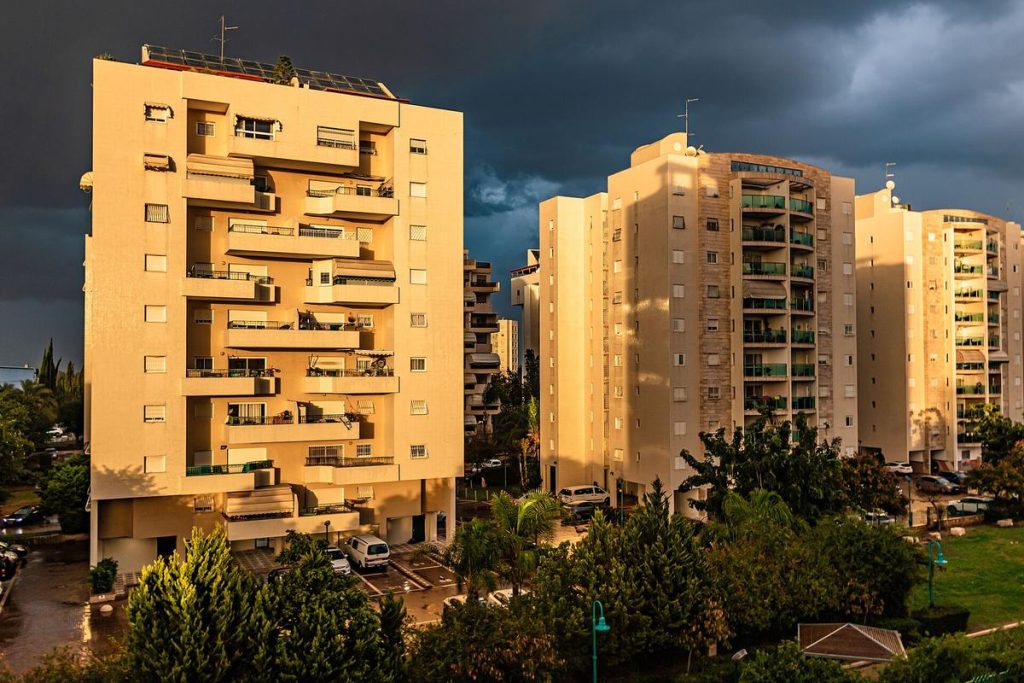
In Israel, the legal warranty for a new mamad relies on the sales contract and technical standards, not on routine usage checks. The management company identifies the defect, but only the owner, through an assessment by a certified professional, can hold the developer liable. This procedure strictly distinguishes between construction defects and tenant-caused damage, determining whether the repair or reimbursement is at your expense.
Distinguishing construction defects from tenant damage
The first step is to determine the origin of the damage. A mamad is a secure room designed to withstand impacts and fire. If a crack appears in the partition or the door mechanism has a fault, you must verify whether it stems from a manufacturing defect or improper use by the tenant. In the United States, one often relies on standard building inspections. In Israel, this concept does not exist in the same way. Proof relies on contractual expertise and physical inspection.
The bedek bayit, or building inspection by a professional, plays a central role here. It is not a legal obligation imposed by the state, but a step initiated by the parties to establish the precise cause. The professional examines the structure, materials, and installation. Their report is neutral and holds weight in court or during negotiations with the developer. It clearly distinguishes whether the material degraded prematurely (defect) or if the wear is normal (damage).
This distinction is crucial. If the tenant forced the lock or damaged the finish through negligence, the repair is their responsibility, often deducted from the security deposit. If the structure itself is faulty, the developer must act. Without this qualification step by a competent third party, the developer will refuse coverage, citing normal wear and tear. The owner must therefore require an inspection before any formal claim.
The role of the management company regarding the builder’s warranty
The building management company monitors the general condition of the building. It is often the first to report an anomaly on a mamad when it impacts collective safety or the common structure. Its primary obligation is to notify the developer and document the defects. However, the management company cannot directly hold the developer liable without a specific mandate from the co-ownership or the owner.
In new buildings, the management company manages the stabilization period. It maintains a list of delivery reservations. If multiple mamad units show the same structural anomalies, for example, identical leaks in ventilation systems or similar waterproofing defects, a collective claims procedure may begin. The management company then coordinates communication with the developer, centralizing the evidence.
It is common for the management company to ask the owner to consult our article on Condo fees before delivery: paying the management company in Israel? to understand the limits of its powers. The management company does not pay for individual repairs. It acts as an information relay. If the defect affects only your mamad, the management company alerts you, but it is up to you to initiate the process with the developer. It cannot sign a repair agreement on your behalf.
Holding the developer liable
Once the cause is established by the inspection, the next step is the formal engagement of the developer. You must analyze the sales contract. The duration and scope of the legal warranty on the mamad are defined there. They vary according to the developer’s specific clauses and current standards. The contract often distinguishes between the warranty for latent defects, which covers flaws not apparent at delivery, and the warranty for proper execution of works, which covers the quality of labor.
Legal recourse is made before the district court or the family court, depending on the nature of the dispute and the value of the damage. For a complex technical defect, the district court is generally competent. The owner must notify the developer in writing, attaching the professional’s report. The developer has a set period to respond. If they refuse the repair, the owner can take the matter to court.
There is no simplified procedure like a « consumer complaint » for this type of structural defect. It is a classic civil dispute. Written proof is paramount. The developer may contest the cause of the damage if the inspection report is not precise. It is therefore essential to ask the professional to detail the faulty materials and the testing method used. This file will serve as the basis for any negotiation or judicial procedure.
Technical intervention and validation of repairs
When the developer accepts the repair, the quality of the intervention must be controlled. It is not enough to let a developer’s worker intervene. You must bring in a certified professional to document the site condition before the work and validate compliance afterward. This professional checks waterproofing, insulation, and ventilation. These elements are critical for the safety function of the mamad.
If the mamad is individual, the work may impact the common mamak of the floor, that is, the shared protected space. The professional must verify that the modifications do not compromise the safety of neighbors. Poor waterproofing in your mamad can create leaks in the neighboring mamak, creating a new dispute with the co-ownership.
The final technical report must certify that the materials used comply with standards. The developer is required to use materials of equivalent quality to the original. If they substitute less performant materials, the owner can refuse acceptance of the work. This validation by an independent third party protects the owner against a cosmetic repair that masks a persistent structural problem.
Tax and accounting treatment of costs
The costs related to repairing a construction defect have a tax impact. The deductibility of repair expenses in the calculation of mas shevach, the capital gains tax on real estate, depends on the nature of the expense. If the repair is charged to the developer, it does not constitute an expense for the owner. But if the owner must advance the costs before reimbursement, the accounting must reflect this advance.
One must distinguish between a current maintenance expense, which is not deductible, and a capital investment. The repair of a construction defect is generally considered a restoration, not an improvement. However, the reshut ha-misim, the tax authority, may have a specific interpretation depending on the amount and nature of the work. It is advisable to keep all invoices and the inspection report.
Managing the developer’s invoices is simple: the developer pays the subcontractor directly. The owner pays nothing. But if the owner had to hire a professional for the inspection, that invoice is their responsibility. It can be deducted from rental income if the property is rented, subject to the rules for deducting management fees. The shtar hov, the promissory note signed by the tenant, does not cover these repair costs. It covers only the rent and the security deposit.
Tenant protection during works
During the duration of the repairs, the tenant remains in the premises. The owner has the obligation to maintain the habitability of the apartment. If the work on the mamad makes the room unusable, for example due to significant noise or dust, the tenant may demand a rent reduction. This reduction is negotiable and depends on the duration and extent of the inconvenience.
If the mazgan, the air conditioner, is inoperable during the summer due to work in the mamad that houses the cooling units, the inconvenience is major. The tenant may refuse to pay part of the rent. The shtar hov remains valid, but the owner must grant a discount. In case of a financial dispute during this period, the shtar hov allows the owner to recover the rent due, but it cannot be used to impose a fine on a tenant who contests the rent reduction.
The tenant has the right to report nuisances. The owner must coordinate work hours to minimize disruption. If the work lasts several weeks, a temporary relocation solution may be considered, but this is rare for a mamad defect. Communication between the owner, the management company, and the tenant is essential to avoid a breach of the lease contract.
Prevention: inspection before the warranty expires
The best protection is prevention. It is recommended to plan a complete inspection of the mamad a few months before the builder’s warranty expires. This proactive inspection allows for the detection of latent defects that have not yet manifested. The professional checks the seals, waterproofing membranes, and integrated ventilation systems.
Systematic photographic documentation is indispensable. It proves the initial state of the mamad at the time the warranty ends. In case of a future claim, these photos serve as proof that the defect already existed. Without this documentation, the developer can argue that the defect appeared after the warranty ended, rendering the claim inadmissible.
This step is simpler than reacting to a defect reported by the management company. It allows you to negotiate with the developer before they close the file. The cost of this inspection is low compared to the risk of losing coverage for a major defect. For owners who do not reside in Israel, this inspection can be entrusted to a property manager. It is a key step to secure the investment.
Rental management and post-purchase follow-up
Once the deed is signed and the warranty initiated, the daily management of the property becomes complex. Who receives the keys? Who finds the tenant? Who responds when a pipe bursts on a Friday? These questions are crucial for an owner residing abroad. The mamad is not the only point of vigilance. The entire apartment must be maintained.
The tenant must be found by a professional who knows the local market. The drafting of the lease and the signing of the shtar hov with the tenant and their arev, the guarantor, must be rigorous. In case of a leak or breakdown, it is the manager who intervenes on site. They coordinate with the management company and the owner.
We manage this operational chain. We ensure the rental, the tracking of vaad bayit fees, and the arnona, the municipal tax. We respond to technical emergencies. To understand how we secure your property and your income, consult our property management service. This service integrates with our advice for buying or selling in Israel, ensuring smooth management of your assets. If a leak occurs, our protocol for repairing a leak in a new mamad in Israel applies immediately, with no delay in response.
Do not let the warranty expire without having the mamad inspected. A latent defect detected in time is covered by the developer. A defect detected after the deadline is at your expense. Plan this inspection with a certified professional at least three months before the end of the contractual warranty period.

Gestion locative en Israël pour propriétaires francophones. Bureaux à Netanya, 26 Dizengoff. Une question sur votre bien ? Écrivez-nous.