Israeli Condominium Dispute Resolution: A Guide
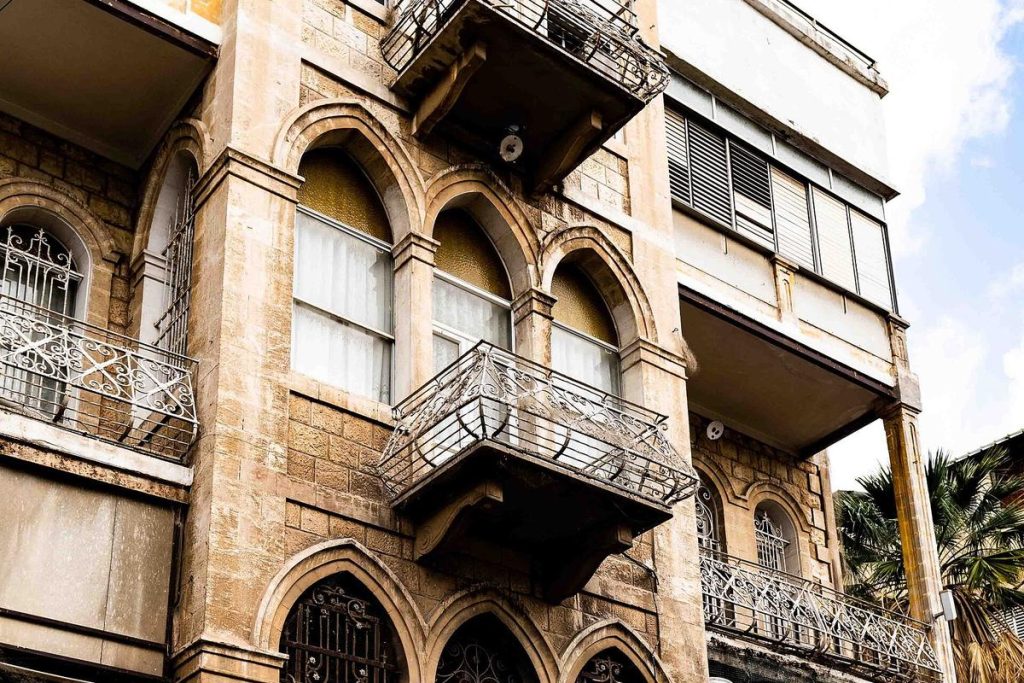
To resolve a dispute related to condominium regulations in Israel, you must first identify if the conflict is between one co-owner and another or if it concerns the management of common areas by the vaad bayit. If the problem involves maintenance or fees, the claim should be addressed to the building committee. If it involves a structural modification or a nuisance, the recourse involves verifying the regulations registered at the tabou or contacting the municipality.
Identify the nature of the dispute: between private parties and vaad bayit management
The first step is to classify the conflict to determine the appropriate contact. In Israel, the distinction between private use and collective management is fundamental. A dispute can take three distinct forms that do not follow the same resolution procedures.
- Neighbor disputes: these concern individual behavior, such as noise, inappropriate use of stairs, or storing objects in hallways. Here, the vaad bayit acts as a mediator or arbitrator according to the powers delegated by the assembly.
- Assembly failures: this dispute arises when decisions made by co-owners contravene the original condominium regulations or property laws.
- Financial disputes: these involve the calculation of fees or the collection of building-related taxes. It is necessary to distinguish between routine maintenance costs and exceptional work decisions.
If you find that funds collected for elevator or lighting maintenance are not being used in accordance with assembly decisions, you are facing a management dispute. To understand the structure of these responsibilities, we invite you to consult our article on The condominium manager in Israel: how the vaad bayit works. The nature of the problem will dictate whether you need to send a formal demand letter to a neighbor or contest a decision made by the co-owners’ assembly.
Verify the validity of the condominium regulations with the tabou
In Israel, the document governing building life is not a simple internal agreement; it must be enforceable against third parties. To know if a rule is applicable, you must verify its registration at the tabou (the land registry). An unregistered regulation or an unpublished modification can make a challenge legally groundless.
We proceed with the verification of official documents to confirm that the rights of each unit are clearly defined. This includes verifying the boundaries between private areas and common areas. If a neighbor claims the right to use a terrace or a roof, the only valid proof is an extract from the land registry.
- Consult the tabou extract to confirm the registration of the condominium regulations.
- Compare visible structural modifications (balcony extensions, modification of a load-bearing wall) with the official filed plans.
- Verify if the general assembly decisions regarding changes to building rules have been formally registered.
This step is crucial before incurring legal fees. If you are considering investing in Israel, verifying the compliance of the regulations with the tabou must be part of your due diligence process. An obsolete or improperly registered regulation can hide latent disputes regarding the ownership of common spaces.
Activating the vaad bayit in case of service failures
The vaad bayit has the obligation to maintain the building in an operational state consistent with established rules. When collective equipment breaks down or maintenance is neglected, the co-owner must act in a structured manner. A lack of maintenance can directly impact your property value and the safety of occupants.
We recommend following this order of operations to handle a service failure:
| Type of failure | Immediate action | Contact |
|---|---|---|
| Elevator or lighting failure | Written report to the manager | vaad bayit |
| Fee inconsistency | Request for invoice justification | vaad bayit / Accountant |
| Unauthorized work | Contesting the cost distribution | Co-owners’ assembly |
If the committee refuses to intervene to repair a sump pump or a security system, a formal demand letter is necessary. In the event of a dispute over the distribution of costs for these repairs, refer to our guide on Vaad bayit work disputes: procedures and fee distribution. Do not pay additional fees without obtaining a detailed breakdown of quotes and proof of the assembly vote.
Managing neighbor nuisances and common space modifications
Disputes in Israel often concern the addition of technical equipment on facades or roofs. The installation of a mazgan (air conditioner) or a doud shemesh (solar water heater) must respect the aesthetic and structural standards of the building. A non-compliant installation can not only degrade the appearance of the property but also create sealing problems for lower floors.
We monitor the compliance of exterior installations to protect the integrity of the building. A dispute may also arise regarding access to secured areas. For example, obstructing access to the mamad (secure room) is a serious violation that goes beyond simple condominium regulations and affects public safety.
In the face of an unauthorized modification of common space, the reaction steps are:
- Have the modification assessed by a professional (architect or engineer).
- Verify if the modification respects easement rights.
- Request the removal of the equipment or the restoration of the premises via the vaad bayit.
The role of the municipality and the arnona in condominium disputes
The municipality intervenes when the dispute exceeds the private sphere and affects urban planning. If a co-owner carries out work that increases the living area without a permit, it is no longer just a condominium regulation issue, but a violation of city laws. These illegal works have a direct impact on the building’s taxation.
An increase in built area modifies the calculation base for the arnona (municipal tax). If a neighbor expands their apartment irregularly, the municipality can reassess the tax for the entire building or penalize the offender. We advise reporting any suspicious construction to the municipality’s urban planning services to prevent the community from bearing the fiscal consequences of individual fraud.
Municipal interventions are also possible for noise nuisances or sanitation problems (accumulation of waste in common areas). The municipality can order inspections and impose fines. This recourse is distinct from actions taken by the vaad bayit, as it is based on public law rather than the private law of the condominium.
Legal recourse and mediation: from family court to civil courts
The choice of jurisdiction depends on the origin of the contested right. In Israel, the distinction between pure property disputes and disputes related to inheritance is vital. If the apartment in dispute comes from a yerusha (inheritance) and the co-owners are heirs, the case may require a tsav yerusha (probate order) to clarify who has the right to vote in the assembly.
For classic condominium disputes, the procedure generally follows this path:
- The mediation phase: an attempt at an amicable resolution to avoid legal costs.
- Civil court filing: for matters of damages or enforcement of regulations.
- Family court recourse: only if the dispute is intrinsically linked to an inheritance or a partition of undivided property.
To build a solid case, we proceed with the collection of material evidence. A dispute is not won on verbal statements. You must gather written testimonies, dated photographs, and, above all, have the facts verified by a professional so that reports have evidentiary value before a judge.
Once the purchase deed is signed, the management of your property does not end with the handing over of the keys. The tenant must receive a precise move-in inspection report, and you must ensure that the vaad bayit has correctly recorded your contact information for emergency calls. In the event of a water leak on a Friday evening or a mazgan failure, responsiveness is the only guarantee against the degradation of your assets. To delegate these technical and administrative aspects, we offer our rental management services.

Gestion locative en Israël pour propriétaires francophones. Bureaux à Netanya, 26 Dizengoff. Une question sur votre bien ? Écrivez-nous.