Penthouse Terrace Building Permit: Verification Before Signing
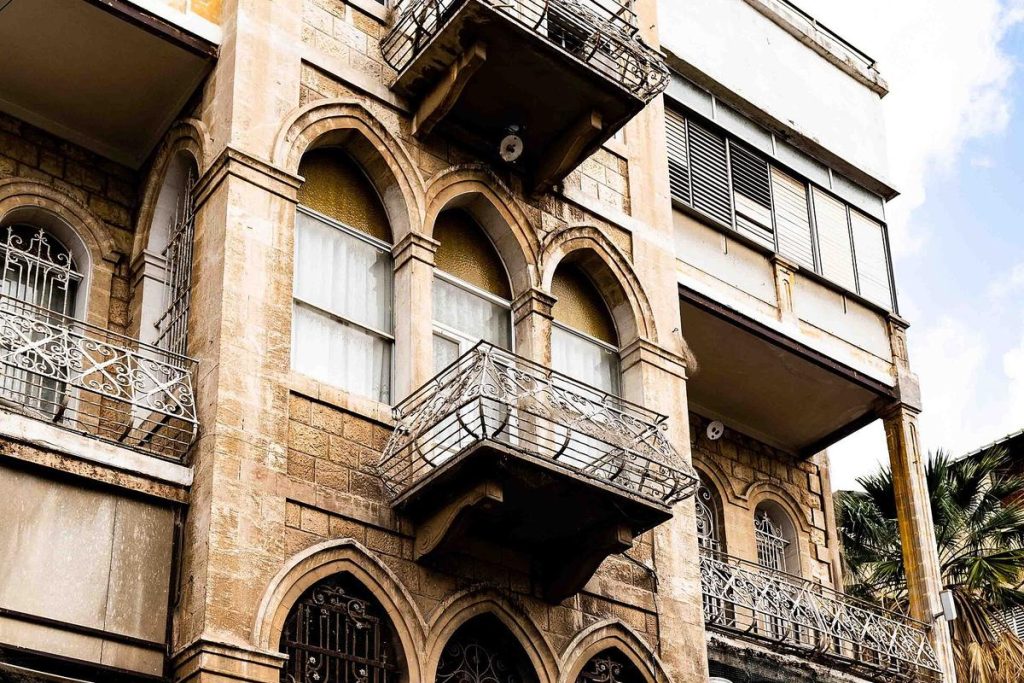
Before signing the purchase agreement, you must request a certified copy of the modification permit specifically covering the terrace expansion. In Israel, the absence of this document means the additional area is illegal and may be demolished at your expense. The seller must guarantee the administrative validity of this extension, failing which a portion of the sale price should be withheld. This verification is done with the municipal permits office, not by simply consulting the land registry.
The tabou registry and detecting undeclared work
In the United States, title companies and attorneys verify property compliance through public records and inspections. In Israel, the tabou (land registry) indicates the initial cadastral area but does not always reflect subsequent physical modifications. A penthouse may show an area of 150 m² in the registry, while the actual terrace covers 200 m². This discrepancy is common and serves as the first warning sign.
You cannot rely on the property description in the listing. The « actual » area is what physically exists, while the « legal » area is what was approved by the initial construction permit. If the terrace was expanded after construction without a modification permit, it does not legally exist. In the event of a municipal inspection, this area is considered an illegal structure.
To detect this anomaly, you must compare the original construction permit plans with the current state of the property. The tabou allows you to find the reference number of the initial permit. You must then hire a licensed surveyor to measure the exact dimensions of the current terrace. The surveyor overlays these measurements on the original plans. If the outdoor area exceeds the limits of the initial permit, the extension is irregular.
This step is crucial because it defines the scope of negotiation. If the extension is illegal, the sale price must reflect the risk of demolition or the cost of regularization. Never sign a contract that mentions an area larger than the permit without demanding proof of authorized modification. The surveyor does not provide legal advice, but they provide the factual data necessary for your attorney to assess the risk.
Inquiry with the municipality and the strength of the construction permit
Consulting the tabou is not enough. The construction permit is a separate document, archived by the municipality. You must submit a formal information request to the local permits office (Tzav Hachana). This procedure is different from a simple cadastral consultation. It allows you to verify if a modification permit was issued for the specific terrace.
Verify that the permit explicitly covers the terrace expansion. A generic permit for « outdoor works » or « building renovation » does not protect against future disputes. The document must mention the exact dimensions of the new area and the approved materials. An expired permit or one not executed within the deadline loses its validity.
Clearly distinguish between a work authorization and a post-construction regularization. A work authorization issued before construction has strong legal value. A regularization requested after construction is more fragile and can be challenged by third parties or the municipality itself if standards were violated. The impact on the legal value of the extension is direct: a recent regularization exposes the owner to a risk of demolition if the municipality decides to reclassify the work.
We systematically verify the permit issue date and the completion date of the work. If the gap is abnormal, we request proof of work completion. This verification takes time and must be integrated into the transaction timeline. Do not consider the transaction secure until you have the certified copy of the modification permit, confirmed by the municipality.
The legal risk of illegal extension: demolition and fines
The municipality has the power to order the forced demolition of non-compliant structures. This decision is enforceable and provides no compensation for the buyer. If you buy a penthouse with an expanded terrace without a permit, you are the legal owner of the building and therefore responsible for the illegal structures present. The seller’s fault does not protect you.
Fines for illegal work fall on the current owner. They are calculated based on the value of the illegal structure and the duration of the illegality. These amounts can be significant and add to the cost of demolition. The Court for Illegal Structures (Beit Mishpat LeChalavot Ila’ut) is competent to adjudicate these disputes.
Consider the case of a foreign investor who bought a penthouse in Netanya. The terrace had been expanded by 20 m² by the previous seller. No regularization procedure had been initiated. Three years after the purchase, the municipality ordered demolition. The investor had to pay the demolition costs and a substantial fine. He could not recover these amounts from the seller because the contract did not contain a specific clause regarding terrace compliance.
This case illustrates the major financial risk. Demolition is not limited to the structure: it includes restoring the ground, reconstructing the roof if necessary, and any potential damage to neighbors. If the terrace encroaches on the ventilation or light zones of lower floors, the risk of litigation with neighbors adds to the municipal risk.
The warranty clause in the sales contract: the one-week clause
The sales contract must contain a specific clause guaranteeing the existence and validity of the permit for the expanded terrace. Do not settle for a general warranty against hidden defects. Draft a clause stating that the seller guarantees the terrace corresponds to the plans approved by the municipality.
Implement a retention mechanism. A portion of the sale price, for example a significant percentage, is withheld by your attorney until the seller produces the certified permit. If the permit is absent or invalid, this sum covers regularization or demolition costs. If the permit is valid, the retention is released at the signing of the notarial deed.
Clearly define responsibilities in the event of an irregularity discovered after signing. The contract must specify that the seller remains responsible for fines and demolition costs if the irregularity existed before the sale. This clause must be enforceable against the seller’s heirs in case of death. In Israel, contractual liability can be transmitted to heirs, but this depends on the contract drafting and the succession (yerusha).
We draft these clauses to protect the buyer residing abroad. The warranty clause must be clear and unambiguous. It must explicitly mention the terrace area and the permit reference number. In case of litigation, this clause is the first proof of the seller’s responsibility. Do not let a seller’s attorney minimize the importance of this clause under the pretext that it is « unusual. » It is essential for properties with extensions.
The role of the attorney and cross-verification with the vaad bayit
The attorney must verify that the work did not violate the building’s internal regulations. The vaad bayit (building committee) has the power to challenge modifications that affect the structure or aesthetics of the building. An expanded terrace may alter the distribution of charges or the stability of the building.
Consult the minutes of the general assemblies of the vaad bayit. Search for any challenges to the validity of the work by neighbors. If a neighbor filed a complaint against the extension, even if the municipality issued the permit, the risk of civil litigation remains. The vaad bayit may refuse to cover damages caused by the extension in its collective insurance.
Coordination between administrative verification (municipality) and civil verification (co-ownership) is indispensable. A municipal permit does not exempt you from co-ownership approval if the work affects common areas. Conversely, the approval of the vaad bayit does not replace the municipal permit. The two verifications are complementary and must be conducted in parallel.
We require a certificate from the building manager confirming the absence of ongoing litigation regarding the terrace. This certificate must be recent and signed by the president of the vaad bayit. It must state that the work was carried out in accordance with internal regulations. In case of doubt, we request a copy of the assembly minutes authorizing the work. This double verification secures the transaction against administrative and civil risks.
Regularizing work: when the permit does not exist
If the modification permit is absent, you can request a retroactive permit. This procedure is complex and long. The municipality imposes strict conditions: the terrace must not encroach on protected zones, must not violate neighbors’ rights to view, and must respect fire safety standards.
The cost and duration of regularization must be integrated into the price negotiation. If the permit is missing, the sale price must be reduced by an amount corresponding to the estimated regularization costs by an expert. This amount includes the architect’s fees, filing fees, and any fines for illegal work. Do not negotiate the price without obtaining a precise estimate of these costs.
The risk of refusal of regularization is real. If the terrace encroaches on the ventilation zone of lower floors, or if it blocks natural light for a neighbor, the municipality may refuse the permit. In this case, the only solution is demolition. This refusal can occur at any time, including after the purchase. The risk therefore remains intact until regularization is obtained.
We advise against buying a property with an unregulated extension without an exit clause. If regularization is refused, you must be able to cancel the sale without penalty. This clause must be drafted by your attorney. Regularization is an uncertain process. Do not count on it as a guarantee of security. It is a safeguard option, not a protection.
Protection of the buyer residing abroad: the notarial deed
The notarial deed must expressly mention the compliance of the terrace with the approved plans. This mention blocks any future dispute. The Israeli notary does not systematically verify the physical compliance of extensions, unlike in the United States where title companies and attorneys play a control role. In Israel, it is up to the buyer to provide the proofs to the notary.
Attach a certified copy of the modification permit as an annex to the sales deed. This annex is an integral part of the deed. In case of litigation, it proves that the buyer acted in good faith and that the seller provided the required documents. Without this annex, the notary may refuse to mention compliance, leaving the buyer exposed.
The difference with the United States is significant. In the US, title companies and attorneys verify inspections and property compliance. In Israel, the notary ensures the legal validity of the transaction but does not control the physical reality of the property. This is why your role, and that of your attorney, is crucial. You must provide all proofs of compliance before signing.
We prepare the complete file for the notary: permit, vaad bayit certificate, surveyor report. This file is attached to the deed. It protects the buyer residing abroad who cannot travel to Israel to verify the site. Documentation is your only protection. Do not neglect any document.
Post-purchase management: keys, tenants, and emergencies
Once the deed is signed, the management of the property becomes your responsibility. Who receives the keys? Who finds the tenant? Who answers when a pipe bursts on a Friday night? These questions must be addressed at signing.
If you reside in the United States, you cannot manage the property yourself. You must entrust management to a professional. We offer rental management that covers all these aspects. We manage tenant search, lease drafting, rent collection, and property maintenance.
In case of technical emergency, our team is reachable 7 days a week. We intervene quickly to repair water damage or mazgan (air conditioning) failures. We also manage relations with the vaad bayit and the municipality. You do not have to worry about administrative or technical details.
Rental management is essential to preserve the value of your investment. A poorly maintained property loses value and attracts low-quality tenants. We ensure that the property is always in optimal condition. For more information on our services, consult our page buying or selling in Israel. If you have questions about permit verification, read our article Verifying the permit of an inherited apartment in Israel before renting. And if you fear damage, discover Tenant damages the penthouse terrace: who pays in Israel?.
Never sign a sales contract without having obtained the certified copy of the terrace modification permit. Demand a specific warranty clause and a retention of guarantee until the production of the document. Verification with the municipality and the vaad bayit is indispensable to secure your investment.

Gestion locative en Israël pour propriétaires francophones. Bureaux à Netanya, 26 Dizengoff. Une question sur votre bien ? Écrivez-nous.