Renting a Mamad Without a Final Occupation Permit in Israel
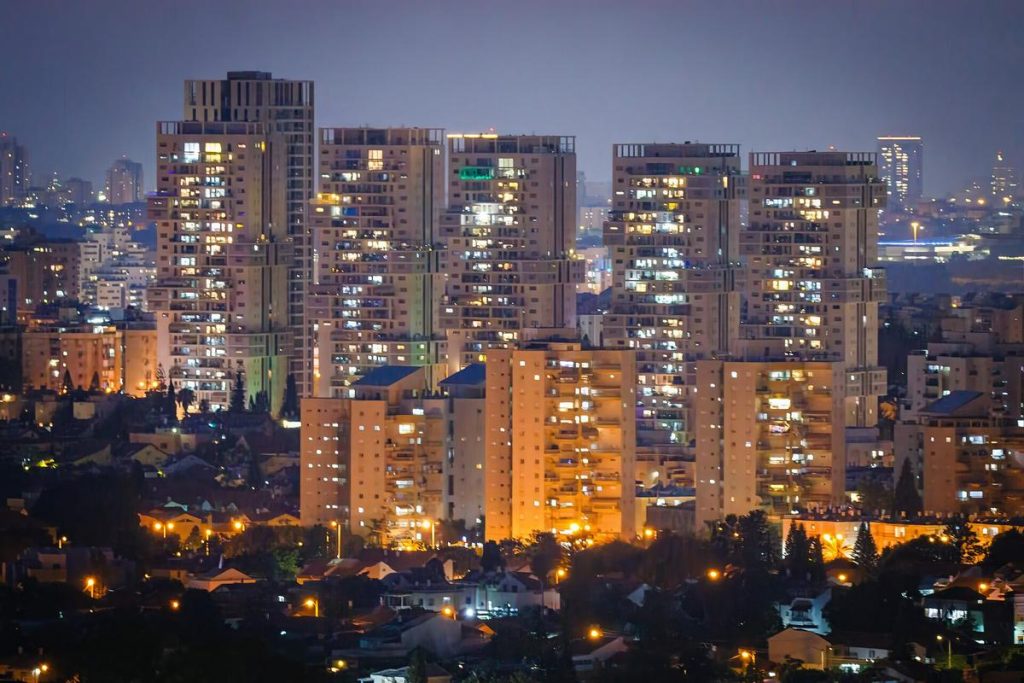
In Israel, a mamad is a secure room independent from the rest of the unit. You can rent it out immediately, even if the building’s overall occupancy permit is not finalized, because it is a distinct unit. The key is not administrative but contractual and technical: you must have valid electrical and water connections, as well as liability insurance. The main risk is not the legality of the rental, but the inability to bill for services or the lack of indemnification in the event of a claim.
The legal distinction between the main unit and the mamad
The mamad is often registered at the tabou as a separate unit, distinct from the main apartment. Check if your title deed mentions two unit numbers or just one with an annex. If it is an annex, its rental is subordinate to the main unit; if it is a distinct unit, it has its own legal existence. This distinction is crucial because it determines whether you can collect independent rent.
Unlike in France, where an annex cannot be rented separately without specific authorization, Israeli law tolerates this separation if access is independent. The lack of an occupancy permit for the entire building does not prohibit renting a unit whose structure is complete and secure. The tenant does not need the entry hall to be furnished or the neighboring floors to be delivered to occupy their secure room.
Review the sales deed or the real estate promotion contract. If the developer delivered the mamad before the rest, they generally provided a partial compliance certificate. Keep this document: it proves the room is ready for use, even if the hall or neighboring floors are not. This certificate is your shield against tenant claims citing the building’s incompleteness.
- Confirm the legal nature of the unit at the tabou before signing the lease.
- Keep the partial compliance certificate provided by the developer.
- Ensure that access to the mamad is physical and independent of the main unit.
The status of the occupancy permit and its local limits
The finalized occupancy permit concerns the overall safety of the building: emergency stairs, fire detection in common areas, and material compliance. It does not validate the use of an individual room if that room is physically autonomous. In practice, many mamad units are rented in office towers or residential buildings currently being delivered. Tenants accept that access is via a temporary corridor or a construction elevator, provided the room itself is delivered.
Do not promise the tenant that the global permit will be obtained by a specific date. This is a variable outside your control. Instead, commit to the immediate availability of electricity and water for this specific unit. This is where the real risk of dispute lies, not in urban planning administration. If the mamad elevator is not functional, consult our analysis on the mamad elevator permit to understand your remedies.
The occupancy permit is an administrative document certifying the compliance of the whole. It has no blocking effect on the use of a closed and secure unit. The tenant pays for the security and privacy of their room, not for the completion of the rest of the building. As long as the reinforced door closes properly and the life systems are operational, the rental is valid.
- Do not link the validity of the lease to the acquisition of the global permit.
- Specify temporary access conditions in the lease if the hall is incomplete.
- Focus your contractual guarantees on the internal functionality of the unit.
Technical connections: electricity and water in an isolated unit
The mamad must have independent electricity and water meters. If the meters are shared with the main unit, you cannot reliably bill the tenant. The electrical network must be connected to a separate panel, protected by a dedicated circuit breaker. Without accounting separation, you risk not being paid for the tenant’s actual consumption.
The presence of a doud shemesh on the common roof is a point of friction. If the system is not yet connected to the mamad, the tenant will have to pay for cold water only or use electric heaters. Specify this in the lease. Otherwise, they may refuse the unit or demand a rent reduction. Hot water is a service expected by default in an Israeli dwelling, even a small one.
Have a certified electrician inspect the compliance of the mamad electrical panel. This is not a usage check as in France, but a technical verification essential for your insurance. If the wiring is temporary (bare cables, unsecured outlets), the unit is not rentable. You must require the developer or the building manager to ensure final compliance before handing over the keys.
- Verify the existence of individual meters for water and electricity.
- Test water pressure and electrical voltage stability.
- Require the activation of the doud shemesh or plan a contractual alternative.
Drafting the lease: shtar hova and unit specifics
The lease must describe the object of the rental with precision: “the secure unit designated as mamad, located on the Xth floor, distinct from the main unit.” Avoid vague terms like “annex space” that can create ambiguity regarding the rented area and charges. Clarity in the title is the first protection against future disputes.
Include a clause on the condition report. Unlike a complete apartment, the mamad has a reduced surface area. List each element: reinforced door, window, power outlet, water point. An empty and precise condition report is easier to contest or validate than a generic document. The tenant must know exactly what they are renting.
The shtar ’hov (promissory note) is often requested in addition to the lease. It is a signed acknowledgment of debt by the tenant and their guarantor. Nothing is paid at the signing, but this document strengthens your position in case of non-payment. It does not replace the lease; it complements it. Ensure that the amount of the shtar ’hov corresponds to the monthly rent and that the guarantor is solvent.
- Describe the unit as a distinct property, not as an annex.
- Draft a detailed condition report of internal equipment.
- Require a shtar ’hov signed by the tenant and a arev (guarantor).
Insurance and liability: the blind spot
Your standard home insurance does not necessarily cover the rental of a distinct unit. You must subscribe to a landlord liability insurance policy. This policy must cover damages caused to third parties by the tenant and damages suffered by the building. In the event of a claim, the insurer will check if you declared the rental.
The main risk is not the legality of the rental, but the lack of coverage. If a pipe bursts and floods the apartment below, your insurance must indemnify the neighbor. If you did not declare the rental, the claim may be denied. You would then be personally responsible for the damages. Verify that your policy explicitly mentions the rental of the mamad.
The tenant must also subscribe to their own liability insurance. This is common practice in Israel for rentals. Require a certificate of insurance from the tenant before handing over the keys. This protects your assets in case of tenant fault. The coexistence of two insurances (your liability and the tenant’s) is the security norm.
- Extend your insurance policy to cover the rental of the mamad.
- Require a liability insurance certificate from the tenant.
- Check the exclusions of your policy regarding buildings under delivery.
Managing charges and taxes: arnona and vaad bayit
The arnona (municipal residence tax) is due to the city hall. If the mamad is a distinct unit at the tabou, it may be subject to a separate notification. Otherwise, it is included in the notification of the main unit. You must clarify with the tenant who pays the arnona. Generally, the tenant pays the share corresponding to the rented area, or the owner pays the total and passes it on in the rent.
The vaad bayit (condominium charges) cover the maintenance of common areas. If the building does not yet have a formed management board, charges may be managed by the developer or a temporary manager. Consult our article on the manager of a new mamad to understand obligations without maintenance history. The tenant must know if the vaad bayit are included in the rent or paid in addition.
Transparency on charges is essential. A low rent but high and unpredictable charges create disputes. Fix the amount of the vaad bayit in the lease or plan an annual revision based on actual invoices. The tenant must be able to verify the invoices. The lack of clear billing is a major source of conflict in new buildings.
- Determine who pays the arnona and the vaad bayit.
- Specify if charges are included in the rent or billed in addition.
- Obtain the charge invoices to verify their actual amount.
The concrete case: a mamad in a residential tower under delivery
Imagine a mamad on the 12th floor of a tower where floors 1 to 10 are delivered, but the entry hall is still under construction. The tenant wishes to move in immediately. The mamad door is reinforced, and electricity and water work. The global occupancy permit is not obtained.
In this case, the rental is possible. The lease specifies that access is via the service elevator, secured by a code. The tenant accepts this temporary access. The developer’s partial compliance certificate is attached to the lease. The owner’s insurance is updated. The shtar ’hov is signed. The tenant pays the first month’s rent and charges.
The risk here is not legality, but practicality. If the service elevator breaks down, the tenant is blocked. The lease must provide a termination clause if access becomes impossible for more than a few days. This clause protects the tenant, but also you, as it limits your liability in case of force majeure related to building works.
- Specify the temporary access method in the lease.
- Include a termination clause in case of access blockage.
- Attach the partial compliance certificate to the tenant’s file.
Once the deed is signed: who manages the daily life
Once the lease is signed, daily management becomes your responsibility. Who receives the tenant’s keys? Who answers when a pipe bursts on a Friday evening? If you are in the United States, you cannot physically intervene in Netanya. You need a local point of contact.
We, at GII, manage this interface. We hand over the keys, we conduct the condition report, we collect the rents. When a problem arises, we intervene immediately. We have a network of local professionals: plumbers, electricians, glaziers. We do not leave the tenant to call a stranger. We coordinate the repair and bill the tenant if the failure is their responsibility.
This rental management is essential for an absent owner. It avoids reaction delays that can aggravate a claim. It ensures service continuity. You should not be on the phone with a tenant in Netanya for a plumbing problem. We manage the rental management of your property so that you can remain at ease in the United States.
Before renting your mamad, check three points: the independence of the meters, the coverage of your liability insurance, and the precision of the lease regarding the rented unit. These three elements are the pillars of a dispute-free rental. Do not neglect the drafting of the shtar ’hov; it is your financial guarantee in case of payment default.

Gestion locative en Israël pour propriétaires francophones. Bureaux à Netanya, 26 Dizengoff. Une question sur votre bien ? Écrivez-nous.