Silent Builder on Defects in a New Condo Before Key Handover in Israel
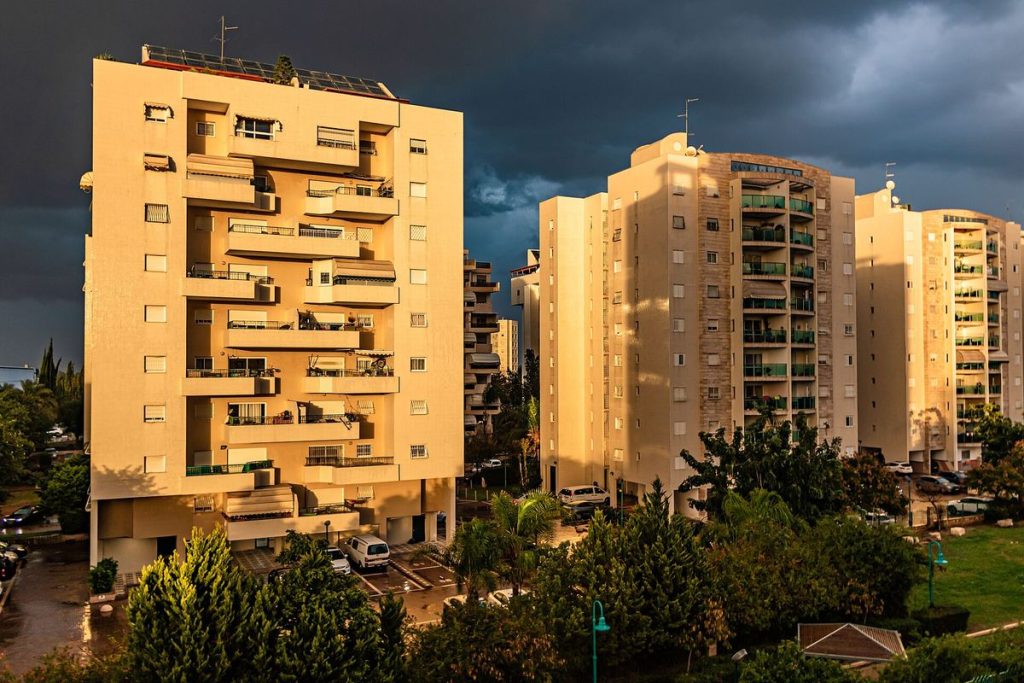
When a builder remains silent about defects in a new mamad, silence is not an option. Israeli law does not provide an automatic ten-year warranty like in the United States; your protection relies exclusively on the clauses in the construction contract and the technical evidence collected before signing the delivery report. Acting immediately in writing and having anomalies documented by an independent professional is the only way to preserve your financial and legal rights before receiving the keys.
The construction contract: your only shield before delivery
In Israel, the initial balance of power is determined by the document you signed. Unlike the U.S. system, which imposes strong and uniform legal guarantees, the Israeli system relies on contractual freedom. If the contract does not explicitly mention penalties for delays or the technical specifications of the mamad, your room for maneuver is reduced. You must immediately reread the sections regarding « construction defects » and « delivery deadlines. » Many developers include clauses limiting their liability to the simple handover of the keys, even if obvious workmanship errors remain. This is where the contract becomes your only shield.
Also check the status of the tabou, the land registry. The developer has likely registered a mortgage on your property as security for the bank loan they contracted to build. As long as this registration exists, your property rights are encumbered. If the developer goes bankrupt or disappears, the bank will take precedence over you. Understanding this mechanism is crucial: you cannot simply « refuse » the property without understanding the consequences for the mortgage. In the U.S., a ten-year warranty covers issues affecting the structural integrity of the work for ten years, without the need to prove fault. In Israel, you must prove that the defect existed at delivery and that it violates the contract or construction standards. This fundamental difference changes the strategy: it is not a matter of waiting for the problem to appear, but of documenting it now.
Written complaint protocol: the legal procedure in Israel
The builder’s silence must be broken by formal written communications. A phone call or a WhatsApp message, even if the developer responds later, has insufficient evidentiary value for a court. You must send a formal notice by registered mail with proof of receipt, or by timestamped email if the contract allows it. The content must be precise: list each observed defect (crack, leak, door that does not close) with dated photos. Do not say « the work is poorly done »; state « the partition of the mamad has a 2 cm crack, contrary to the approved plans. »
The contract often defines a response deadline, for example 14 days. If the developer does not respond, this silence constitutes an implicit acknowledgment of the facts or, failing that, a breach of their contractual obligations. Prepare your technical file in parallel. Israeli construction standards (SII) are strict. If you suspect a structural problem or non-compliance with the permit, reference the relevant articles of the standards. Do not rely on amateur photos. Take measurements with a laser meter, document the condition of surfaces. This file will be your primary evidence. In case of litigation, the judge will not visit the site to verify if the crack existed three months ago. They will base their decision on the documents you provided. The rigor of this written step determines the course of the process.
Building inspection: when to call an expert before key handover
Before signing anything, bring in a third-party professional. They must not be employed by the developer. A licensed architect or an independent structural engineer will perform a bedek bayit, a technical inspection of the building. This is not a standard usage check, but an expertise at your initiative. The cost of this intervention is initially at your expense. However, if the defects are confirmed and the developer is ordered to repair them, you can request reimbursement of this amount as legal fees or damages.
The expert’s report is a legal document. It describes the state of the premises, identifies non-conformities, and evaluates the severity of the defects. If the expert finds that the mamad does not meet fire safety standards or that insulation is insufficient, this report becomes a key piece of evidence. It allows you to move from a « complaint » to « proof of non-compliance. » Be careful with the choice of expert: avoid those who regularly work for the developer. The credibility of your file relies on the inspector’s independence. This report will also help negotiate the amount of withholdings on the balance. Without it, you are in the dark; with it, you have figures and objective findings.
The key dilemma: accept or refuse formal handover
The handover of keys is a legal act, not just a symbolic gesture. Signing the delivery report (PVL) with reservations is risky. In Israel, the signature of the PVL is often interpreted as acceptance of the property as is, except for very precise and limited reservations. If you sign without reservation, you lose the ability to claim repair of apparent defects. If you refuse the keys, the developer can invoke a delivery delay caused by you and charge you penalties.
The most common strategy is « acceptance under reservation. » You agree to receive the keys to access the property and avoid delay penalties, but you attach to the PVL an exhaustive list of unresolved defects, accompanied by the repair deadline set by the contract. You must also withhold a portion of the balance due to the developer, often called a « retention of guarantee. » This amount must cover the estimated cost of repairs. If the developer refuses to sign a PVL with reservations, do not sign. Contact your lawyer. The impact on notary fees and property transfer is direct: the transfer can only occur if contractual conditions are met. Do not yield to schedule pressure.
Housing administration intervention: the role of the municipality
The municipality, or arnona in the broad sense of local administration, plays a role of public control, not private mediation. You can report non-conformities to the municipal engineer. They will verify if the construction respects the approved building permit. If the mamad was modified without authorization, or if safety standards are not met, the municipality can issue a correction order. This order is binding on the developer.
However, the municipality does not settle financial disputes between you and the builder. It will not pay for repairs or compensate you. Its intervention serves to strengthen your file: a municipal correction order proves that the defect is real and illegal. Use the expert’s technical reports to support your complaint with the permits office. The municipality can also check the status of vaad bayit (condominium fees) if the building is already under management. But do not count on it to pressure the developer for financial compensation. It is a compliance tool, not a commercial dispute resolution tool.
Judicial recourse: the district court and mediation
If negotiations fail, the judicial path opens. In Israel, real estate disputes fall under the civil district court. You can request an injunction to pay or repair. The procedure often begins with an attempt at mediation, imposed by the court to reduce the judicial load. Mediation can be effective if the developer wishes to avoid a public scandal or an unfavorable judgment that would affect their reputation.
The costs of judicial proceedings are significant: lawyer fees, court costs, additional expertises. The timelines are long, often several months, or even years depending on the complexity of the case. Before engaging in this battle, evaluate the amount in question. If the defects are cosmetic, the cost of the procedure will exceed the value of the repair. If the defects are structural or affect the safety of the mamad, recourse is justified. The professional orders of architects and engineers can also be approached to report an ethical breach, which can exert moral pressure on the faulty professional.
Post-litigation management: insuring your property in case of hidden defect
Once the dispute is settled, or even during it, you must protect your investment. Standard home insurance does not cover construction defects, but it covers residual damages after key handover. If a pipe bursts after the signature, it is your insurance that intervenes, not the builder’s, unless the hidden defect is proven. The interaction with the builder’s liability insurance is complex. In case of water damage caused by a construction defect, you must contact your insurer first, who will then turn against the builder if fault is established.
Update your technical documentation. Keep all inspection reports, written exchanges, and repair reports. This traceability is essential for future resale or rental. An informed buyer or tenant will appreciate the transparency. If you plan to rent the property, the presence of a compliant and secure mamad is an argument. Managing these technical and legal aspects is an integral part of the asset’s value.
Never sign the delivery report without having attached a precise list of reservations. In Israel, the signature constitutes acceptance. If you have doubts about the solidity of the mamad or the compliance of the installations, have the facts documented by an independent expert before any signature. The developer’s silence resolves nothing; it only delays the resolution of the problem.
After the signature: the reality of remote management
Once the deed is signed and the keys handed over, the relationship with the builder ends. The property enters a new phase: that of ownership. For an owner residing in the United States, this transition is critical. Who receives the keys? Who verifies that the mamad is properly secured and that basic installations, such as the doud shemesh or the mazgan, function correctly?
The problem arises immediately. If a pipe leaks on a Friday evening, or if a tenant reports an air conditioning failure in the middle of summer, you cannot be on site. Property management is not just about finding a tenant. It involves a physical presence for emergencies, monitoring of vaad bayit, and managing relationships with tenants. We manage these aspects for our clients, ensuring key reception, rental placement, and intervention in case of damage. This operational continuity is essential to preserve the value of your investment and prevent minor problems from becoming major disputes. Discover how we take over after delivery in our article on property management in Israel.
To understand the steps preceding this phase, consult our guide on buying or selling in Israel. If you have already observed leaks before key handover, read Repairing a leak in a new mamad in Israel. Finally, do not neglect equipment maintenance: Air conditioning maintenance before key handover: obligation in Israel? details the developer’s responsibilities and yours.

Gestion locative en Israël pour propriétaires francophones. Bureaux à Netanya, 26 Dizengoff. Une question sur votre bien ? Écrivez-nous.