Tenant Returns After Absence: Empty Property in Israel
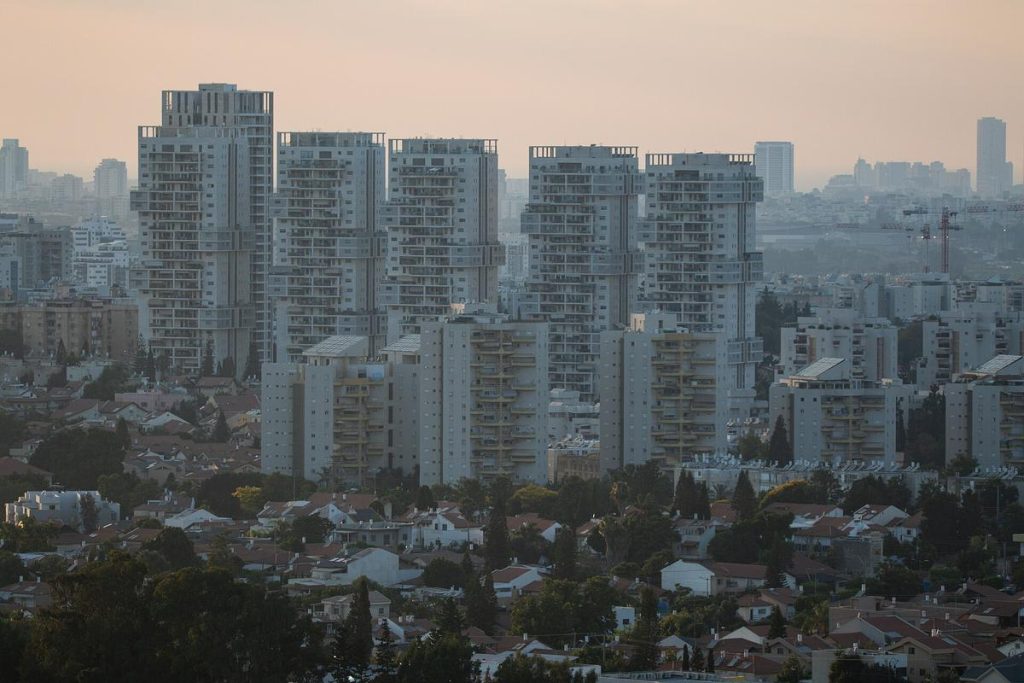
After several months of vacancy, handing over the keys to a new tenant in Israel requires a thorough technical inspection, as the heating and air conditioning systems have been completely inactive. The safety of the mamad must be verified before any occupation, and the signing of the shtar ‘hov replaces the standard security deposit. This procedure differs significantly from practices in the United States, where prolonged absence does not change the nature of routine move-in inspections.
Move-in inspection: the practice of bedek bayit after prolonged absence
In Israel, there is no legally mandated usage inspection before a property is rented out. The responsibility lies with the owner to ensure the property is habitable. After a long period without occupancy, a simple visual check is insufficient. We recommend hiring a professional for a building inspection, commonly known as a bedek bayit. This step is not an administrative formality, but a protection against latent damage that occurred during the vacancy.
The critical point concerns mechanical equipment. The doud shemesh (solar water heater) and the mazgan (air conditioner) accumulate dirt and can suffer from microscopic leaks if water stagnates in the pipes. A technician must verify the system pressure and the proper functioning of the pump. If the doud shemesh is out of service, the tenant will not be able to use hot water, which constitutes an immediate cause for complaint.
The move-in report must be drafted with precision. In the absence of a document signed by a neutral third party or a professional, the tenant can dispute the initial condition of the property. They may then attribute pre-existing damages to their stay. We insist on drafting a detailed report listing each equipment item verified. This document will serve as a reference in case of dispute. Unlike in the United States, where inspections are often standardized, here the quality of the inspection depends on the rigor of the owner or their manager. A careful inspection avoids disputes over repair responsibilities.
Legal compliance verification before move-in: the mamad and safety standards
Civil safety is the absolute priority in Israel. Before handing over the keys, you must check the secure room, the mamad. After months without maintenance, the doors of this room may be stuck, the seals worn, or the alarm system faulty. If the apartment does not have a mamad, the verification covers the mamak, the protected common space on the floor. Access to this space must be free and secure.
This requirement contrasts with the United States, where focus is often on environmental checks such as the condition of installations. In Israel, protection against aerial attacks is a basic safety condition for habitation. Local insurance companies often require proof that the mamad is functional to cover the property. If the mamad door does not close correctly, insurance may refuse to cover damages in the event of a major incident.
You must also verify basic electrical compliance. Outlets must be in good condition, without oxidation. An electrician can intervene quickly to ensure that the electrical panel has not suffered damage due to humidity or rodents. This verification is essential for tenant safety. We never allow a long-unoccupied property to be put back into service without this safety check. It is a matter of direct civil liability. If a fire breaks out due to a defective outlet left in that state, the owner is fully responsible. The safety of the mamad and electrical circuits is therefore the first filter before signing the lease.
Signing the shtar ‘hov: financial security without initial cash
The guarantee system in Israel relies on the shtar ‘hov, a promissory note. This is not a security deposit blocked in a bank account, as is common in the United States. It is a document signed by the tenant and their guarantor, the arev. No money is paid at the time of signing. The shtar ‘hov represents a potential debt that the tenant and guarantor acknowledge owing to the owner.
The value of the shtar ‘hov is set contractually. It generally corresponds to several months of rent, covering risks of non-payment or damage. The procedure for verifying the guarantor’s solvency is crucial. In the United States, one verifies the tenant’s income. In Israel, the guarantor’s solvency is equally important. We verify the financial capacity of the arev before accepting the shtar ‘hov. If the guarantor cannot cover the amount of the note, the owner’s security is compromised.
This mechanism offers flexibility. In the event of an incident, the owner can demand payment of the shtar ‘hov if damages exceed normal repairs. It must be clearly understood that this is not insurance. It is a legal recovery tool. The lease drafting must specify the conditions for triggering this note. We insist on the clarity of this point. The tenant must know that their signature engages their personal assets and those of their guarantor. This practice is common and well understood by Israeli tenants, but it requires strict administrative rigor to be effective in case of dispute.
Restarting subscriptions and charges: vaad bayit and public services
After a prolonged vacancy, water and electricity meters may have been cut off or put on standby. You must reactivate these services with the local companies. For water, this often concerns regional companies like Mei Ayalon or their equivalents depending on the region. For electricity, it is Teled. Reactivation takes a few days. You must anticipate this step so that the tenant finds water and electricity upon move-in.
Condominium charges, the vaad bayit, are another source of problems. During the absence, these charges continue to accrue. If the owner has not paid the association bills, arrears may accumulate. These debts remain the responsibility of the owner, even if the property is rented. We systematically verify the vaad bayit balance before handing over the keys. A dispute with the condominium can block the key handover or lead to penalties.
The arnona, the municipal tax, is a frequent point of friction. This tax is due by the occupant of the property. The transfer of responsibility occurs on the tenant’s move-in date. Even if the quarterly bill has already been issued in the owner’s name, the portion corresponding to the months of occupancy must be reimbursed by the tenant. This point must be clarified in the lease. We require that the tenant take charge of the arnona from their arrival. This distinction between routine charges and municipal taxes is essential to avoid financial misunderstandings between the owner and the tenant.
Rent indexation: application of the cost-of-living index after a vacancy
In Israel, rent indexation is based on the cost-of-living index (CPI). After a vacancy of several months, the rent must be updated to reflect the inflation that occurred between the end of the old lease and the signing of the new one. This update is not automatic as in some U.S. leases. It must be negotiated and included in the new contract.
The calculation is based on the variation of the official index between the two dates. If inflation was high during the vacancy, the new rent will be significantly higher than the old one. There is no automatic triennial revision in Israel. Indexation occurs at the signing of the lease or by mutual agreement during the contract term. We advise including an annual indexation clause in the lease, based on the CPI variation over twelve months. This clause protects the owner against the erosion of the rent’s purchasing power.
The negotiation of this clause is a sensitive point. The tenant may resist a strong initial increase due to past inflation. A balance must be found. We explain to the tenant that indexation is a standard practice in Israel. The absence of this clause exposes the owner to a loss of real value in the rent. Transparency regarding the indexation calculation is essential to obtain the tenant’s agreement. This practice differs from the United States, where indexation mechanisms are often more rigid and frequently capped by law. Here, contractual flexibility is the key.
Home insurance: owner coverage and tenant requirements
Insurance in Israel is distinct for the owner and the tenant. The tenant is required to subscribe to a « mashken » insurance covering the contents of their apartment and their civil liability. This insurance is separate from the owner’s. It covers damages caused by the tenant to condominium property or to neighbors. The owner must verify that the tenant has properly subscribed to this policy before handing over the keys.
The owner, on the other hand, must ensure that their policy covers water damage to common areas and the mamad. After a vacancy, the risk of leaks is increased. If a leak originates from the owner’s doud shemesh and damages the tenant’s apartment, the owner’s insurance intervenes. If the leak is due to tenant negligence, the tenant’s insurance pays. The boundary between the two is sometimes blurry.
We verify the deductibles of both policies. In the event of an incident linked to negligence during the absence, the deductible may be significant. It must be known who bears it. The lease must specify that the tenant is responsible for damages caused by their use of the property. The interaction between insurances is complex. We recommend having the policies reviewed by a broker. This step is crucial to avoid the owner having to advance significant sums. The strict separation of responsibilities between the owner’s insurance and the tenant’s insurance is a specific feature of the Israeli market.
Key handover and transfer of responsibility: the legal moment of possession
The transfer of legal responsibility occurs at the exact moment of the key handover. A precise key handover protocol specifying the date and time must be drafted. This document marks the end of the owner’s responsibility and the beginning of the tenant’s. In Israel, there is no mandatory contradictory move-in inspection imposed by law. The protocol signed by both parties is the only recourse in case of dispute.
We insist on photographing existing defects. Before handing over the keys, we photograph cracks, stains, and scratches, with timestamps. These photos are attached to the protocol. Without this proof, the tenant can claim repairs for pre-existing damages. This is a common-sense practice, but it has become indispensable. The protocol must list the water and electricity meters as of the handover date.
This moment is crucial. Once the keys are handed over, the tenant is responsible for the preservation of the property. Any damage occurring after this time is at their expense. We ensure that the tenant has fully understood this transfer of responsibility. The clarity of the protocol avoids misunderstandings. This practice, simple in appearance, is the foundation of the owner’s legal security. It replaces U.S. usage inspections with documentary and photographic rigor. It is the Israeli method of protecting the property.
After a prolonged vacancy, do not hand over the keys without a professional inspection of the mamad and heating systems. The shtar ‘hov and the key handover protocol are your only legal protections. For rigorous management of these steps, consult our property management. If you anticipate a tenant departure, read our article on apartment repairs after tenant departure in Israel. Finally, in case of inheritance, the current tenant’s situation is addressed in Current tenant and inheritance in Israel without a lease.

Gestion locative en Israël pour propriétaires francophones. Bureaux à Netanya, 26 Dizengoff. Une question sur votre bien ? Écrivez-nous.