Waiver of Condo Fees During Extended Vacancy in Beersheba
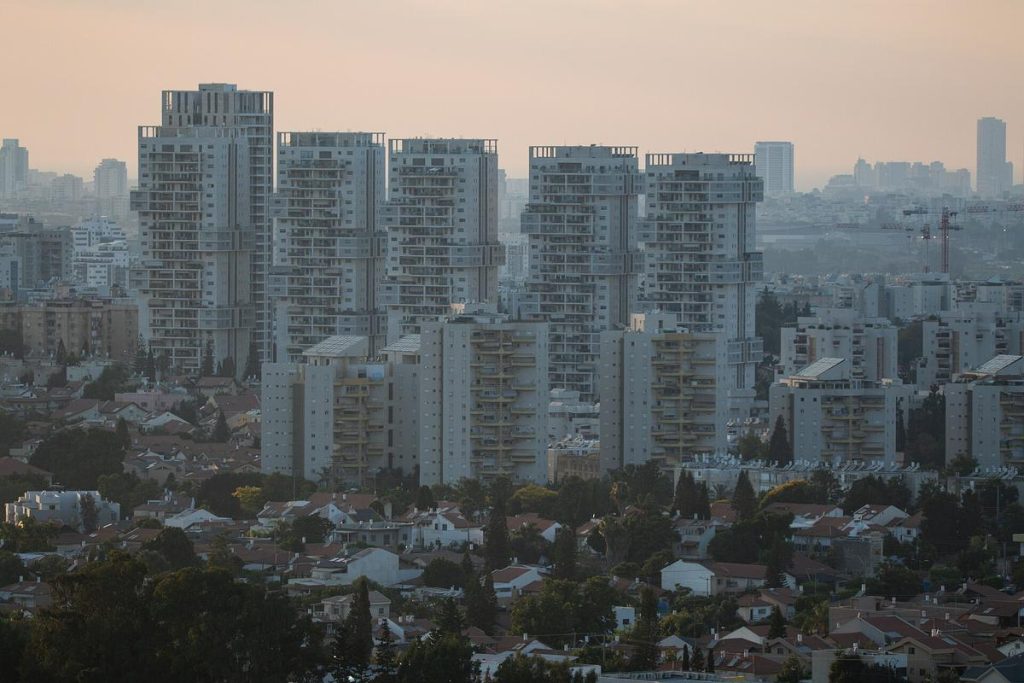
In Israel, district court precedents and the bylaws of building associations (vaad bayit) allow owners to seek a reduction in common charges if part of the building is unusable during a prolonged vacancy. This exemption does not apply to municipal taxes (arnona) but covers maintenance fees for common areas. In Beer Sheva, where older buildings are common, the process relies on proof of specific deterioration rather than a simple declaration of vacancy. You must work with the building manager to adjust cost allocation, demonstrating that your apartment does not benefit from common services during the relevant period.
The legal distinction between arnona and vaad bayit
Owners living abroad should stop linking these two expenses. Arnona is a local tax due for the existence of the property, while vaad bayit fees are service charges. In Beer Sheva, the city requires payment of arnona even if the apartment is empty. However, the building association may agree to reduce your share of common charges if you prove that you do not use elevators, underground parking, or common spaces during the vacancy. This distinction is fundamental for any exemption request. Never submit a file that mixes the two. Separate the requests: one for the city (rarely accepted) and one for the building manager (often accepted under certain conditions). Confusion delays processing and exposes you to late penalties on arnona, which are calculated by the municipality without regard to your rental situation.
- Define the tax nature of arnona paid to the Beer Sheva municipality, which remains due regardless of occupancy.
- Explain that building association charges (vaad bayit) cover common area maintenance and are negotiable according to bylaws.
- Clarify that vacancy never exempts you from arnona, but it can impact your share of vaad bayit fees if a service becomes impossible.
- Differentiate the Israeli property tax from building manager charges, which are often confused by foreign owners.
The role of the building manager and the tabou registry
Before submitting a request, you must identify the decision-maker. In Israel, the building manager is not a passive intermediary but an elected administrator. They have the power to propose changes to charges at the general assembly. The tabou, or land registry, does not mention rental vacancy, but it proves ownership. For an exemption request, you must provide a certificate of non-occupancy. The manager must verify that the apartment is not used as a commercial space or for storage. If the building bylaws in Beer Sheva are silent on vacancy, the manager can rely on the principle of equity to propose a reduction. You must provide them with the exact dates of the vacancy. Without this documentation, the manager cannot initiate the process with other owners. The tabou registry serves here as proof of title, not proof of use. Use is proven by the absence of utility consumption records or service bills related to occupancy.
- Identify the building manager (vaad bayit) appointed by the general assembly and verify their legal mandate.
- Consult the land registry (tabou) to confirm the absence of a registered tenant and the date of vacancy.
- Review the building bylaws to understand the procedure for modifying charge allocations.
- Obtain a copy of the minutes from the previous general assembly addressing common budgets.
Proof of unusability of common areas
Exemption is not automatic. It relies on proof that you did not benefit from the services. If the elevator is out of order and you cannot access your floor, the manager can reduce your share of elevator fees. If the parking is flooded and unusable, the parking fee share can be suspended. In Beer Sheva, where infrastructure can be aging, these situations are frequent. You must document each unused service. A simple letter stating « I am absent » is not enough. The manager requires factual demonstration. If the building does not have a functional mamak (protected common space), or if access is locked, this constitutes a strong argument. You can hire a professional to inspect the common areas if a major breakdown has made them inaccessible. This inspection, or bedek bayit, must be requested at your initiative, and you must advance the costs if the request is rejected. The professional’s report must precisely list the out-of-service elements and the duration of unavailability.
- Create a list of common services rendered inaccessible: elevator, parking, trash room, secure access.
- Have the building condition certified by a professional if a major breakdown has made common areas inaccessible.
- Provide utility consumption records (electricity, water) showing no activity in the apartment.
- Attach a signed sworn statement from the owner attesting to total vacancy.
The procedure for requesting a reduction from the vaad bayit
The request must be written and formal. Send a certified letter to the president of the vaad bayit. The letter must list the affected charge items and the vacancy period. Attach the evidence described previously. The manager is obligated to respond. In Israel, neighborly relations are direct. The manager cannot ignore a motivated request. If the manager refuses, they must justify their decision in writing. You can then appeal to the general assembly. If the assembly refuses the reduction, you can contest it before the district court. The procedure is accessible to individuals. An attorney is not mandatory for an initial contest, but legal advice is recommended if the amount is significant. The court will examine the building bylaws and the proof of service unavailability. The court’s decision binds all owners. This step is rarely necessary if the evidence is solid and the manager acts in good faith. The key remains the clarity of the request and the rigor of the evidence provided from the start.
- Draft the request specifying the charge items targeted.
- Attach proof of vacancy and deterioration of common areas.
- Send the certified letter to the president of the vaad bayit.
- Wait for the manager’s written response within a reasonable timeframe.
- In case of refusal, present the file to the general assembly of owners.
The specific case of Beer Sheva and older buildings
Beer Sheva has a unique real estate stock. Many buildings date back several decades. Technical installations, such as elevators or ventilation systems, may be chronically faulty. In this context, prolonged vacancy often coincides with the actual unavailability of common services. The vaad bayit in Beer Sheva is accustomed to these situations. The proof must be adapted: a dated photo of a blocked elevator, a report of unperformed repairs, or a zero electricity bill. Newer buildings, with modern mamak spaces and electronic security systems, offer less room for maneuver. If access to your floor remains possible via stairs, the reduction in elevator fees will be minimal. However, if the underground parking is flooded due to stormwater drainage issues, characteristic of certain areas in Beer Sheva, suspending the parking fee share is more justified. Adapt your argumentation to the technical reality of your building.
| Type of common service | Condition for exemption | Required proof |
|---|---|---|
| Elevator | Prolonged breakdown making access impossible | Breakdown report, photos, absence of usage records |
| Underground parking | Flooding or total closure | Photos of flooding, municipal notice |
| Common spaces (mamak) | Lockout or unsanitary conditions | Notary inspection, dated photos |
| Solar water heater (doud shemesh) | Unavailability of the common system | Technical report from a professional |
Managing vacancy and impact on rents
Rental vacancy depletes your cash flow. Without a tenant, the rent disappears, but arnona remains due. The reduction in vaad bayit fees does not cover this loss; it only reduces fixed charges. Separate the accounts. Entrust the property to a manager, such as our property management service, to negotiate charges with the building manager on your behalf. The manager knows local practices and the contacts within the vaad bayit. This accelerates the processing of your request. Prolonged vacancy signals a marketing problem. If the apartment remains empty, check if the condition of common areas is lowering its rental value. A poorly maintained building deters tenants. Reducing charges corrects the budget, not the appeal. Treat vacancy as a warning sign about the building’s attractiveness, not just as a line item to reduce.
- Do not confuse charge reduction with rent loss.
- Use the vacancy to audit the maintenance of common areas.
- If you are under management, ask the manager to negotiate charges.
- Check if the building’s condition is hindering re-rental.
Common errors made by foreign owners
Foreign owners make mistakes that harm their case. The first is requesting a total exemption. Israeli law does not provide for automatic exemption. It provides for a reduction proportional to the lack of use. Requesting a total exemption puts you in an aggressive position, and the manager will refuse. The second error is mixing arnona and vaad bayit. As noted, these are two distinct entities. The third error is failing to provide proof. A simple verbal statement has no legal value. The manager needs documents. The fourth error is neglecting deadlines. If the vacancy lasts several months, make the request in the first month. Waiting until the end of the fiscal year complicates retroactivity. Finally, do not underestimate communication. The vaad bayit is composed of neighbors. A polite and documented request is better received than an aggressive complaint. Israeli culture values clarity and directness. Be direct, factual, and courteous. These errors are avoidable with careful preparation of your file.
- Request a reduction, not a total exemption.
- Strictly separate arnona and vaad bayit.
- Provide documentary proof, not just verbal statements.
- Act early, at the beginning of the vacancy.
- Adopt a factual and courteous tone in your communications.
The role of the professional in inspection
If the situation is complex, hire a professional. An engineer or real estate expert can draft a detailed report on the condition of common areas. This report, or bedek bayit, has evidentiary value in court if the manager refuses the reduction. The professional must list defective elements and estimate the duration of unavailability. They can also assess the impact on the apartment’s rental value. This report costs money, but it is often worthwhile if the amount of charges at stake is significant. The professional can also advise you on repairs to request from the vaad bayit to avoid future vacancies. Prevention is more effective than repair. If the building has recurring problems, the professional’s report can serve as a basis for a collective action against the manager. You are not alone in this process. Other owners may be affected by the same problems. A collective action strengthens your position. The professional can help you identify these co-owners and coordinate the effort. It is an investment in peace of mind and the protection of your asset.
- The expert report has legal value in case of dispute.
- It documents the condition of the premises and the duration of unavailability.
- It can serve as a basis for corrective works.
- It helps coordinate a collective action with neighbors.
To obtain a charge reduction, document every element. Take dated photos, keep zero electricity bills, and have the condition certified by a professional if necessary. Always separate arnona from vaad bayit. Read our article Arnona and charges: paying for vacancy between two tenants in Israel to understand the complete tax mechanism. If your vacancy is very long, also read Arnona and prolonged vacancy: the transfer of municipal taxes in Israel to see if you can transfer the tax burden to a future buyer or tenant. Act early, be factual, and do not hesitate to call on a professional if the manager resists. Your property is an investment; protect it with solid evidence.

Gestion locative en Israël pour propriétaires francophones. Bureaux à Netanya, 26 Dizengoff. Une question sur votre bien ? Écrivez-nous.