Water damage: what to do in the first 48 hours
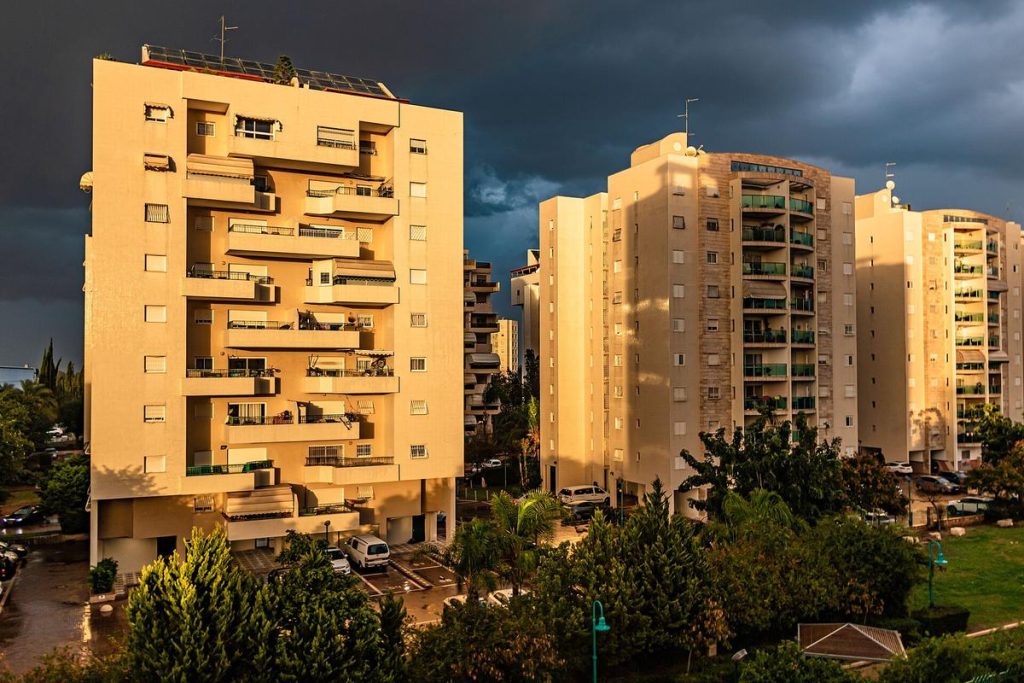
Water damage in a let apartment is settled, or gets out of hand, within the first two days. After that the water has had time to cross a floor slab, the neighbor’s paint has blistered, and a plumbing call-out has turned into a building site with a loss adjuster.
Here is what to do, in order, whether you are on site or four thousand miles away.
Hour zero: turn off the water
The first reflex is neither to call the insurer nor to look for someone to blame, it is to shut off the supply. In most Israeli apartments the stopcock sits in the service duct near the entrance, or in the water heater cupboard.
Every tenant should have been shown this on the day they moved in. It belongs in the condition report, with a photograph of where the valve is. That sounds excessive until the night somebody is looking for it at midnight.
Hour one: photograph before you mop
The natural urge is to soak it up. Photograph first: the source of the leak, how far the water has spread, the furniture affected, the marks on walls and ceilings, in your apartment and the neighbor’s if it has traveled.
Those time-stamped photographs are what will establish the origin of the loss and bring the right policy into play. Without them, everything is argued from memory, several weeks later, in front of an adjuster.
First hours: work out where the water is coming from
The answer determines who pays, and it breaks into three branches.
| Origin | Who bears it |
|---|---|
| Tenant’s appliance: washing machine, dishwasher, flexible hose | Tenant’s third-party cover, צד ג׳ |
| Embedded pipework, water heater, fixed installation | Building insurance, the owner’s |
| Common riser, roof, sealing of common parts | The building’s policy, through the vaad bayit |
A plumber identifies the origin in one visit. That is a modest cost against what it avoids: without the diagnosis, each insurer points at the other and weeks pass while the damage worsens.
Within 24 hours: notify
Policies generally impose a short notification window, often a few working days. Notifying early costs nothing, even if the origin is not yet established; notifying late can be enough to have the claim refused.
If neighbors are affected, tell them immediately, even where responsibility is not established. A neighbor informed the same day stays an interlocutor; the same neighbor who discovers the source three weeks later becomes an opponent.
Within 48 hours: dry it out
This is the step most often skipped, and the one that costs most when it is. A wall or floor left damp develops mould, and what would have been a repaint becomes stripping out the finish.
In Israel the heat helps, but not in a closed room. Ventilate, open up, and bring in a dehumidifier if the affected area is significant.
What changes when you live abroad
All of the above assumes a quick decision. An owner in New York or London usually learns of the loss from a message sent hours earlier, and has no way to send anyone round.
This is exactly the situation where management on the ground changes the nature of the problem. The tenant calls a local number, someone attends, shuts off the water, photographs, calls a plumber they know, warns the neighbors and notifies the claim. The owner receives a report, and a quote if there is work at their expense.
Without that, the whole chain rests on the tenant, who has neither the same obligations nor the same interest.
What could have been avoided
A good share of the water damage we deal with comes from known causes that can be checked in advance:
- Flexible hoses on washing machines and dishwashers, which split after a few years.
- Older water heaters, whose tanks eventually perforate.
- Shower and bath seals, which let water through to the slab unseen.
- Balcony and terrace waterproofing, tested by every winter.
Those four are checked during the twice-yearly inspections we carry out in the properties we manage. A replaced hose costs a few dozen shekels. The same hose bursting costs a ceiling.
This article describes practice on the ground and replaces neither your policy nor a loss adjuster’s opinion. Deadlines and exclusions vary between contracts: check yours before you need them.
Documenter la scène avant toute intervention
La première erreur que commettent la plupart des locataires est de commencer à nettoyer avant d’avoir capturé l’état des lieux. Il est impératif de réaliser une série de photos et de vidéos détaillées avant de toucher au moindre objet ou d’essuyer le moindre sol. Cette documentation doit être chronologique et exhaustive. Prenez des photos de l’origine supposée de la fuite, si elle est visible, puis filmez l’étendue des dégâts sur les sols, les murs et le mobilier. Assurez-vous que les horodatages des fichiers sont visibles dans les métadonnées ou mentionnez l’heure dans le fichier vidéo. Ce geste simple transforme une simple déclaration de sinistre en un dossier solide qui accélère considérablement le travail de l’expert d’assurance. Sans ces preuves visuelles, toute discussion ultérieure sur la cause du dégât devient une confrontation de paroles contre paroles, ce qui ralentit le processus de règlement et peut même mener à un rejet partiel de la prise en charge si l’assureur juge les preuves insuffisantes.
Il ne s’agit pas uniquement de montrer l’eau, mais de montrer ce qui a été touché. Photographiez les pieds des meubles, les plinthes et les zones où le gonflement du bois est déjà visible, car ces dommages ne sont pas toujours évidents à l’œil nu dans les premières minutes. Si vous êtes absent et que c’est un voisin ou un concierge qui a découvert la fuite, demandez-lui immédiatement de faire de même. Insistez sur le fait que toute action de nettoyage, même anodine comme l’aspiration de l’eau, doit attendre que la documentation soit complète. Un aspirateur sec peut détruire des traces d’humidité qui prouvent la trajectoire de l’eau, ce qui est crucial pour déterminer si la fuite est venue du dessus ou du dessous. Cette rigueur administrative, souvent perçue comme une perte de temps dans l’urgence, est en réalité l’outil le plus puissant pour sécuriser vos droits et éviter les litiges techniques lors de l’évaluation des dommages.
Maîtriser l’humidité et la ventilation active
Une fois l’arrivée d’eau coupée, la lutte ne fait que commencer. L’objectif immédiat est d’empêcher la condensation et la prolifération des moisissures, qui commencent souvent à se développer dès que la température et l’humidité relative se stabilisent dans les matériaux poreux. Ouvrir les fenêtres est un réflexe courant, mais il est souvent inefficace, voire contre-productif, si l’air extérieur est plus humide que l’air intérieur ou si la température extérieure est plus basse. Dans ce cas, vous créez un pont thermique qui favorise la condensation sur les surfaces froides, aggravant les dégâts. La stratégie correcte consiste à utiliser des déshumidificateurs portables. Ces appareils extraient l’humidité de l’air et la condensent dans un réservoir, ce qui est bien plus efficace que la simple ventilation naturelle pour assécher les murs et les sols.
Si vous n’avez pas accès à un déshumidificateur professionnel, utilisez des ventilateurs puissants dirigés vers des fenêtres ouvertes uniquement si l’air extérieur est sec et chaud. Placez des ventilateurs devant les zones touchées pour créer un flux d’air continu qui empêche la stagnation de l’humidité. Pensez également à retirer les éléments les plus vulnérables : tapis, coussins, livres et documents importants. Ces objets absorbent l’humidité comme des éponges et deviennent des foyers de moisissure s’ils restent dans la pièce. Si possible, séparez-les et exposez-les à l’air libre dans une pièce sèche et ventilée. Ne laissez jamais de moquette mouillée sous un meuble, car le poids de l’ameublement compresse les fibres et rend le séchage quasi impossible, forçant souvent le remplacement complet du revêtement. Cette phase de séchage actif est le moment où se joue la distinction entre une tache réparée et une structure dégradée.
Communiquer avec le voisin et l’assureur
La communication avec le voisin responsable, s’il a été identifié, doit rester factuelle et écrite. Évitez les appels téléphoniques ou les discussions orales qui peuvent prêter à confusion ou être interprétés de manière négative. Envoyez un message écrit, par courriel ou via l’application de l’immeuble, pour confirmer les faits : l’heure de la découverte, les mesures prises immédiatement (coupure de l’eau, photos) et la demande de prise de contact avec les assurances respectives. Ce canal écrit crée une trace incontestable qui protège les deux parties. Il est crucial de ne pas admettre de faute de votre part ni d’accuser formellement le voisin de négligence dans ce premier message. Limitez-vous aux faits observables et à la nécessité de coordonner la déclaration. Cette approche professionnelle désamorce les tensions émotionnelles qui s’installent souvent dans les premières heures et permet de se concentrer sur la résolution technique du problème.
Concernant votre assurance, la déclaration doit être faite rapidement, mais sans précipitation. Attendez d’avoir les premières photos et d’avoir identifié l’origine probable de la fuite. Lors de l’appel ou de la saisie en ligne, décrivez la situation avec précision : type de dégât, surfaces touchées, objets endommagés et actions déjà entreprises. Ne minimisez pas les dégâts par peur d’une franchise, mais ne les exagérez pas non plus. L’honnêteté est la meilleure stratégie, car les experts d’assurances sont formés pour détecter les incohérences. Si vous êtes loin de l’appartement, demandez à votre assureur s’il peut envoyer un agent local pour constater les lieux avant que le nettoyage ne commence. Cette intervention sur place est souvent plus rapide et plus précise qu’une expertise à distance basée sur des photos. En coordonnant bien les échanges entre voisins et assureurs, vous évitez les doublons de déclarations et les délais inutiles, garantissant ainsi une gestion fluide de la situation dans les 48 heures critiques.

Gestion locative en Israël pour propriétaires francophones. Bureaux à Netanya, 26 Dizengoff. Une question sur votre bien ? Écrivez-nous.