Who pays the property management fees in Israel?
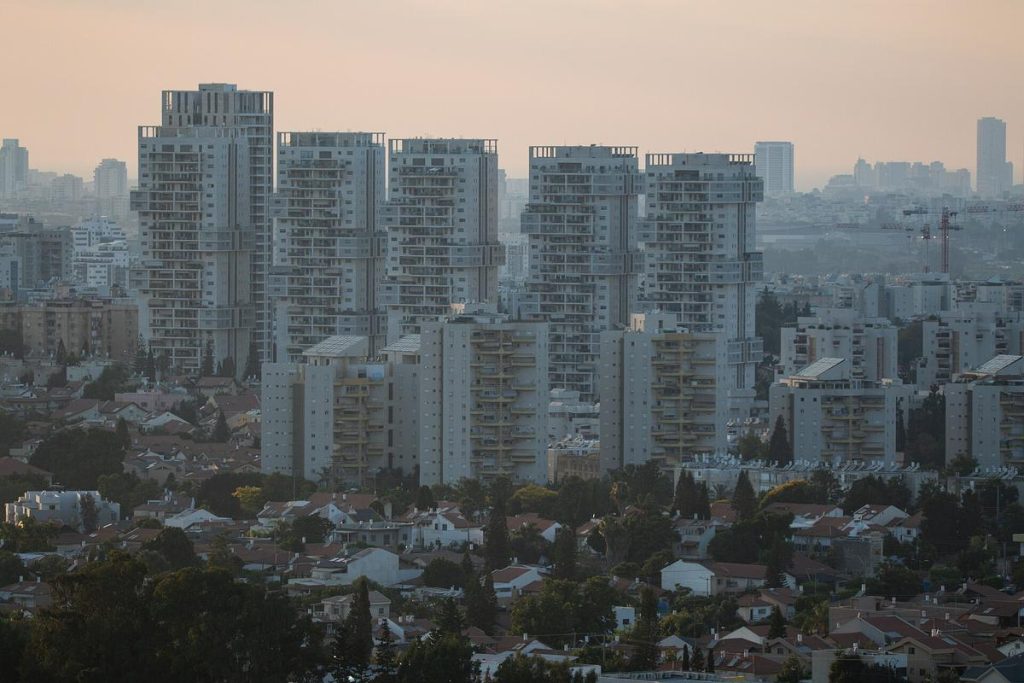
In Israel, cost allocation is governed by the management contract and local law, with no direct equivalents to French practices. The owner covers the agency commission, the vaad bayit, and the arnona, while the agency bills for its supervision and coordination services. Repair costs depend on the cause of the damage: normal wear and tear is the owner’s responsibility, while proven negligence is the tenant’s responsibility.
The agency commission: a contract distinct from the lease
The relationship between the owner and the agency is based on a mandate contract, which is separate from the lease signed with the tenant. This contract defines the agency’s compensation, usually expressed as a percentage of the gross rent or as a fixed monthly amount. Unlike in France, where regulated practices may exist in certain areas, the commission is freely negotiated. There is no legal cap imposed by the state.
This point is crucial: the commission is paid by the owner, not the tenant. In the Israeli market, the tenant does not pay an agency commission to the owner. It is therefore common for the owner to bear this cost alone, which affects the calculation of net yield. Furthermore, the commission is due even if the tenant leaves before the end of the lease, unless an explicit clause states that billing stops in case of vacancy.
We distinguish between two types of fees that are often confused. On one hand, there is the management commission, paid monthly. On the other hand, there are listing fees, which cover finding the tenant, drafting the lease, and verifying the application. These initial fees are often the exclusive responsibility of the owner. They are not shared with the tenant, unlike in some French habits where the landlord may ask the tenant to contribute.
Before signing, verify whether the commission is calculated on the gross rent or the net rent after charges. This detail changes the calculation basis. If the tenant pays a portion of the vaad bayit via a lease clause, should the commission be calculated on this additional amount? The contract must specify this. We recommend requesting a three-year numerical simulation, including potential vacancy periods, to visualize the real impact of this commission on your cash flow.
Vaad bayit charges: who advances them?
The vaad bayit are the building’s common area charges. They cover the maintenance of common areas, cleaning of stairwells, security, and sometimes central air conditioning. Under Israeli law, these charges are due by the apartment owner, regardless of whether the unit is occupied by a tenant or vacant. The building committee bills the owner based on the address registered at the tabou (land registry).
The tenant does not receive a direct invoice from the building committee. This is a major difference from France, where the property manager may bill the tenant directly for certain recoverable charges. Here, the owner remains the primary debtor. If the owner resides in France, they cannot easily manage disputes with the building committee. This is where the agency steps in.
The agency often acts as a financial intermediary. It advances the vaad bayit to the building committee to avoid any payment delays, which could lead to penalties or a suspension of common services. Then, it deducts this amount from the rent received or bills the owner separately. This mechanism creates a specific cash flow: the agency must have sufficient liquidity to cover these advances before being reimbursed by the owner.
Check your contract to see if the agency has the right to advance these fees without your prior consent. If the vaad bayit amount increases significantly, for example due to major facade work, should the agency consult you before paying? Most contracts provide for mandatory notification in case of an increase above a certain threshold. We require our clients to explicitly authorize this advance in the contract, with an annual cap, to avoid surprises.
The arnona and municipal taxes: an owner’s obligation
The arnona is the municipal residence tax, collected by the Netanya city hall or any other city where the apartment is located. It is calculated based on the apartment’s square footage, its location, and the building category. This tax is a legal obligation of the property owner. It is due even if the apartment is rented, even if it is vacant, and even if the owner resides abroad.
The tenant never pays the arnona. This is a frequent confusion among French-speaking owners, who associate this tax with French local charges. In Israel, the arnona is strictly the owner’s responsibility. The city hall sends the tax notice directly to the owner registered at the tabou.
The agency manages the payment schedule for the arnona. It monitors deadlines, often quarterly or semi-annual, and executes the transfer to the city hall. A payment delay can result in late interest and, in extreme cases, administrative sanctions. We verify each year that the declared square footage at the city hall matches the actual apartment. A declaration error can lead to an overtax or a request for retroactive regularization.
It is important to distinguish the arnona from the real estate income tax, which is a national tax. The arnona is local. The owner may sometimes request a reduction of the arnona if the apartment has been unoccupied for a long period, but this procedure is complex and depends on the specific rules of the Netanya municipality. The agency can help you prepare this file if you plan to leave the apartment vacant for several months.
Repair management: normal wear vs. tenant damage
The line between routine maintenance and damage repair is a source of disputes. The general principle is as follows: normal wear and tear related to the use of the apartment is the owner’s responsibility. This includes replacing worn plumbing parts, repainting walls after several years of occupation, and maintaining fixed equipment. Damage caused by the tenant’s fault is their responsibility.
The agency bills for its hours of supervising contractors, in addition to the cost of the work, according to the contract. This is not a hidden fee, but a service rendered. The agency organizes the intervention, verifies the quality of the work, and ensures that the tenant has access to the apartment for the repairs. If the doud shemesh (solar water heater) leaks, the agency organizes the intervention. The owner pays the contractor if the leak is due to wear. The tenant pays only if they caused the damage through proven negligence, for example by clogging the pipe.
For the mazgan (air conditioner), the distinction is more delicate. Annual filter maintenance and cleaning of outdoor units are often the owner’s responsibility, as they preserve the equipment’s value. However, if the tenant does not clean the filters and this causes a breakdown, the repair cost may be charged to the tenant. We address this point in our article on air conditioner repair: who pays, tenant or owner in Israel?.
In case of a dispute over the origin of the damage, the agency can have the damage assessed by a professional. This is not a mandatory expert inspection in the French sense, but a building inspection (bedek bayit) initiated by the parties. The written report serves as proof in case of a claim. We recommend always photographing the state of the apartment at the tenant’s entry and exit, with visible dates.
Legal fees and the shtar ‘hov in case of dispute
Attorney fees to recover an indigent tenant or an unreturned security deposit are the owner’s responsibility, unless otherwise agreed in the management contract. The agency does not cover court costs. It acts as an administrative and technical intermediary, but the decision to pursue legal action rests with the owner.
The agency’s role in preventing disputes is crucial. It drafts or has the shtar ‘hov (acknowledgment of debt) drafted in advance. This document is signed by the tenant and their arev (guarantor). It is not a payment, but a legal obligation to repay unpaid rents. In case of default, the agency can execute this shtar ‘hov without going through a long trial, which accelerates recovery.
If the tenant refuses to leave the premises, the agency can initiate an eviction procedure. The costs of this procedure, including attorney fees, are the owner’s responsibility. The agency can negotiate a friendly settlement to avoid these costs, but it is not their obligation. We always inform the owner of legal risks before launching a procedure.
It is important to verify that the shtar ‘hov is correctly drafted and registered. A poorly formed document can be annulled by the court. The agency must ensure that the arev has the financial capacity to pay. A solvency check is recommended before signing. If the tenant leaves before the end of the lease, the shtar ‘hov remains valid for the remaining rents, unless otherwise agreed.
Bank fees and international transfers: the cost of transfer
International transfer fees (SWIFT) to send rents to the owner in France are often deducted by the agency before transfer. These fees vary depending on the local bank and the destination. The agency applies the exchange rate in effect on the day of the transfer. It does not guarantee a fixed exchange rate. The conversion is done in shekels, then into euros or dollars according to local banking agreements.
There is no direct transfer in euros from an Israeli bank to a French bank without an intermediary. The conversion is automatic. The owner receives an amount in euros that depends on the day’s rate. This volatility is a risk factor to consider in the yield calculation. We recommend verifying the rate applied by the agency compared to the central bank’s market rate.
File fees or bank account fees may be included in the agency commission or billed separately. The contract must specify whether these fees are included or not. If the agency uses an intermediate account, account maintenance fees may be the owner’s responsibility. We verify that all bank fees are mentioned in the initial contract to avoid surprises.
In case of a transfer delay, the agency must inform the owner. A delay of several days can result in unfavorable exchange fees. We address this point in our article on who pays the charges of an apartment in case of inheritance in Israel?, where the management of financial flows is also central.
Audit and transparency: the owner’s right to verify
The owner has the right to demand a detailed monthly or quarterly statement of inflows and outflows. This statement must list the rent received, the vaad bayit paid, the arnona settled, and repair fees. The agency must provide supporting documents: contractor invoices, arnona tax notices, vaad bayit receipts.
Verify that the agency does not deduct hidden fees. File fees, account fees, or administrative management fees must be mentioned in the initial contract. If a fee appears without being contractually provided for, the owner can contest it. We recommend requesting a copy of the management contract and comparing it with the monthly statements.
The owner can request an inspection of the apartment at any time. The agency must facilitate this visit. If the owner cannot travel, they can appoint a third party to verify the state of the premises. This inspection is not mandatory, but it is recommended to ensure that the agency fulfills its obligations.
| Type of fee | Responsible party | Frequency | Required proof |
|---|---|---|---|
| Agency commission | Owner | Monthly | Account statement |
| Vaad bayit | Owner | Monthly/Quarterly | Committee receipt |
| Arnona | Owner | Quarterly | City hall notice |
| Wear repairs | Owner | Variable | Contractor invoice |
| Tenant fault repairs | Tenant | Variable | Inspection report |
| Legal fees | Owner | Variable | Attorney invoice |
Before signing a rental management contract, demand an exhaustive list of all fees deductible from the rent. Verify that the agency commission, bank fees, and supervision fees are clearly defined. Do not leave any implicit fees. Compare this list with the monthly statements during the first six months to ensure the agency’s transparency.

Gestion locative en Israël pour propriétaires francophones. Bureaux à Netanya, 26 Dizengoff. Une question sur votre bien ? Écrivez-nous.