Tenant Blocks Access to the Roof: Procedure in Israel
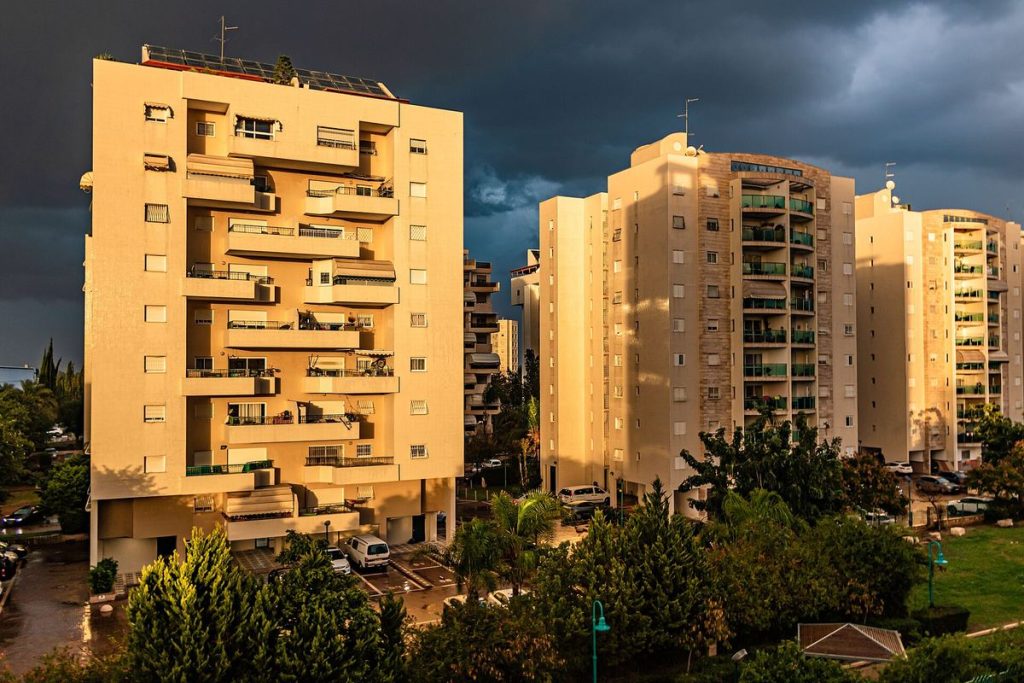
If your tenant blocks access to the roof of your penthouse in Netanya for urgent repairs, you cannot force the door open yourself. Israeli law prohibits self-help, even in cases of immediate danger. The procedure requires a professional assessment of the emergency, followed by an urgent petition to the family court. This court can order access under judicial supervision and impose financial penalties on the tenant for each day of obstruction.
The penthouse roof: between private property and common use
Before taking any action, you must determine the legal nature of the surface in question. In Israel, the distinction between private and common space is strict and relies on the tabou, the land registry. If the roof is registered as an integral part of your unit, you are the exclusive owner. If, on the contrary, it is listed as a common area of the building, it belongs to all co-owners, managed by the vaad bayit.
This distinction radically changes the procedure. If the roof is common, the vaad bayit has the power to compel access for works of general interest, regardless of the agreement of your apartment’s tenant. In this case, the building manager must act, not you alone. If the roof is private, the tenant cannot refuse access for structural safety reasons, but they can refuse for privacy reasons if the emergency is not proven.
In the United States, the law often presumes exclusive enjoyment for upper levels if the title is ambiguous. In Israel, the absence of a mention in the tabou can deprive the owner of their right of access. Therefore, verify your deed of ownership immediately. If the right of access is registered as a separate easement, you must prove that this right includes the maintenance of equipment located on the roof. This verification is the first step of any procedure, as it determines who has the legitimacy to request intervention.
Technical emergency: the legal threshold for forced intervention
Emergency is not a subjective concept. In Israeli law, it is defined by the immediate risk of serious bodily or material damage. An active leak, an electrical short-circuit risk, or an immediate structural threat constitute emergencies. A simple water infiltration that has not yet caused visible damage is not sufficient to justify forced intervention without the tenant’s consent.
The first concrete action is to bring in a professional for a building inspection (bedek bayit). This is not a legal obligation like mandatory surveys in other jurisdictions, but an essential step for proof. The professional must document the state of the premises, photograph the damage, and draft a report specifying the nature of the emergency. This report will serve as the key document for the court petition. Without this document, your emergency request will likely be rejected.
It is illegal to force the door or bypass the tenant without a prior judicial order. Even if you are the owner, you cannot enter by force. Local police can only intervene to secure the premises or prevent a break-in, but they cannot order access to private premises themselves without a warrant. If you attempt self-help, you risk a complaint for trespassing, which would weaken your position in the judicial procedure. Proof of emergency must be objective, documented by an independent third party, and not by your own declarations.
The family court order and the 24-hour deadline
Once the emergency is documented, you must file an urgent petition with the family court competent for the Netanya district. This court handles urgent rental disputes with greater speed than ordinary civil courts. If the proof of emergency is solid, the hearing can take place within 24 to 48 hours. Unlike in the United States, where emergency motions can take several days, the Israeli procedure is designed to respond quickly to critical situations.
The court can issue an emergency injunction authorizing access. In extreme cases, forced entry is supervised by a representative of the justice system, not a private process server. This representative ensures that the intervention is limited to the technical necessity and that the tenant’s belongings are protected. The court can also impose on the tenant the payment of a lump sum for each day of obstruction. This financial penalty creates immediate pressure to resolve the situation without waiting for the end of the trial.
The presence of the court clerk or judicial representative is crucial for the legality of the act. If you obtain this order, you must execute it strictly within the defined limits. Any deviation, such as unanticipated work or unnecessary damage, would expose you to damages. The speed of the Israeli procedure is a major advantage for owners living abroad, often far from the property. It allows you to resolve the crisis before damage worsens, thereby limiting repair costs.
The access clause in the lease: what the contract actually allows
Before going to court, reread the maintenance clause in your lease. Most Israeli leases contain a clause allowing access for maintenance, but it is often limited to specific hours, usually on weekdays. If the tenant refuses access outside these hours, they violate the contract, but this does not constitute an emergency justifying immediate forced intervention.
If the lease includes a arev (guarantor), they can be pursued for non-compliance with contractual obligations if the obstruction causes damage. The guarantor is jointly liable for the tenant’s debts, including repair costs and late penalties. This clause strengthens your negotiating position. You can notify the guarantor that their commitment is activated if the tenant continues to block access.
The absence of usage inspections in Israel means you do not need to provide a « technical inspection » as in other countries. However, you must prove the necessity of the intervention through an expert report. If the obstruction persists after a formal written warning, it constitutes a major violation of the lease. This opens the way to an eviction procedure, but that is lengthy. The priority remains to unblock access for urgent work. The termination clause is a threat to wield, but not an immediate solution for an active leak.
Roof work: who pays and who decides?
The allocation of costs depends on the nature of the roof. If it is a common area, the costs fall to the vaad bayit. You must therefore ask the building manager to finance the intervention. If the roof is private, it is your responsibility as the owner. You cannot immediately pass these costs on to the tenant, unless they are the direct cause of the damage.
Rent indexation in Israel is based on the cost-of-living index. You cannot increase the rent immediately after work to cover the costs. This increase will only be possible at the next indexation cycle, and only if the index allows it. Plan your cash flow accordingly. The choice of professional is at your discretion, but the tenant must be informed in advance of the time and expected duration. This information is mandatory to respect their right to privacy.
Concrete case: if the doud shemesh (solar water heater) is broken and poses a leak risk to the apartment below, the emergency is shared between the two units. The tenant below has an interest in the work being done quickly. You can use this joint pressure. If the tenant of your penthouse refuses access, the tenant below can also petition the court to protect their property. This collective dynamic strengthens your case. Coordination with neighbors is often more effective than direct confrontation with a stubborn tenant.
Obstruction by the tenant: sanctions and proof
Proof is the owner’s main weapon. Document each refused access attempt by photo and video, with timestamps. These proofs must show the presence of the tenant or their relatives at the time of refusal. Send a registered letter specifying that the obstruction constitutes a contract violation and that you are petitioning the court. This formal notice is mandatory to engage the tenant’s liability.
The court can impose on the tenant the reimbursement of attorney fees and damages for the harm suffered. The harm includes loss of rent if the apartment is rendered uninhabitable, and repair costs. In Netanya, lawyers specializing in real estate law prefer negotiation under the threat of a rapid procedure rather than a long trial. The prospect of a daily fine and reimbursement of legal costs is often enough to resolve the situation.
- Keep all written communications with the tenant.
- Keep a copy of the bedek bayit report.
- Record the dates and times of access refusals.
- Notify the arev if the lease includes one.
This administrative rigor is essential. Without solid proof, the court cannot sanction the tenant. The Israeli procedure is formal and demanding. An incomplete file delays the decision. The precision of the proof is therefore the determining factor in the speed of conflict resolution.
| Step | Required Action | Responsible Party |
|---|---|---|
| 1 | Verify the nature of the roof in the tabou | Owner |
| 2 | Have the emergency documented by a bedek bayit | Owner |
| 3 | Send a formal notice | Owner |
| 4 | File an urgent petition with the court | Attorney |
| 5 | Execute the order under judicial supervision | Owner + Judicial Representative |
Prevention and remote rental management
The best protection against this type of obstruction is a robust lease clause and a relationship of trust. If you manage your property from the United States, you must anticipate emergency situations. We recommend including in the lease a precise clause on access hours for maintenance and a lump-sum penalty for unjustified refusal. This clause must be validated by an Israeli attorney to be enforceable.
Remote rental management requires immediate reactivity. A response delay of 48 hours can worsen water damage. We intervene on-site to document the emergency and coordinate the intervention of professionals. This physical presence is crucial to document the facts and reassure the tenant. If you do not have a local network, you risk being at the mercy of the tenant’s pace. Delegating technical management to a local company like GII allows you to react within the hour, not the week. This reactivity is the key to preventing the situation from degenerating into a judicial conflict.
Consult our guide on renting from abroad to understand the specifics of remote management. Prevention is less costly than repair. A well-drafted lease and regular inspections reduce the risk of obstruction. Do not let a minor breakdown become a major dispute. Technical vigilance is the owner’s first line of defense.
For more information: Penthouse terrace access: rental management in Israel, Tenant refuses access to private balcony: maintenance in Israel.
Never attempt to force entry into a rented apartment, even in an emergency. This action would expose you to a criminal complaint. The only legal path is petitioning the family court after a professional assessment of the emergency. Act quickly, but strictly within the framework of the law.

Gestion locative en Israël pour propriétaires francophones. Bureaux à Netanya, 26 Dizengoff. Une question sur votre bien ? Écrivez-nous.